



Disclosure: some links in this article are affiliate links. If you sign up through one, HeroHunt may earn a commission at no extra cost to you.
Recruiting top tech talent is an endless challenge for companies seeking to build exceptional teams in the fast-paced and competitive technology industry. LinkedIn is the default, and for good reason, but it is also where every other recruiter is, which is exactly why the reply rate on your InMails looks the way it does. The platforms below are where tech people spend time when they are not being recruited, and each one gives you something LinkedIn does not: evidence of what someone can actually build, rather than a claim about it.
This guide was rewritten in July 2026, and the rewrite mattered. Two of the platforms in the original version have materially changed: Polywork shut down entirely on 31 January 2025 after burning through $44.5 million of funding, and Stack Overflow removed its jobs board, its CV product and its salary calculator. Advice written before those events is now actively misleading, so the sections below reflect what each platform is in 2026, what it costs to reach people on it, and where it fails.
Let's jump right in.
1. GitHub
2. Wellfound
3. Xing
4. Kaggle
5. Stack Overflow
| Platform | Best for | Cost to reach people | Biggest weakness |
|---|---|---|---|
| GitHub | Software engineers, judged on real code | Free to search and browse | The best engineers often have empty profiles (their code is private) |
| Wellfound | Startup-minded engineers, designers, PMs | Free to post; Recruit Pro $499/mo | Startup-skewed pool; job posts require a salary range |
| German-speaking mid-career talent (DACH) | onlyfy TalentManager, annual contract via sales | DACH only, and no longer the default network there | |
| Kaggle | Data scientists and ML practitioners | Free to browse | Competition skill is not production ML engineering |
| Stack Overflow | Deep specialists in one specific technology | Free to browse; no jobs product since 2022 | New activity collapsed after ChatGPT; it is an archive now |
1. GitHub

GitHub is where software actually gets written, which makes it the single best LinkedIn alternative for engineering roles. GitHub's own Octoverse 2025 report puts the platform at more than 180 million developers and 630 million repositories, with over 36 million new developers joining in 2025 alone, roughly one every second. No other talent pool on this list is close to that size, and almost none of what you see on it is self-reported.
Search it like a database, not a website: GitHub's user search accepts qualifiers most recruiters never touch. language:rust location:Berlin followers:>50 returns Rust developers in Berlin with a real following, and stacking repos:>10 filters out dormant accounts. It is the closest free equivalent to LinkedIn Recruiter's filters that exists for engineers.
Evidence instead of claims: a repository shows you code quality, commit discipline, test coverage, how someone writes a pull request description, and how they respond when a maintainer pushes back on their work. A LinkedIn profile shows you what someone decided to type about themselves. For senior engineering hires, that difference is the whole ballgame.
The AI angle: Octoverse 2025 counts 4.3 million AI repositories, and more than 1.1 million public repositories now use an LLM SDK, almost 694,000 of them created in the last twelve months (up 178% year on year). If you are hiring for genuine LLM experience rather than a CV that mentions it, this is the most honest signal available anywhere.
Where it fails, and know this before you start: the contribution graph rewards people who write code in their spare time. That biases hard toward students, juniors and open-source enthusiasts, and against exactly the senior engineers you want most, whose best work sits in a private company repo and who stopped coding at weekends when their second child arrived. An empty GitHub profile is not a negative signal. Treat GitHub as high precision and low recall: everyone you find there is real, but most of the market is not there.
2. Wellfound
Wellfound (formerly AngelList Talent) is the closest thing on this list to a LinkedIn replacement rather than a LinkedIn supplement, because it is an actual hiring marketplace instead of a community you have to source from sideways. It is startup-native: candidates state their salary expectations, their equity comfort and the company stage they want before you ever message them.
The price is the headline: posting a job is free, provided you include a salary range. Wellfound also gives you Track (a free applicant tracking system), free sync into Greenhouse, Lever or Workable if you already have an ATS, and five complimentary technical assessments. Paid tiers are Recruit Pro at $499/month for sourcing and outreach, Promoted Jobs from $200, and Autopilot (custom-priced), which delivers 5 to 10 pre-vetted candidates a week. For a company hiring two or three engineers a year, the free tier alone does more than a LinkedIn job slot costing several times as much.
Self-selection does your filtering: people on Wellfound are there because they want to work at a startup. You skip the entire conversation about why the equity is worth the salary cut, because everybody in the pool has already accepted that premise.
Where it fails: that same self-selection is the ceiling. If you are hiring for a 40,000-person bank, an established non-tech employer, or any role outside the startup archetype, the pool is wrong for you and no budget fixes it. The mandatory salary range is a hard blocker for companies that will not publish compensation, and the candidate base skews heavily to the US and to remote-friendly roles.
3. Xing
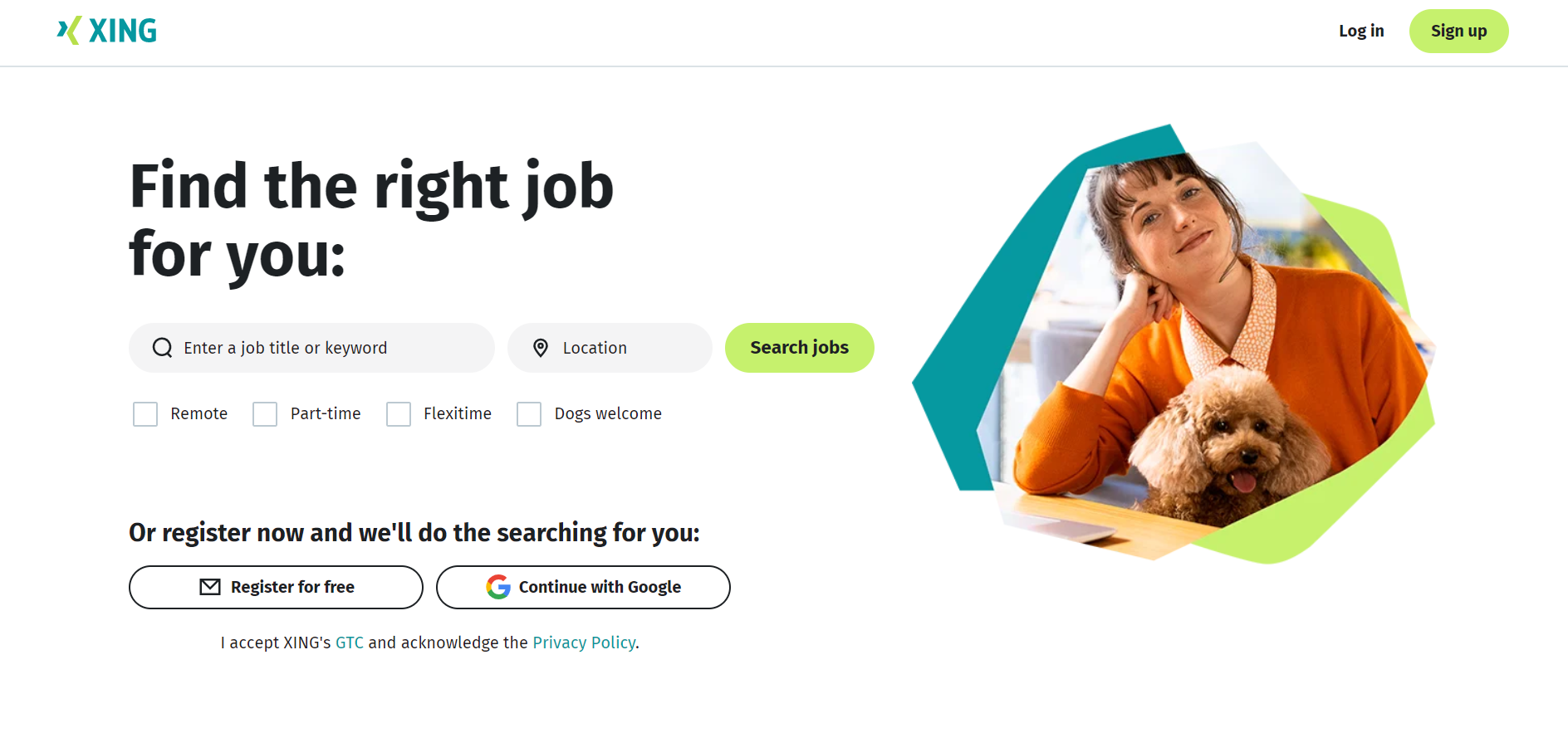
Xing is the professional network of the German-speaking world, with around 22.5 million members across Germany, Austria and Switzerland. It earns its place for one narrow but valuable reason: there is a large population of German Mittelstand engineers and mid-career IT professionals who keep a Xing profile current and treat LinkedIn as an American thing they log into twice a year.
Talent search and filtering: the recruiter product is onlyfy TalentManager (Xing's B2B brand), which gives you search filters, candidate pipelines and messaging against the Xing member base. It is sold on an annual contract through a salesperson rather than a self-serve checkout, so budget for a procurement conversation rather than a credit card.
Language is the moat: a German-language approach to a German-speaking candidate, on the platform they associate with German employers, gets read. The same message in English on LinkedIn frequently does not.
A correction worth knowing: older guides (including the first version of this one) tell you to source through Xing's tech groups and communities. That advice is dead. Xing shut down Groups and its Events marketplace on 11 January 2023, deleted the group data, and refocused the product on job matching. If a post published after that date still recommends Xing groups, nobody involved in writing it has opened Xing.
Where it fails: Xing is not the safe DACH default it was in 2018. LinkedIn has grown aggressively in German-speaking Europe and now rivals or exceeds Xing's regional audience, and Xing's parent New Work SE was delisted from the Frankfurt exchange in 2024 and taken fully private by Burda Digital in June 2025 after a period of falling revenue. Xing is a genuinely good complement for DACH hiring. It is not a LinkedIn substitute, and for English-speaking startup engineers in Berlin it is close to useless.
4. Kaggle
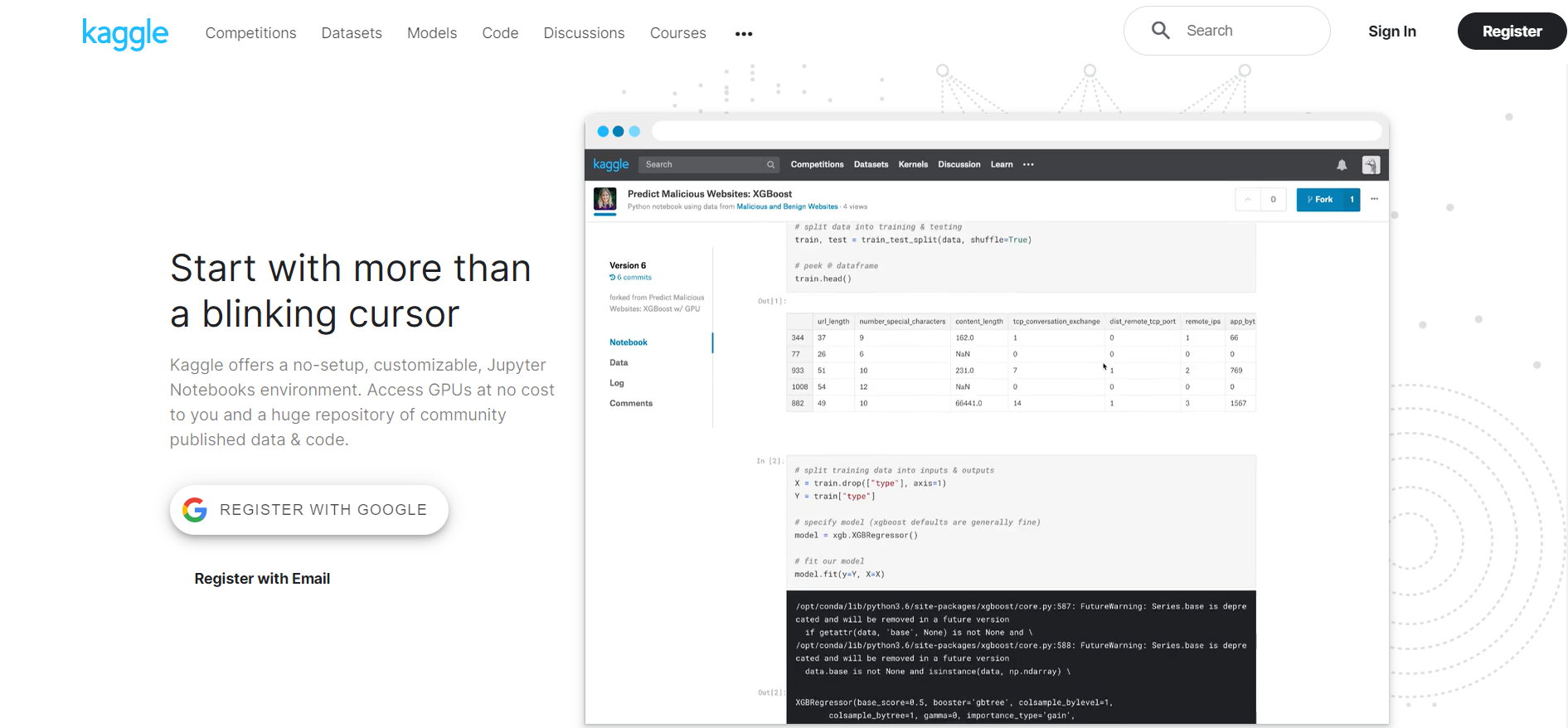
Kaggle (owned by Google since 2017) is the largest data science and machine learning community anywhere, at roughly 23.3 million accounts. For data and ML roles it does something no other platform does: it ranks people against each other on identical problems, publicly.
The ranking is brutally selective, and that is the point: of those 23.3 million accounts, about 2,973 had reached Master and only 612 had reached Grandmaster as of April 2025. Grandmaster is roughly 0.003% of the user base. When one appears in your pipeline that is a genuinely rare signal, and it is verifiable in ten seconds rather than taken on trust.
Read the tier properly, because most recruiters do not: Kaggle's five tiers (Novice, Contributor, Expert, Master, Grandmaster) are awarded separately in each of four categories: Competitions, Datasets, Notebooks and Discussion. Somebody can put "Kaggle Grandmaster" on a CV entirely truthfully having earned it through 15 gold Notebook medals, or through 500 Discussion medals of forum activity, without ever placing highly in a competition. Competitions Grandmaster is the one that means what you think it means: five gold medals, at least one won solo. Always check which category the title came from before you get excited.
Where it fails: Kaggle measures one specific skill, squeezing the last decimal out of a metric on a clean, fixed dataset, usually with heavy ensembling. That is not the job. Production ML is data plumbing, drift, latency budgets, monitoring, and knowing when a simpler model is the correct answer. Kaggle finds you excellent modellers. It does not tell you who can ship and maintain a system, and some of the strongest competitors are weakest at precisely that.
5. Stack Overflow
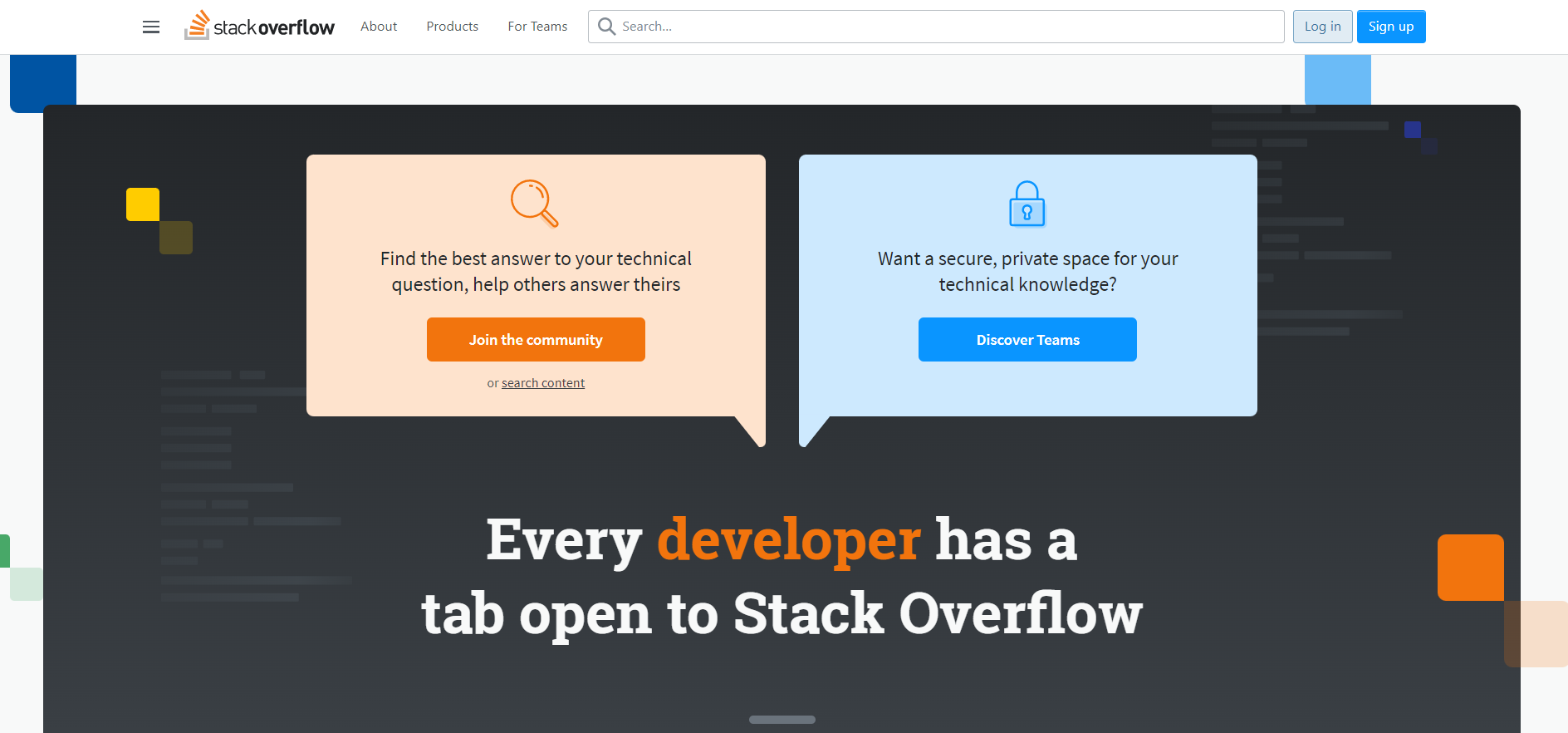
Stack Overflow is still on this list, but it has been demoted, and it is worth being straight about why. It is now an archive to mine, not a community to recruit in.
What was removed: Stack Overflow exited talent acquisition entirely. Developer Story (the CV product), the Salary Calculator and the whole Jobs board were sunset by 31 March 2022. CEO Prashanth Chandrasekar's stated reason was that "the talent acquisition space is not one where we have a strong competitive advantage." Any guide still telling you to post jobs or read Developer Stories on Stack Overflow is describing a product that has not existed for four years.
What collapsed: new question volume fell off a cliff after ChatGPT launched. Monthly questions dropped from roughly 108,000 in November 2022 to around 25,000 by December 2024, a decline of about 76%, taking activity back to levels last seen in 2009. Developers ask a model now. The live community you were told to engage with is largely gone.
What still works: the archive is a decade-deep, tag-by-tag public record of who genuinely solved hard problems in a specific technology. Filter answers by tag, sort by score, and you have a shortlist of real specialists in Kubernetes networking or Postgres query planning that no LinkedIn keyword search will ever surface. Reputation, top tags and answer history are all still on the profile.
Where it fails: it is a lagging indicator. Reputation earned between 2012 and 2019 tells you what somebody was excellent at seven years ago, and a good share of the top accounts belong to people who have since moved into management or left the industry. Use it to find the one specialist nobody else can find, never to build volume.
The step none of these five solves: contact details
This is where most "LinkedIn alternatives" articles stop, and where the actual work starts. You have found a brilliant Rust developer on GitHub, a Competitions Master on Kaggle, or the person who wrote the definitive answer on Postgres indexing. Now reach them. None of these five has an InMail equivalent you can run at volume: Xing messaging sits behind a TalentManager contract, Wellfound outreach sits behind Recruit Pro, and GitHub, Kaggle and Stack Overflow have no recruiter messaging product at all. This contact gap, not discovery, is the reason most recruiters quietly go back to LinkedIn.
Try the free method first, because it often works. GitHub's "Keep my email addresses private" setting is opt-in and off by default, which means a large share of public commits carry the author's real email address in plain sight. Add .patch to the end of any public commit URL and read the From: line. If the developer has switched privacy on you will see username@users.noreply.github.com instead, and that route is closed. It costs nothing, it takes fifteen seconds, and it is the most useful sourcing trick on this page.
Apollo.io, for the profiles where that fails
The commit trick does not exist on Kaggle or Stack Overflow, where a profile is frequently just a handle and an avatar. Once you have resolved that handle to a real name and a current employer (via their bio, a conference talk, a personal site), a B2B contact database will usually finish the job by looking the person up on company and role.
Apollo.io
For this specific problem, turning a handle you found on GitHub or Kaggle into an address you can actually send to, Apollo.io is the cheapest sensible starting point: the free plan gives each seat 900 credits per year, released monthly, so you can test whether your particular talent pool is covered at all before spending anything. Paid starts at $49 per seat per month billed annually, or $65 month to month, for 30,000 credits per seat per year. The honest caveat: Apollo is a B2B sales database indexed by company and job title, not a developer index. You cannot search it by GitHub handle, and its coverage is thinnest exactly where these five platforms are strongest, on independent developers, students, and engineers at five-person startups. For an engineer with a work email at a company that has a website, it works well. For the anonymous Kaggle Grandmaster with no employer listed, nothing here will save you except a well-written message in the one place they do read.
Whichever route you take, respect the norms of the platform you found them on. A recruiter pitch in a GitHub issue or a Stack Overflow comment gets you reported. An email you found in a commit patch is fine to use once, personally, referencing their actual work. It is not fine to load into a sequencer.
The takeaway
None of these five replaces LinkedIn, and any article promising that is selling you something. What they do is beat LinkedIn on one axis each: GitHub on evidence, Wellfound on price and intent, Xing on language and region, Kaggle on verifiable ranking, Stack Overflow on finding the deep specialist. Pick the one that matches the role in front of you rather than trying to work all five, budget for the contact step because that is the part that actually stops people, and check the publication date on any sourcing advice you read. As Polywork's investors and Stack Overflow's jobs board both demonstrate, this list has a shorter half-life than it looks.