



As the job market continues to evolve, more and more people are on the lookout for flexibility in their careers. Freelancing has become a popular option for those who want to control their schedules, work independently and make their own decisions. Statista has projected that the number of freelancers in 2027 will reach 86.5 million and will make up 50.9% of the total workforce in the United States.
One freelancing career option that has really taken off is recruiting.
As we all know, a typical career path for an agency recruiter is to build up a wide network of clients and candidates within their niche and eventually start their own agency. However, you can now make an incredible amount of money as a recruiter without working for an agency or dealing with the hassle of starting and running a business. You could even do it without ever constructing another business development email, cold calling a hiring manager, or mass mailing a CV.
The tides turned on the tech industry's RPO (Recruitment Process Outsourcing) model, and a wave of platforms emerged that band together with tech companies and let recruiters sign up, submit the right candidates to open roles and earn placement fees (the jargon calls them bounties).
It's a win-win. A company signs up and posts a bounty for a role they need filling at a fraction of the price that an agency would charge them, all while avoiding having to juggle multiple accounts on their Preferred Suppliers List (PSL).
Meanwhile, a recruiter signs up and without having to do any business development, can start referring candidates to open roles and earn a multiple of what they'd take home working for an agency.
It's safe to say there's going to be a lot more of this in the future:
Two things have changed since we first wrote this, and both matter before you sign up anywhere.
The category consolidated. Of the five platforms originally covered here, one has shut down entirely and one has abandoned the marketplace model completely. The money concentrated in a single winner.
The gates closed. The original pitch of this whole category was that anyone could sign up and start earning. That is no longer true at the top of the market. Paraform now describes itself in its own help centre as "a closed marketplace" and approves you on a role-by-role basis. The opportunity is still real and still large, but it now rewards a track record rather than enthusiasm.
Here is where each platform actually stands, checked against each one's own documentation.
Paraform
Industry: Tech
Your cut: 80% of the placement fee
Key perks: Weekly interview bonuses, and up to $200/month reimbursed for recruiting software
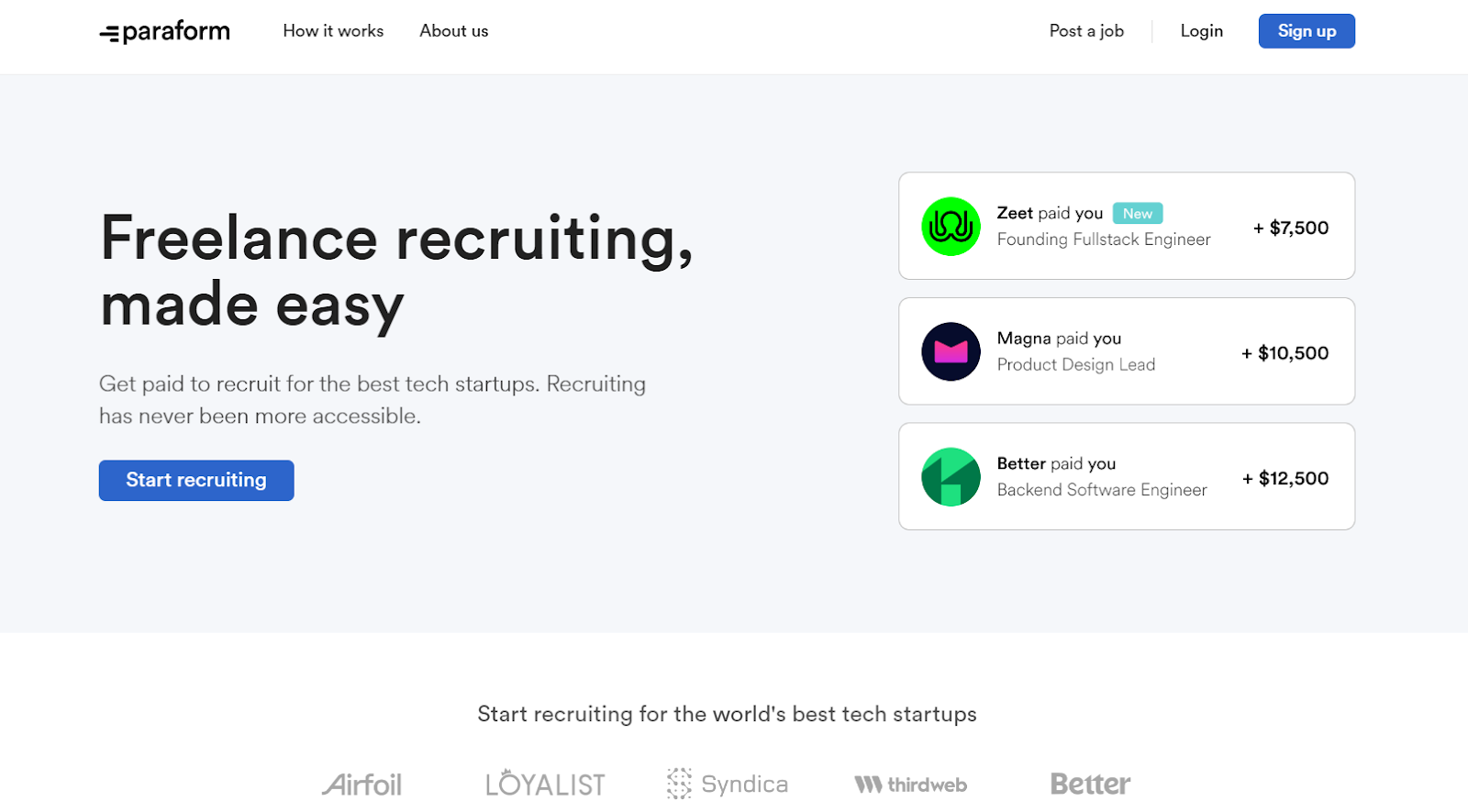
Paraform is the platform that won this category, and it is not close. Tech start-ups and scale-ups post roles across Engineering, Design, Product and Marketing with a reward attached, and independent recruiters fill them. Fees run roughly 20% to 25% of first-year salary and recruiters keep 80% of that - Paraform. On a $180,000 engineering role at 20%, that is a $36,000 fee and roughly $28,800 to you.
Here is the correction to what this article said in 2024, and it is the single most important thing on this page: you cannot just sign up and start submitting. Paraform states that "it takes approvals from either our end or the hiring manager's end to start recruiting for a role" - Paraform's approvals policy. You apply per role, and you can be turned down for your recruiter rating, your recruiting background, or simply because the role already has too many recruiters on it. Hiring managers rate every submission on a 4-point scale, and that rating follows you into your next approval decision. Joining at all now starts with an onboarding call to check mutual fit.
There are hard caps too. You can hold a maximum of 10 actively approved roles and 3 pending applications at any one time. The old claim that "there is no limit to how many roles you can recruit for" is dead. Paraform also tells recruiters to hold a 60% first-round interview rate and a 30% mid-round rate, which is "what leads to consistent hires" - Paraform's FAQ. Read that as a warning: submitting volume to see what sticks will cost you the approvals that make the platform worth using.
The payment mechanics have held up well. The reward pays in three installments: a third at 30 days after your candidate starts, a third at 60 days, a third at 90 days - Paraform's payments doc. If your candidate leaves before an installment falls due, you do not get the rest of it. On top of the base reward, Paraform pays weekly bonuses of $200 or $500 based on interview volume and reimburses up to $200 a month for recruiting software, which in practice covers your whole tool stack.
Best for: experienced technical recruiters who can hold a high interview rate on a small number of roles. Worst for: a beginner hoping to learn recruiting on the platform, because the approval gate is now specifically designed to filter you out.
Hirechain
Industry: Web3 and crypto
Bounty range: $5,000 to $50,000
Key perks: You get paid a share even if your candidate only reaches interview
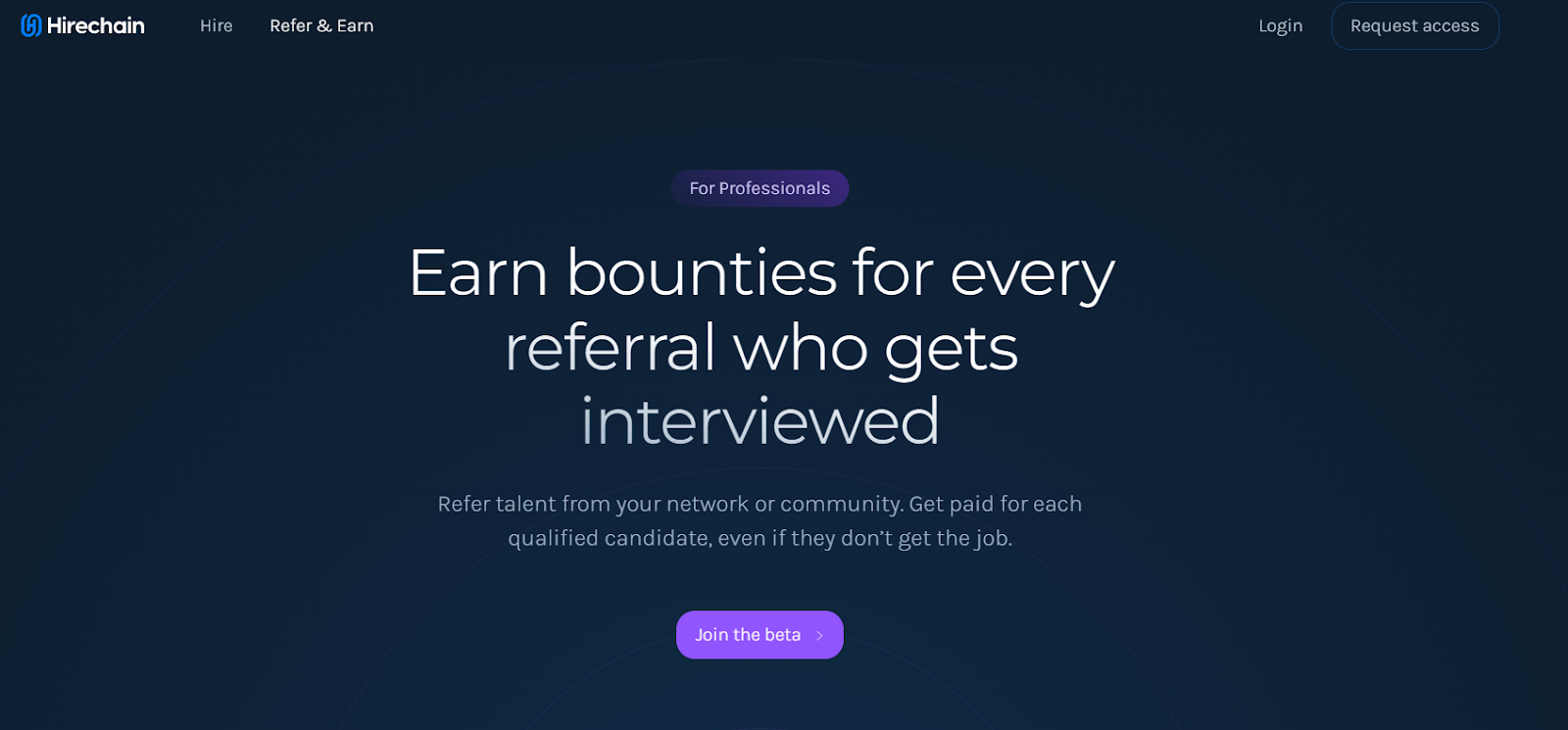
Hirechain was listed here as "set to launch in Q1" and it did. It is now the crypto talent network, has moved its site and app from hirechain.xyz to hirechain.io, and says it is used by 190+ companies including Pump.fun and Messari. It also absorbed the community from Job Protocol, the Web3 platform this article previously recommended (more on that below).
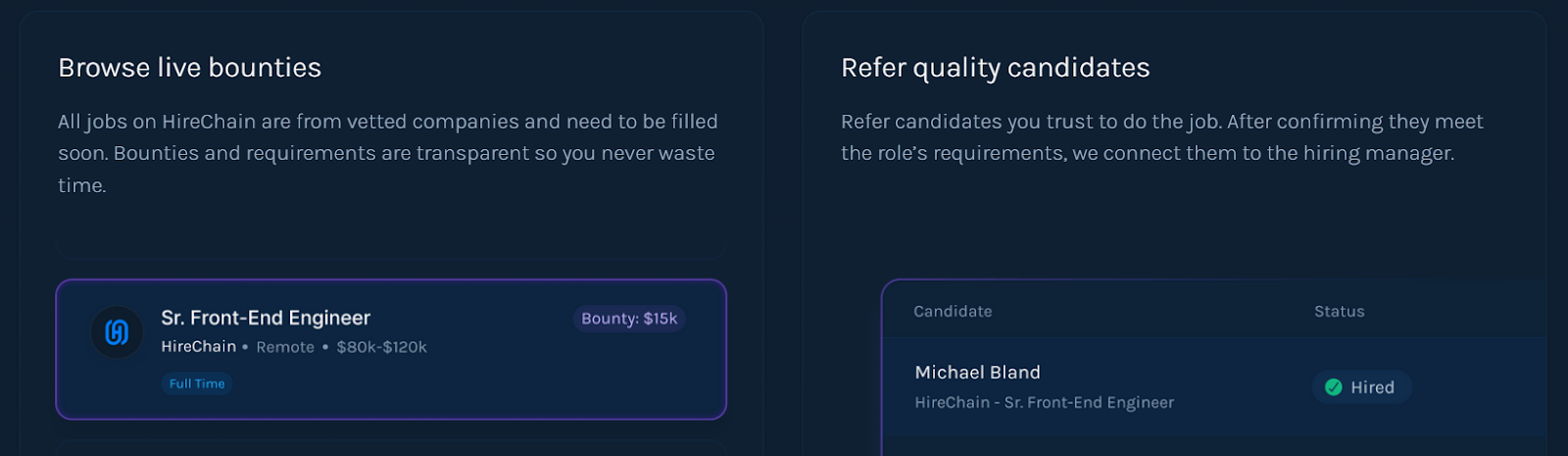
The reason Hirechain is worth your time is the same as it was in beta: you can earn without a hire. The biggest share of a bounty goes to the referrer whose candidate got the job, but referrers whose candidates only reached the interview stage split a slice of it. That single design choice makes the platform less brutally winner-take-all than the rest of this list, which matters a lot when you are working a role alongside other referrers.
Payment is slower than Paraform's. A placement bounty pays in three installments at roughly 35, 65 and 95 days after your candidate starts, so budget for a full quarter between the handshake and the last payment. The obvious caveat is concentration risk: this is a crypto-only network, and your earnings track a famously cyclical hiring market. If Web3 is not already your niche, the bounties are not worth learning a new sector for.
Relancer
Industry: Multiple
Your cut: 100%, no commission
What it costs you: Free, or $99/year for Pro
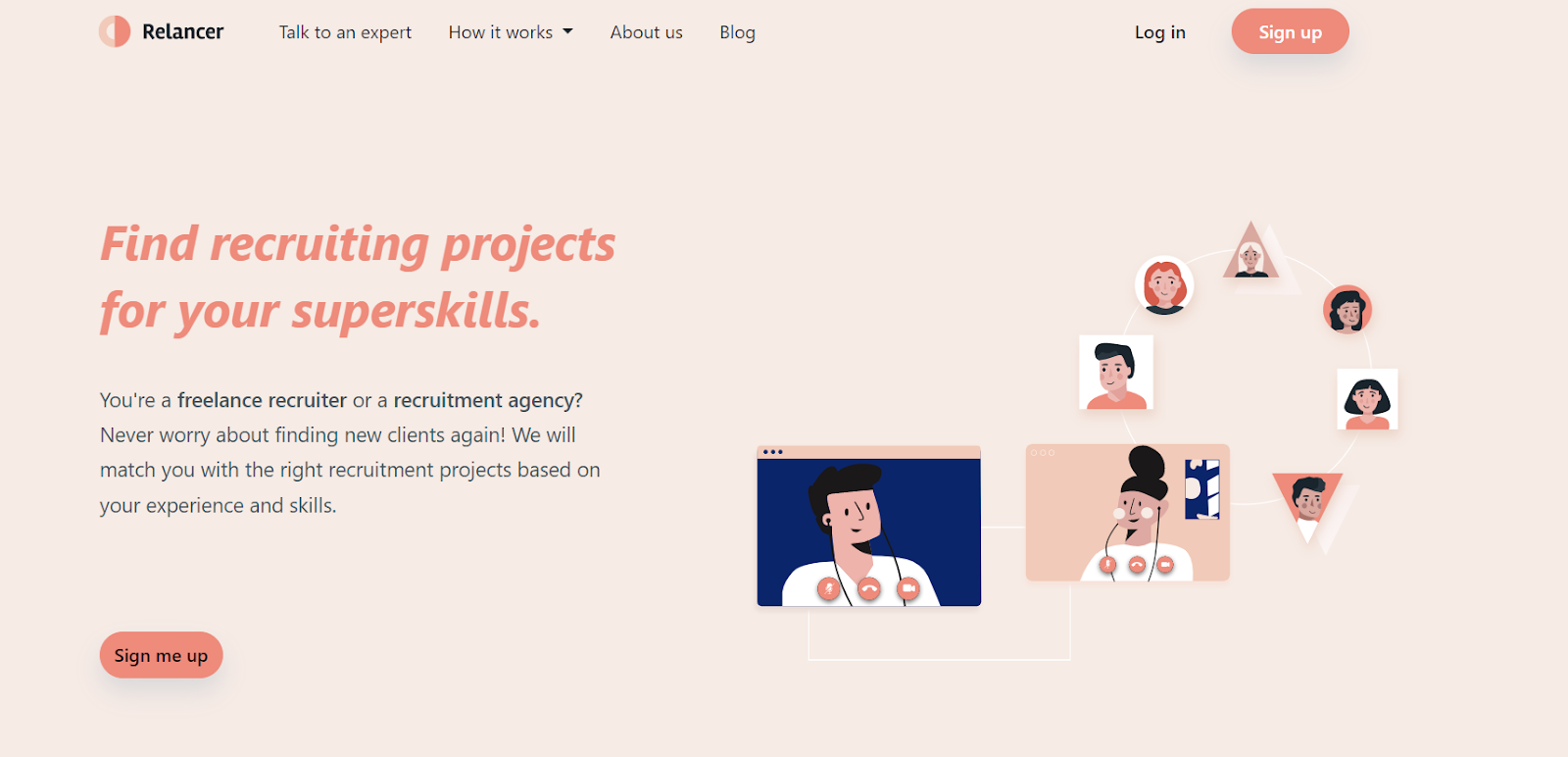
Relancer changed its business model completely, and if you read the 2024 version of this article you should ignore everything it said about fees. Relancer used to take 15% of the first €10,000 you billed with a client, 10% up to €20,000 and 5% beyond that. That commission is gone. Relancer now runs as a directory of recruitment partners across 60+ countries, it is free for hiring companies to search, and you keep 100% of what you bill - Relancer for recruiters.
The money now comes from a subscription instead. A Basic profile is free: you list your industry, roles, geography and pricing, collect reviews and appear in searches. Pro is $99 a year and buys higher directory placement, a direct link to your site, a Pro badge and analytics, with additional locations beyond your primary market at $49 each.
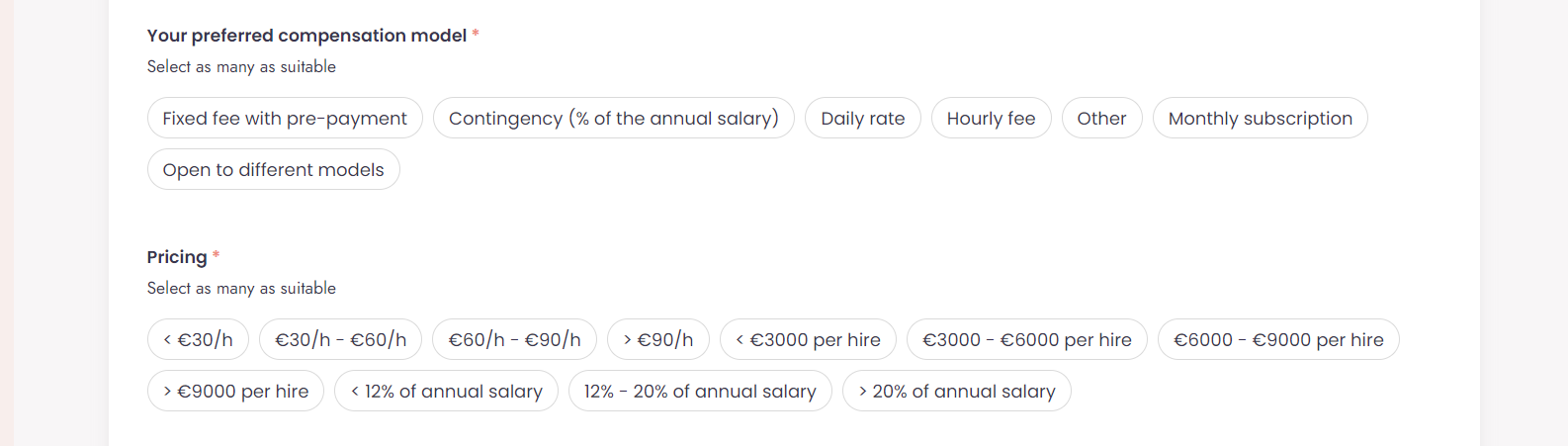
Be honest with yourself about what that trade means. Relancer is now lead generation, not a marketplace. Nobody hands you a requisition, nobody sets a bounty, and there is no account manager doing business development on your behalf. You are buying placement in a directory and hoping a company finds you, after which you negotiate your own fee and sign your own contract. For a recruiter who can already close clients and just wants inbound, keeping 100% of a self-negotiated fee beats any split on this page. For someone who came here specifically to avoid business development, Relancer no longer does the thing you wanted.
Bounty Hunter World
Industry: Multiple
Bounty guidance: Minimum 5% of annual salary, set by the employer
Key perks: App-based, free, no vetting to get started
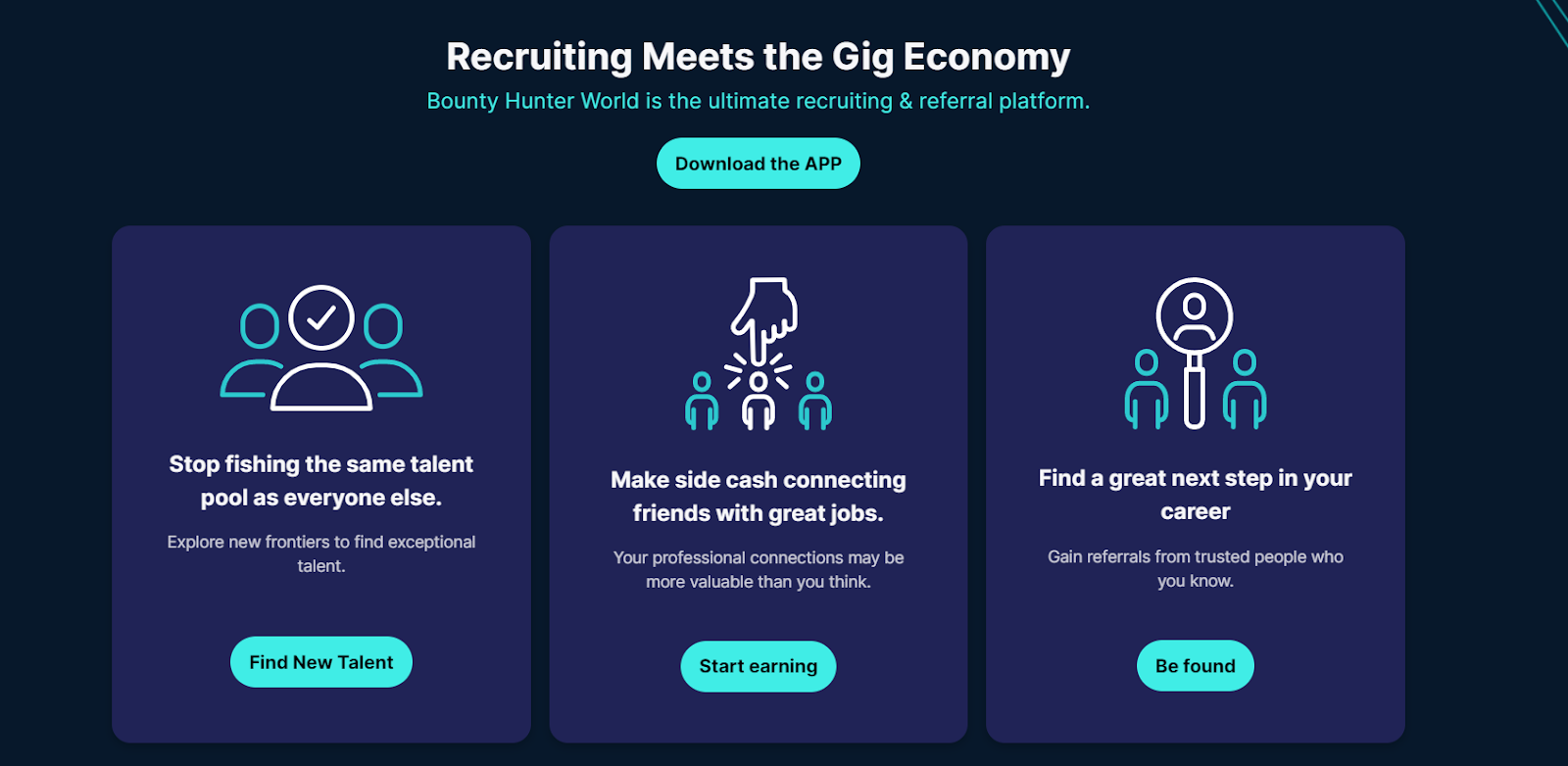
Bounty Hunter World is the last genuinely open door on this list. You download the app, create a profile, refer people from your network and earn a bounty when one gets hired. There is no approval gate and no interview-rate scorecard, which is exactly why it sits at the bottom rather than the top: open access and small bounties travel together.
Read the split before you spend a single hour here. The platform's own homepage states that when a company hires, "the bounty is split: 10% goes to those who recommended people who achieved interviews, and 50% goes to the Bounty Hunter who recommended the successful hire". So the number on the job card is not what you take home: the winning referrer gets half of it. Confusingly, Bounty Hunter World's Referring Users page says that "if your referred candidate is hired for the position, you receive the full bounty amount", which directly contradicts the homepage. Get support to confirm the split in writing before you work a role.
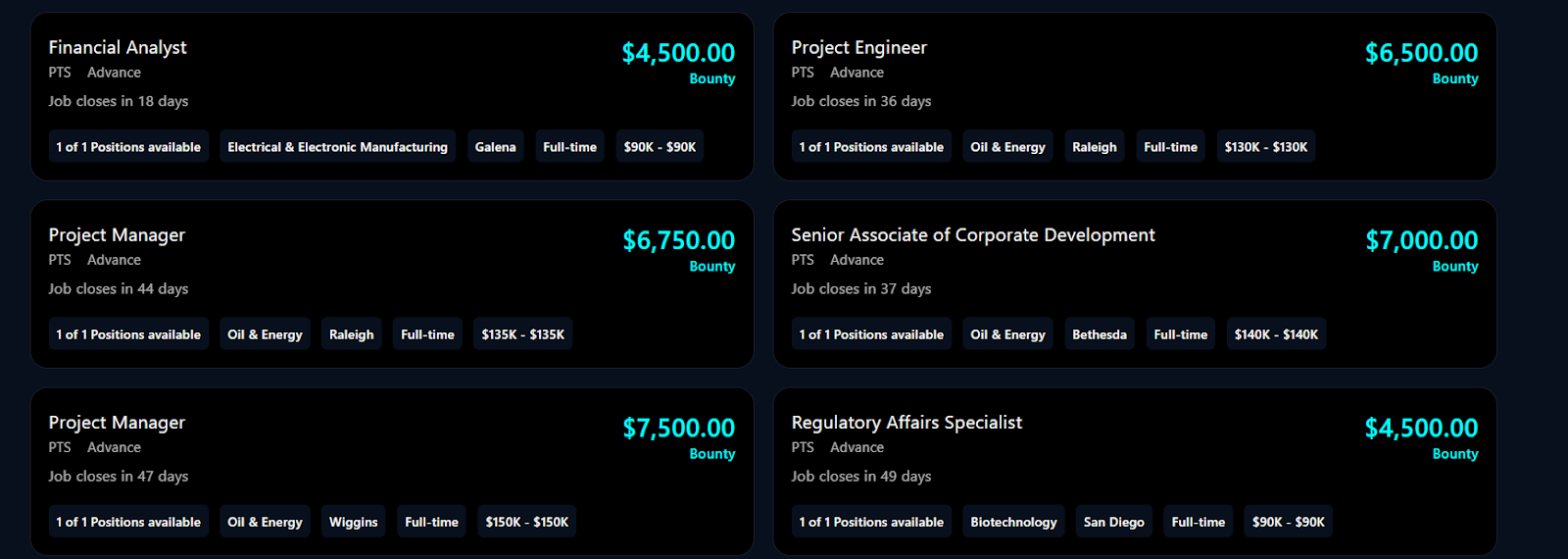
The live bounties tell the story better than any pitch. Employers are guided to post a minimum of 5% of annual salary, and the board reflects it almost exactly: a $90K Financial Analyst carries a $4,500 bounty, a $150K Project Manager carries $7,500. Apply the homepage's 50% split and a successful referral on that Project Manager role nets you around $3,750. Compare that with roughly $28,800 on a Paraform placement and you have the honest ranking of this list in one line. The upside is real breadth: roles run from Oil & Energy to Biotechnology, Communications and Finance, so this is a reasonable way to monetise a network in sectors nobody else on this page covers.
What happened to Job Protocol
The decentralised Web3 platform this article recommended in 2024, the one that paid bounties in USDC and where a $40,000 reward was not unusual, no longer exists. Job Protocol sunset its platform and now redirects its clients and talent partners to Hirechain - Dealroom. If you built a referral history there, it went with the company.
That is worth more than a footnote, because it is the structural risk of this entire category. On every platform above, the marketplace owns the client relationship and the marketplace owns the record of your work. Your reputation score, your submission history and your candidate notes live in someone else's dashboard, and they are only as durable as their startup. When Job Protocol shut down, the recruiters who had a database of their own kept working. The ones who had only a Job Protocol login started over.
The stack you need to actually work these platforms
Every platform on this list gives you a requisition and a reward. None of them gives you candidates. That is your job, it is where the money is won or lost, and it is the part the marketing pages quietly skip over. Paraform will approve you for a role and then judge you on a 60% first-round interview rate, which means the platform is not really paying you to submit people, it is paying you to be right about them.
So you need two things no marketplace on this page provides: a fast way to find and contact the right candidates, and somewhere of your own to keep them.
HeroHunt.ai: the sourcing engine no marketplace gives you
For the first, HeroHunt.ai, an AI powered talent search and engagement engine, can accelerate your search and engagement by letting you find talent from 1 billion candidates and add them to automated engagement flows without needing a paid LinkedIn Recruiter seat. On a bounty marketplace, where you are competing against other approved recruiters on the same role and speed decides who submits first, that matters more than it does on an agency desk.
HeroHunt.ai
The gate described above is the whole reason a sourcing engine matters here. Paraform approves you per role, holds you to a 60% first-round interview rate and caps you at 10 active roles, so you are working a small number of reqs against other approved recruiters and the first credible submission usually wins the interview slot. HeroHunt.ai searches roughly 1 billion public profiles and drops the people you shortlist straight into automated multi-channel outreach, with no LinkedIn Recruiter seat required, which is exactly the two jobs no marketplace on this page does for you. The honest caveat: it finds and contacts candidates, it does not track your submissions, so it replaces neither the ATS below nor the platform dashboards. It also earns its keep on outbound tech roles rather than on a referral play like Bounty Hunter World, where you are recommending people you already know and there is nothing to source.
Manatal: the tracker for submissions you actually own
For the second, you need a private ATS or recruitment CRM, and you need it from your first placement rather than your tenth. Manatal is an AI-powered ATS and recruitment CRM built for solo recruiters and small agencies, and it is the cheapest credible answer to the Job Protocol problem described above.
Manatal
Paraform caps you at 10 actively approved roles, and every platform on this list keeps your submission history inside its own dashboard, so when a role closes (or a platform sunsets, as Job Protocol did) your candidate history goes with it. Manatal is the cheapest credible place to keep that history yourself: $15 per user per month billed annually, or $19 monthly, with a 14-day trial and no credit card. That entry tier holds 15 jobs and 10,000 candidates, which is more than Paraform will ever approve you for at once, so unlike an agency you are never pushed up to the $35 tier. Paraform's up to $200/month software reimbursement covers it outright. The honest caveat: none of these marketplaces integrate with Manatal, so every submission gets entered twice, and its client-and-jobs model is built for an agency desk rather than a bounty board. If you are working one or two bounties, a spreadsheet is genuinely enough.
Whichever tool you land on, the rule does not change: the marketplace's dashboard is not your database. A candidate you sourced for a Paraform role that got cancelled is still a candidate you know, and the only place that fact survives is somewhere you control.
So which one should you actually join?
The honest answer depends entirely on what you already have, because in 2026 these platforms are no longer interchangeable.
If you are an experienced tech recruiter, the answer is Paraform and effectively nothing else. It has the fees, the volume and the 80% split, and the approval gate that makes it annoying to join is the same gate that keeps the roles worth working once you are through it. Treat your interview rate as the actual product you are selling.
If you already live in crypto, add Hirechain, and take the interview-stage payouts seriously in your maths. If you can already close clients yourself, Relancer at $99 a year is cheap inbound and you keep the whole fee. And if you simply want to monetise a network in a sector nobody else here covers, Bounty Hunter World is free to try, as long as you have confirmed the split in writing first.
What is no longer true is the promise this article opened with in 2024: that anyone can sign up and earn triple an agency salary without doing the work. The bounties are still there, and they are still large. The filtering just moved from the client to the platform.
Platform facts here were checked against each vendor's own documentation and pricing pages in July 2026. Fees, splits and caps in this category change often, so verify before you commit time to a role.