



The 2026 field guide to using Claude to find candidates who are genuinely open to moving, and to reach them with outreach that earns a reply instead of a block.
Recruiting is now the single most AI-saturated job in human resources: 51% of organizations already point AI at it, more than any other HR function - SHRM. Yet most of that AI is aimed at the easy, visible parts of hiring: writing the job ad, parsing the inbound pile, scheduling the calls. The two stages that actually decide whether a role gets filled, finding the right people and reaching them in a way they answer, are still where teams quietly lose.
Here is the problem this guide solves. Inbound applications are drowning in AI-polished noise, cold email reply rates have fallen to 3-5% across 2024 and 2025 - Reachoutly, and candidates have grown allergic to anything that smells automated. At the same time, Claude, Anthropic's family of models, has quietly become good enough to read a profile, judge fit, and write a message that sounds like a human wrote it. The opportunity is not "use AI to send more messages." It is to use Claude to find a smaller, better list and reach it more like a person.
This is not a general "AI for recruiting" overview. It is a hands-on, end-to-end playbook for the find-and-reach half of sourcing with Claude: turning a role into a precise brief, generating search strings, reading the signals of who is actually open, scoring candidates at scale, writing outreach that converts, sequencing it across channels, and (if you want) wiring it all into an autonomous agent. It covers the platforms that wrap Claude so you do not have to, where they fit, what they cost, and the legal and ethical lines you cannot cross. Everything is grounded in late-2025 and 2026 data, with real prices and real model names.
This guide is written by Yuma Heymans (@yumahey), who built HeroHunt.ai and its AI Recruiter and has spent the last several years building sourcing technology that finds people the moment they become reachable. He writes from inside the exact find-and-reach problem this guide is about.
Contents
- Why finding and reaching talent is where hiring actually breaks
- What Claude actually is in 2026: a recruiter's map
- Step one of finding: turn a role into a precise candidate brief
- Step two of finding: search strings and the signals of who is open
- Step three of finding: score, enrich, and rank at scale
- Reaching talent: personalization that earns a reply
- Reaching talent: sequences, channels, and deliverability
- The platform landscape: tools that wrap Claude for find and reach
- Building your own sourcing and outreach agent
- Where it fails: bias, hallucination, deliverability, and the law
- The next 90 days and where agentic recruiting goes
1. Why finding and reaching talent is where hiring actually breaks
Most hiring failures are sourcing failures wearing a different costume. By the time a role is "stuck," the usual diagnosis blames the interview loop or the offer, but the real bottleneck is almost always upstream: the team is either looking at the wrong people or reaching them in a way that gets ignored. This matters because sourced candidates are roughly 5x more likely to be hired than inbound applicants, while job boards and social sites generate 49% of applications but only 24.6% of hires - Gem via Prospeo. The leverage is in proactively finding good people, not in processing the pile faster.
It helps to see how lopsided the current AI investment is against that reality. Recruiting is already the most AI-saturated HR function, but the effort clusters on the visible tasks: in 2025, teams pointed AI mostly at writing job descriptions (66%) and resume screening (44%), with far less aimed at the harder work of automating candidate search (32%) - SHRM. In other words, the industry has automated the parts that were already easy and left the genuine bottleneck, proactively finding and engaging the right people, mostly untouched. That gap is the opportunity. The efficiency picture is also more honest than the marketing suggests: 89% of HR professionals say AI saves time, yet only 36% say it actually reduces recruiting cost - DemandSage, a reminder that doing the wrong work faster is not the same as winning the role.
The math gets worse when you look at where the talent actually is. A long-standing industry rule of thumb holds that around 70% of the workforce is passive, employed and not actively job hunting, a figure that traces back to LinkedIn's 2015 Global Talent Trends research and should be treated as a decade-old approximation rather than fresh data - LinkedIn (2015). The current proof point is sharper: more than 220 million LinkedIn members now carry an "Open to Work" signal, up 35% year over year - CNBC. The people you want exist and a growing share of them are reachable, but they will not come to you.
So the job splits cleanly into two hard problems. Finding is a precision problem: out of a billion-plus profiles, identify the few dozen who match the role and show signs of being open. Reaching is a trust problem: write to those people in a way that earns a reply in an inbox now flooded with automated outreach. Both have gotten harder at exactly the moment AI has gotten good enough to help, which is the tension this guide lives in.
Generic AI makes the reaching problem worse, not better, when used lazily. The flood of AI-generated outreach is a primary driver of declining reply rates, and candidates have learned the cadence: practitioners report that obviously-AI messages can pull response rates as low as a third of human-written ones - Talroo. AI inbox filters now flag template-style automated outreach with up to 99% accuracy, deprioritizing anything that does not reference a person's recent, specific activity - Outreaches.ai. The lesson is counterintuitive but central to everything below: AI used to blast more generic messages is self-defeating, while AI used to find a better list and write something genuinely specific is the whole game.
That is why this guide treats Claude as a research-and-judgment engine first and a writing tool second. The recruiters winning in 2026 are not the ones sending the most AI messages. They are the ones using AI to shrink the list, read the signals, and arrive at each candidate with something true and specific to say. The rest of this guide is how to do that, stage by stage, with Claude doing the heavy lifting and a human keeping the judgment.
2. What Claude actually is in 2026: a recruiter's map
Claude is not one product, and understanding the shape of it is the difference between paying $20 a month and accidentally building a six-figure pipeline. At its core, Claude is a family of models from Anthropic that read and write language with enough judgment to evaluate a resume, draft a tailored message, or follow a multi-step research task. You reach those models three ways: the consumer Claude app (chat, projects, connectors), the developer API (programmatic, pay-per-token), and a growing layer of agent products that let Claude take actions, not just produce text. A recruiter should know which surface fits which job, because the cost and capability differ by orders of magnitude.
Start with the models, because picking the right one per task is the single biggest cost lever you control. As of mid-2026 the lineup runs four tiers, and the right mental model is "use the cheapest one that clears the bar." Claude Haiku 4.5 is the fast, cheap workhorse for high-volume, low-nuance jobs like first-pass resume parsing - Anthropic. Claude Sonnet 4.6 is the balanced default for everyday drafting and nuanced evaluation. Claude Opus 4.8 is the deep-reasoning model for complex, multi-step sourcing agents and technical vetting, released on May 28, 2026, and it pairs adaptive thinking with an "effort" control to decide how hard to work on each task - Anthropic. Claude Fable 5, released June 9, 2026, sits at the frontier ceiling for the rare task that needs it - Anthropic.
The price gaps are large enough to change what is economically possible, which is the point of the chart below. These are the API rates per million tokens (roughly 750,000 words), input and output shown separately, and the spread from Haiku to Fable is a factor of ten.
Claude API price per 1M tokens (mid-2026)
What that pricing means in practice is that bulk candidate screening is almost free and deep agentic work is affordable. Anthropic's own docs work an example where processing 10,000 conversations of about 3,700 tokens each on Haiku costs roughly $37 total - Anthropic. Two cost levers stack on top: prompt caching drops the price of reused input (the same job description and rubric across hundreds of candidates) to 10% of the base rate, and the Batch API halves both input and output for non-urgent overnight runs. A recruiter scoring thousands of profiles against one rubric can do it for tens of dollars, not thousands, if they reuse context and run in batch.
The effort control deserves a second mention because it changes the cost curve, not just the bill. When Anthropic introduced it on Opus 4.5, the model at medium effort matched the prior Sonnet's best scores while using 76% fewer tokens - Anthropic, which is the technical reason high-volume personalization went from a luxury to a default. The practical rule for a recruiter is to run bulk parsing and scoring at low or medium effort on Haiku or Sonnet, and reserve high effort on Opus only for the handful of senior or ambiguous candidates where the extra reasoning earns its cost. Treating effort as a dial you set per task, rather than a fixed quality you pay for everywhere, is how teams keep an entire pipeline's AI spend in the tens of dollars.
Beyond the raw models, three product surfaces matter for find-and-reach work. Claude Code is a command-line and desktop agent that technical recruiters point at a candidate's GitHub to read real code quality. Claude Cowork, launched January 12, 2026, is a desktop agent that operates on your own files and apps and feels like delegating to a coworker rather than chatting prompt by prompt - Anthropic. Claude for Chrome is a browser agent that, as of December 18, 2025, is available on Pro, Team, and Enterprise plans and can read, click, and fill forms on web apps with site-level permissions - Anthropic. These are the surfaces that let Claude actually do outreach work, not just draft it.
The connective tissue under all of this is the Model Context Protocol (MCP), the open standard Anthropic introduced in November 2024 for plugging Claude into outside data and tools - Anthropic. MCP is what turns Claude from a clever chatbot into a hub that can read your applicant tracking system, search a people database, pull a GitHub profile, and post to Slack. Its importance is hard to overstate for recruiting, and it gets a full treatment in the sourcing and agent chapters below. For now, the headline is that Anthropic donated MCP to a Linux Foundation fund in December 2025, cementing it as a vendor-neutral standard the whole industry is standardizing on - Anthropic.
If you want to see where the platform is heading before you commit, the best primary source is Anthropic's own developer keynote, which lays out the model lineup, Claude Code, and the agent infrastructure that underpins autonomous sourcing.
Code with Claude 2026: Opening Keynote
For a solo recruiter, the practical starting point is simpler than all this implies. Claude Pro at $20 a month gives you the app, Projects, and connectors, which covers manual sourcing and outreach drafting for most people - Anthropic. Claude Team at $25 per seat adds collaboration, and the API is what you graduate to when you want to score thousands of candidates or build an agent. Notably, Anthropic's own HR team uses Claude daily to write job descriptions, develop interview questions, and draft candidate communications, while stating plainly that it does not let Claude make hiring decisions or train on candidate data - Anthropic. That split, AI for drafting and analysis, humans for decisions, is the posture this guide recommends throughout.
Knowing when to graduate from the app to the API saves both money and frustration. The consumer app is right while the work is interactive and one at a time: drafting a brief, reading a single profile, writing one thoughtful message. You move to the API the moment the work becomes batch and repetitive, scoring hundreds of candidates against a fixed rubric, generating personalized openers across a whole list, or running anything overnight, because that is where caching and batch pricing turn an expensive chat into a rounding error. The agent products sit a step beyond that, for when you want Claude to take actions across your tools rather than hand you text. Most teams never need all three at once; they start in the app, add the API when volume demands it, and only reach for agents once the manual workflow is proven.
3. Step one of finding: turn a role into a precise candidate brief
Every sourcing failure that looks like a search problem is actually a definition problem. Recruiters open LinkedIn Recruiter or a sourcing tool and start typing titles before they have agreed what "good" looks like, then wonder why the results are noise. The highest-leverage thing Claude does in the entire find-and-reach pipeline happens before any searching: it converts a vague role into a precise, sourcing-grade brief that every later step depends on. Get this wrong and you will efficiently source the wrong people; get it right and the searches, the scoring, and the messaging all inherit the precision.
The reason this is hard manually is that intake calls are messy and hiring managers describe roles in wishes, not specifications. Claude is unusually good at turning that mess into structure because its large context window lets it hold the whole conversation, the job description, and a few example profiles at once without losing the thread - Anthropic. You paste the raw intake notes and the draft job description, and you ask it to separate must-haves from nice-to-haves, infer comparable titles, estimate a comp band, and, crucially, flag what is too vague to source against. That last instruction is what separates a useful brief from a confident-sounding one.
A concrete prompt that produces a real working brief looks like this. Notice that it forces Claude to surface its own uncertainty rather than paper over it:
"Read the attached job description and intake notes. Produce a sourcing-grade candidate brief: must-have skills (max 5), nice-to-haves (max 5), deal-breakers, ideal current title and company type, expected years of experience, and a comp-band estimate based on title and location. Then list every part of the role that is too vague to source against, and ask me exactly one clarifying question per flag. Do not guess at anything you flag."
The output becomes the spine of the whole search. Once you have a brief Claude generated and you corrected, you reuse it everywhere: as the system prompt for outreach personalization, as the rubric for scoring, and as the definition you hand the hiring manager to confirm you are aligned. A practical hygiene tip is to keep one Claude Project per open role, so the brief, the scorecard, and prior candidate evaluations persist across every chat instead of being re-pasted each session - Anthropic. This single habit removes most of the "Claude forgot the context" friction that frustrates new users.
The same brief-building habit extends naturally to the job description itself, which is the first place a role either invites or repels the people you want. Asking Claude to audit a draft for coded language catches the words that quietly shrink your applicant pool: masculine-coded terms like "aggressive" and "competitive", age-coded phrases like "digital native" and "energetic", and culture-cliche fillers like "rockstar" and "ninja" - Built In. One practical privacy note belongs here too, before you paste a single real candidate into the consumer app: turn off the "Improve Claude for everyone" training toggle under Settings and Privacy, so candidate data is never used to improve the model - Glozo. These two small disciplines, an inclusive-language pass and a privacy toggle, cost nothing and remove two of the most common ways AI-assisted sourcing quietly goes wrong.
There is a second reason to do the brief carefully, and it is legal as much as practical. The brief is where bias enters or gets caught. When you ask Claude to define the ideal candidate, it will refuse to filter on characteristics correlated with protected classes and explain why, which acts as a built-in guardrail at the exact moment bias usually creeps in. That guardrail is only useful if you actually run the definition through Claude rather than carrying an unexamined picture in your head. Treat the brief as both your search specification and your first bias checkpoint, and you have turned the cheapest step in the pipeline into the one that most improves everything downstream.
4. Step two of finding: search strings and the signals of who is open
With a brief in hand, finding becomes two jobs: building searches that surface the right people, and reading the signals that tell you which of them are actually reachable. Claude helps with both, and the second is where it earns its keep, because a perfectly matched candidate who is happily entrenched is a worse use of an outreach slot than a slightly-less-perfect candidate who just shipped a side project and updated their headline. The whole find-and-reach pipeline flows from the brief through these two steps and into outreach, and it helps to see it as one connected path before diving into each piece.
On search-string generation, Claude removes the part of sourcing that recruiters hate most. Boolean and X-ray strings are fiddly, easy to get subtly wrong, and slow to iterate, which is exactly the kind of mechanical translation a language model excels at. You describe the target in plain English and Claude produces the syntax for LinkedIn, GitHub, and a Google X-ray, plus the adjacent titles you would have missed. The platforms are converging on this idea from the other direction: LinkedIn has made AI-Assisted Search its default, cutting search time from over 15 minutes to roughly 30 seconds - Pin. Whether you use a tool's native AI search or generate strings with Claude, the manual Boolean era is ending.
A prompt that reliably produces usable strings is specific about platform and exclusions, because the exclusions are where generic AI output falls down:
"Build a Boolean search string for LinkedIn Recruiter to find a VP of Sales at a Series A or B SaaS company, selling to enterprise (1,000+ employee customers), carrying a $2M+ quota, and managing 5+ account executives. Exclude SDR titles and exclude staffing and recruiting companies. Include common title variants. Then give me a second version as a Google X-ray string using site:linkedin.com/in."
The strings get you a raw list; the signals tell you who to actually contact. This is where 2026 sourcing diverges sharply from the spray-and-pray past. Openness is now readable from concrete, public signals, and you can ask Claude to evaluate each candidate against them rather than guessing. The single strongest signal is the explicit one: recruiters who messaged members carrying the "Open to Work" badge saw a 14.5% positive response rate versus 4.6% for those without it, roughly tripling reply odds - LinkedHelper. But the badge is only the loudest signal, not the only one.
The richer signals require reading a profile the way an experienced sourcer does, which is exactly what you can ask Claude to do at scale. For most candidates the openness picture is assembled from several quieter cues:
- Tenure inflection points, where someone is around the 2-to-4-year mark that historically precedes a move
- Recent activity, like a refreshed headline, new posts, or an updated skills section
- Fresh commit cadence on GitHub for engineers, where regular recent commits mark an active, engaged developer
- Promotion gaps, where a strong performer has plateaued in title for a notably long stretch
- Company-level events, such as a layoff, an acquisition, or a leadership change
Feeding Claude a profile and asking it to surface the three strongest openness signals turns this from intuition into a repeatable read. For technical talent in particular, GitHub and the 45-plus developer platforms beyond LinkedIn carry quality and engagement signals that a resume never shows, and a long commit gap is as informative as a recent burst - Riem.ai.
Predictive "likely-to-move" scoring has become standard tooling precisely because these signals are now machine-readable: platforms like Entelo score openness from tenure patterns and recent activity, and LinkedIn ranks candidates by likelihood to respond - Metaview. You can replicate the core of that with Claude on a smaller, sharper list. Feed it a candidate's profile, recent posts, and public activity, and ask for the three strongest openness signals plus a one-to-five openness score with its reasoning attached. A worked read might surface that an engineer joined their current company twenty-six months ago, pushed a flurry of personal-project commits last month, and quietly dropped a "still figuring out my next thing" line in a conference talk: three independent signals that together justify making them a priority rather than a maybe. That is the judgment a senior sourcer applies by instinct, made explicit and repeatable. The practical recipe is to have Claude score each candidate's openness alongside their fit, so your outreach list is sorted not just by who matches but by who is most likely to answer. That ordering is the difference between a 5% campaign and a 20% one, and it is the natural handoff into the scoring step.
5. Step three of finding: score, enrich, and rank at scale
A raw list of matches is not a sourcing result; a ranked, enriched, decision-ready shortlist is. The gap between the two is the work that used to eat a sourcer's afternoon, and it is the work Claude does most reliably because it is structured, repetitive, and judgment-light at the per-candidate level while still requiring real reading. The goal of this step is to take fifty or five hundred plausible profiles and turn them into a ranked shortlist of the dozen worth a personal message, with the reasoning attached so a human can sanity-check it.
The foundation is a weighted scoring rubric, and the trick is to let Claude propose it and then correct it rather than inventing weights yourself. You give Claude the brief and ask for criteria with weights that sum to 100% and anchor descriptions for what a 1, a 5, and a 10 look like on each. Then you point it at the resumes and ask for a ranked output with a one-line justification and a single flag per candidate. Because the model explains its reasoning rather than just emitting a number, you can audit a surprising score in seconds and catch the candidate who looks weak on paper but strong in substance. That explainability is the reason to prefer a reasoning model here over a black-box matching score you cannot interrogate.
The cost of being wrong here is worth a number, because it reframes how much scoring effort is justified. A bad shortlist does not just waste outreach; it wastes the scarcest thing a recruiter has, which is credibility with a hiring manager who only tolerates so many off-target submissions. Spending a few extra cents per candidate to have Claude read the full resume and explain a borderline score is trivially worth it against the cost of a stalled role. This is the inversion that cheap, capable models enable: where careful per-candidate evaluation used to be a luxury reserved for finalists, it is now affordable at the very top of the funnel, which is exactly where a wrong call is cheapest to catch.
For anything that feeds a database or another tool, do not ask Claude for JSON in plain prose and hope. Anthropic's own cookbook shows the reliable pattern: define a tool whose input schema is the JSON shape you want, and Claude is forced to return well-formed data conforming to it - Anthropic Cookbook. This is how you turn a messy resume into clean fields (name, current title, years of experience, skills, work history) that import straight into your ATS. The prompt instructs Claude to return null for missing fields rather than guessing, which is the guardrail that keeps hallucinated data out of your pipeline.
It is worth grounding all of this in a real outcome rather than a promise. The talent marketplace Braintrust built its AI recruiter on Claude to run autonomous first-round screening, and reported a 25% increase in job applicants, with close to 90% of hires coming from matches the system rated good or great and over $150,000 saved in screening costs - Anthropic. Tellingly, the team chose Claude specifically for its large context window, which let it hold entire interviews without losing detail, and for its safety-first design. That is the same logic a smaller team applies at the prompt level: the context window is what lets you score fifty resumes against one rubric in a single pass, and the model's restraint is what keeps the scoring defensible when a hiring manager asks why a candidate ranked where they did.
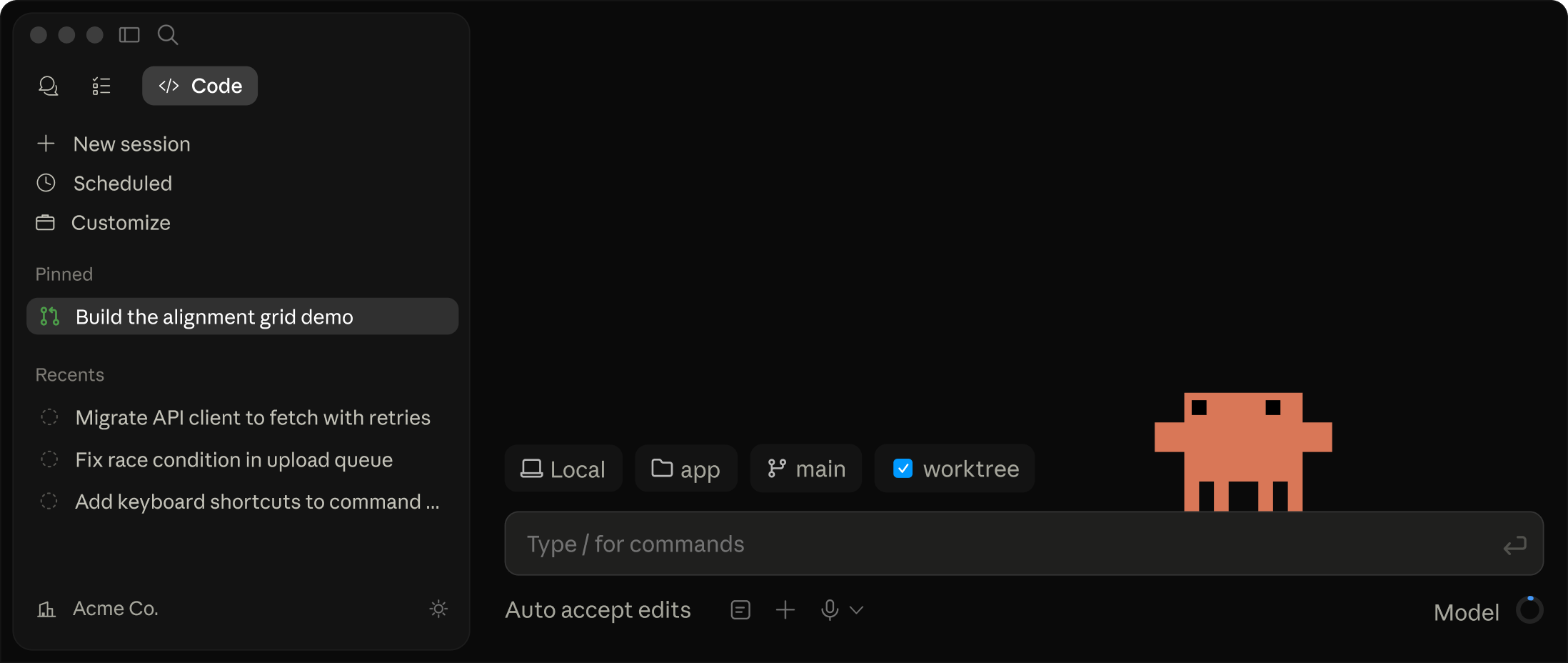
Volume is where the economics get interesting, and it is worth showing the actual tool a technical recruiter uses to go deep on a candidate. Pointing Claude Code at a candidate's public repositories surfaces their real tech stack, contribution share, and testing discipline, which one team reported cutting per-role technical screening from roughly twenty hours to about thirty minutes. The desktop app makes this approachable even for non-engineers reviewing engineering candidates.
Scoring thousands of candidates would be expensive at chat prices, which is exactly why the cost levers from the model chapter matter most here. When the same rubric and brief sit in cached context across every candidate, and the run goes through the Batch API overnight, the cost collapses. The chart Anthropic published with Opus 4.5 makes the underlying principle visible: an "effort" control trades tokens for accuracy, so high-volume work can run at a lower setting and reserve the expensive deep reasoning for the few candidates who warrant it.

The final piece of finding at scale is enrichment and pipeline access, and this is where MCP turns Claude from a reader into an operator. With a people-search MCP server connected, Claude can source, enrich each profile with work history and a verified business email, and export an ATS-ready CSV entirely through natural-language prompts; Crustdata, for example, wires its people database into Claude Code with a single command - Crustdata. With an ATS MCP connected, you can ask Claude conversational questions like which candidates in a pipeline have not been contacted in seven days, and it answers from live data - Metaview. The honest caveat is that Claude Code drafts but does not send on its own and does not natively reach most ATS platforms without that MCP or API work - HireTruffle. It is a copilot for finding and ranking, not yet an autonomous closer, and the next chapters treat reaching as the deliberate, human-supervised act it should be.
6. Reaching talent: personalization that earns a reply
Reaching is a trust transaction, and the entire game is whether your message reads as written for this person or assembled from a template. The data here is unusually clear, which is rare in recruiting, and it all points the same direction: depth of personalization is the single largest lever on reply rate. Hunter.io's analysis of 11 million emails found that personalization beyond merge tags drives 52% higher reply rates, and that tightly targeted micro-campaigns of under fifty contacts outperform broad blasts by 2.76x - Hunter.io via The Digital Bloom. Smaller, better-researched lists beat bigger ones, every time.
The channel matters as much as the words, and for recruiters the best channel is LinkedIn InMail. Recruiting is the single highest-performing industry for InMail, with average response rates around 18-25% against an overall benchmark of 10-25% - SalesSo. Within that channel, personalization still decides the outcome: a personalized InMail replies at 9.36% versus 5.44% for one with no message, per Belkins' study of more than 20 million outreach attempts - Belkins via Prospeo. Cold email, by contrast, is in structural decline at 3-5%, which means email should be a follow-up channel, not your opener, for most senior talent. Targeting compounds the effect: emailing one person per company yields a 7.8% reply rate, while blasting ten or more at the same company cuts it by more than half to 3.8% - Instantly.
This is where AI helps if you use it correctly and hurts if you do not. Used badly, at scale, AI produces exactly the template-grade slop that inbox filters now catch at 99% accuracy and candidates tune out. Used well, for research and a specific first draft, it lifts replies measurably. One 2026 analysis lined up reply rates by personalization depth and found generic email landing around 9%, well-personalized messages near 18%, and signal-based or AI-assisted personalization in the 15-to-25% range - Haus Advisors. The winning pattern is to use Claude for the research and the draft, then ensure every message references one concrete, verifiable detail no template could contain.
Outreach reply rate by personalization depth (2026)
The takeaway is not that AI writes better prose than a person; it is that AI makes deep personalization affordable at a volume no one can match by hand. The jump from a generic message to a well-personalized one roughly doubles the reply rate, and that gain is almost entirely about relevance, the specific and true detail that signals a real human actually looked. That is the bar every message has to clear, which is why the practical question is not whether to personalize but how to make specificity reliable rather than occasional across a whole list.
The way to get genuine specificity at scale, rather than the illusion of it, is to make Claude do the research and then flag its own failures. Instead of one template, you ask for a per-candidate opening line that cites a concrete detail from each profile, and you instruct Claude to flag any candidate where it cannot find a real hook so you can skip or research them by hand. That single instruction is the difference between scaled personalization and scaled spam, because it prevents the model from inventing a generic compliment to fill the gap. A prompt that enforces this looks like:
"For each candidate below, write a 90-word first-touch message that opens with one specific, verifiable detail from their actual work (not flattery, and never 'I came across your profile'), states the role hook in one sentence, and ends with a low-friction question. If you cannot find a specific, genuine hook for a candidate, output 'NEEDS MANUAL RESEARCH' instead of a generic message."
In practice, the safe way to run this at scale is a two-list workflow. First, have Claude generate a hook for every candidate and split the output into two piles: those where it found a concrete, verifiable detail, and those it marked for manual research. Send only from the first pile, and either skip the second or have a human spend two minutes finding the hook the model could not. This inverts the usual AI-outreach failure, where the tool fabricates specificity to fill a gap, because the model is now explicitly rewarded for admitting it has nothing to say. The result is a smaller send list with a dramatically higher floor on quality, which is exactly the trade the reply-rate data rewards: a tight, genuinely personalized cohort beats a large, lightly-tailored one by a wide margin.
There is a deeper reason to keep a human in the loop than just quality, and it is about trust. A second pass where you ask Claude to critique its own draft the way a skeptical senior engineer would, hunting for anything that would trigger an "is this automated?" reaction, catches the tells before the candidate does. The research on whether to disclose AI is genuinely mixed: one controlled study of 1,601 people found that labeling a message as AI-generated did not reduce its persuasive effect - arXiv, while other work finds disclosure can lower trust. The reconciling insight is that candidates do not punish a message for being AI-assisted; they punish it for reading as generic. Write something true and specific, keep your own voice on it, and the question of disclosure mostly dissolves.
7. Reaching talent: sequences, channels, and deliverability
A single great message is a coin flip; a well-built sequence is how you actually reach busy people who meant to reply and forgot. The data gives a clean rule to anchor on: a four-touch sequence captures roughly 90% of all the replies you will ever get, lifting reply rate to about 32% versus 13% for a single message, after which additional touches add little for email-only outreach - TenWest. The practical takeaway is to plan four touches, not one and not ten, and to make each one do a genuinely different job rather than nagging.
The 2026 evolution of this is multichannel, and it is where the biggest gains now live. The most effective recruiting sequences spread four to seven touches over two to three weeks across email, LinkedIn, and sometimes phone or SMS, escalating specificity at each step; layering channels can drive substantially more engagement than email alone - Prospeo. Claude is well-suited to designing these because the hard part is making each touch advance the conversation instead of repeating it. You ask for a sequence where touch one is a specific hook, touch two adds proof, touch three adds social proof, and touch four is a graceful breakup, each under a tight word count and each forbidden from reusing the prior angle. A prompt that produces this reliably names the days and the jobs:
"Design a 4-touch, 17-day recruiting sequence (Day 1, 3, 10, 17) across LinkedIn InMail and email for this role. Each touch must do a different job (hook, proof, social proof, soft breakup), escalate specificity, and never repeat the prior message's angle. Keep each under 110 words and avoid any phrase a generic template would use."
Deliverability is the unglamorous constraint that decides whether any of this reaches an inbox, and mass AI outreach actively degrades it. Overused phrases like "exciting opportunity" signal bulk sending and hurt inbox placement, which is why serious outreach now depends on sending limits, domain warming, randomized send times, custom sending domains, and active deliverability monitoring - Metaview. LinkedIn enforces its own version of this discipline: recruiters must keep an InMail response rate of at least 13% over a rolling 14-day window or face restrictions, which is the platform's way of punishing spray-and-pray - SalesSo.
A concrete sequence makes the abstraction usable. A reliable 2026 cadence runs four touches over about seventeen days: a sharp, specific opener on day one; a short proof point on day three that links a concrete reason the role fits them; a social-proof nudge around day ten referencing a peer or a notable team member; and a graceful breakup on day seventeen that leaves the door open. Each step changes channel where it can, alternating InMail and email, because a second channel sidesteps a single ignored inbox. On deliverability, the mitigations are unglamorous but decisive: warm new sending domains gradually, cap daily volume, randomize send times, and monitor inbox placement so a dip is caught before it becomes a blacklist. None of this is AI work; it is the plumbing that decides whether your carefully drafted message is ever actually seen. The implication is that volume without targeting is not just ineffective, it is actively penalized by the channels you depend on.
There is a hard ceiling on automation here that the trust data makes impossible to ignore, and it shapes how aggressively you should sequence. Candidates have grown wary: only 8% of job seekers believe AI makes hiring more fair even though 70% of hiring managers trust it for faster, better decisions, per Greenhouse's survey of 4,136 people - Greenhouse. Roughly 75% of candidates want the majority of their hiring interactions to stay human - Phenom. The design conclusion is that AI should run the research, drafting, and timing of your sequence, but a human should review and own the voice, especially as a conversation gets real. The recruiters who automate the whole sequence end to end will hit the trust wall; the ones who automate the work and keep the relationship human will not.
8. The platform landscape: tools that wrap Claude for find and reach
If building your own pipeline sounds like work, a crowded market of platforms has done it for you, and the right question is not "which is best" but "which layer of the find-and-reach problem do I want to buy." The category is real money now: the AI-in-recruitment market reached roughly $8.16 billion in 2025 and is projected to hit $15.24 billion by 2030 at a 24.8% growth rate - Grand View Research via Pin. Adoption has followed: in SHRM's 2026 survey, recruiting is the number-one AI use case in HR, and 52% of talent leaders plan to add autonomous AI agents to their teams this year - Korn Ferry. The tools below cluster into a few honest categories.
The first category is AI sourcing and search, tools that turn a description into a candidate list from a large profile database. Juicebox (its PeopleGPT engine) searches more than 800 million profiles with natural-language queries and, in 2026, launched autonomous "Juicebox Agents" that source and engage candidates around the clock across every open role - Juicebox. SeekOut built its assistant on GPT to break a job description into search criteria across 800 million-plus profiles, and its newer "Spot" service pairs six specialized agents with human recruiters - SeekOut. hireEZ layers an agentic suite of sourcing, screening, and outreach on top of a customer's existing ATS - Pin.
The second category is talent intelligence and all-in-one platforms, which add data depth and workflow. Eightfold argues that a purpose-built model trained on 1.5 billion-plus data points and 1.6 billion career trajectories beats general-purpose models for fair, accurate matching, and it has benchmarked Claude alongside others in its evaluations - Eightfold. Gem bundles ATS, CRM, sourcing, and outreach with 800 million-plus profiles, while Findem sells talent intelligence built on expert-labeled data and recently raised a $36 million round to expand its agentic features - Crunchbase News. The incumbents are moving too: LinkedIn's Hiring Assistant reached general availability in late September 2025, and early adopters report reviewing 62% fewer profiles to find a qualified match and a 69% lift in InMail acceptance - LinkedIn News.
The volume end of the market tells the same story from a different angle. Indeed's AI Sourcing Assistant, working across roughly 300 million worker profiles, reports helping employers hire over 30% faster, with candidates surfaced by the assistant 2.9 times more likely to be hired than those from other sources - Las Vegas Sun. The pattern across LinkedIn, Indeed, and the agent-first startups is identical: AI sourcing is not finding more candidates, it is finding fewer, better-matched ones and getting them in front of a recruiter sooner. That is the same thesis this guide builds at the prompt level, which is why the build-versus-buy line is genuinely close for many teams rather than an obvious win for either side.
The third category is the most disruptive: autonomous AI recruiters that aim to do the whole find-and-reach loop on their own. These range from conversational high-volume hirers like Paradox, whose assistant Olivia drives screening and scheduling and helped Chipotle hire 75% faster, to a wave of agent-first upstarts - Index.dev. HeroHunt.ai sits in this category as one option among several, pairing an autonomous AI Recruiter that sources and reaches candidates across more than a billion profiles with RecruitGPT, which generates a shortlist from a single plain-English prompt, and it starts free. Moonhub and Fetcher offer related sourcing-as-a-service models, with Fetcher delivering screened passive candidates straight to your inbox - Pin.
HeroHunt.ai
Of the autonomous options in this category, HeroHunt.ai is the one shaped like the pipeline this guide describes rather than like an ATS bolted to a search box: RecruitGPT takes the same kind of plain-English brief you built in chapter 3 and returns a shortlist from more than a billion profiles, then runs the multi-touch personalized outreach chapters 6 and 7 argue for. The honest caveat is that it is a find-and-reach layer, not an applicant tracking system, so your pipeline still lives in whatever ATS you already run, and the trust data above still binds: keep a human on the review gate instead of letting any autonomous agent message your talent market unsupervised.
One detail cuts through the marketing across all three categories: most of these tools are wrappers around a foundation model, and many disclose which one. Braintrust built its AI recruiter on Claude and saw measurable hiring gains, SeekOut's assistant runs on GPT, and Eightfold leans on a proprietary model it trained itself. The practical implication is that the model is rarely the differentiator you are paying for. What separates these platforms is the proprietary candidate database, the deliverability infrastructure, the native ATS integrations, and the autonomous loop, the parts that are genuinely hard to build and that a raw API call does not give you. Keeping that straight is how you avoid paying enterprise prices for a capability you could replicate with a weekend of prompt engineering.
Price is the cleanest way to compare these, because their feature claims all blur together, and the spread is wide. The chart below shows entry per-seat monthly pricing across the main sourcing tools, drawn from a 2026 comparison roundup; treat these as indicative list prices, since enterprise deals for SeekOut, Findem, and Eightfold are custom and often run far higher. At the low end, Manatal anchors the chart at about $15 per seat, pairing an AI-assisted applicant tracking system with a recruitment CRM.
Entry per-seat monthly price, AI sourcing tools (2026)
The strategic point hiding in that price chart is the build-versus-buy decision, and it is genuinely close in 2026. A seat in a premium tool can run $169 to $835 a month - Leonar, while running your own outreach drafting through the Claude API can cost cents per candidate once you account for caching and batch discounts. What you pay the platforms for is the profile database, the deliverability infrastructure, the ATS integrations, and the autonomous loop, not the language model itself, since most of these tools are wrappers around a foundation model anyway, whether that is Claude, GPT, or a proprietary blend. If your differentiator is a unique candidate pool or a tight ATS workflow, buy the platform; if it is a clever, specific outreach motion, the next chapter shows how to build it yourself.
A third option splits the difference and is what most mid-sized teams actually land on: buy a platform for the database and deliverability, and use Claude on the side for the judgment-heavy work the platform does generically. You let the tool handle the 800-million-profile search and the email infrastructure, then export the shortlist and run it through your own Claude prompts for openness scoring and genuinely personalized openers before anything sends. This keeps you off the treadmill of paying for every feature a suite bundles while still getting the proprietary data you cannot replicate at home. The decision is rarely all or nothing, and the teams that get the most out of 2026 tooling treat the platform as infrastructure and Claude as the craft layer on top of it.
9. Building your own sourcing and outreach agent
For teams with a developer and a distinctive sourcing motion, building your own agent on Claude is now genuinely practical, and the reason is that Anthropic shipped the hard parts as products. You no longer write a six-hundred-line harness to manage tool calls, retries, and context; the Claude Agent SDK (renamed from the Claude Code SDK in September 2025) gives you the same agent loop that powers Claude Code in about twenty lines of Python or TypeScript - Anthropic. The agent you build is conceptually simple: it loops between thinking and acting, calling out to tools to fetch candidates, enrich them, and draft messages, with a human gate before anything sends.
The architecture is worth seeing as a picture, because the value is entirely in what you connect the model to. The model is the reasoning core; MCP servers are the hands that reach into your data and tools; and a human review gate sits between the agent's drafts and the candidate's inbox.
MCP is what makes this real rather than a demo, and 2026 is the year the recruiting ecosystem actually wired itself up. The connector directory has grown past 400 verified integrations, and the two developments that matter most for recruiters both landed in mid-2026: Greenhouse launched Greenhouse MCP, a permission-aware, audit-logged way for approved AI tools to run pipeline analysis against Greenhouse data - PR Newswire, and Ashby expanded its ATS with agents, an assistant, and MCP support so tools like Claude can query and update hiring data directly - PR Newswire. The two most modern ATS platforms now expose governed endpoints Claude can drive in natural language, which removes the integration work that used to make a DIY agent impractical.

If you want the agent to run continuously without owning the infrastructure, Anthropic's Managed Agents, launched in April 2026, hosts the harness, sandbox, and session log for you, billed at standard token rates plus about $0.08 per session-hour - Anthropic. That is the deployment shape for a long-lived sourcing agent that wakes up, checks your pipeline, sources fresh candidates against open roles, and queues outreach drafts for your morning review. The economics are striking: a server-side agent doing continuous sourcing for a handful of roles costs less to run than a single premium tool seat, because you are paying for compute and tokens rather than per-seat licensing.
The discipline that separates a useful agent from a dangerous one is the human review gate, and it is non-negotiable for reasons covered in the next chapter. Build the agent to source, enrich, score, and draft autonomously, but require explicit human approval before any message sends and before any candidate is rejected. This is exactly the posture Anthropic itself models by using Claude to draft and analyze while keeping decisions with people. A well-built agent should feel like a tireless junior sourcer who hands you a ranked shortlist and a stack of drafts every morning, not a black box that quietly emails your talent market on your behalf. Get that boundary right and the build-it path gives you a sourcing motion no off-the-shelf tool can match; get it wrong and you inherit every risk in the next section at machine speed.
10. Where it fails: bias, hallucination, deliverability, and the law
Every capability in this guide has a failure mode, and the responsible way to use Claude for sourcing is to know exactly where the cliffs are. The most consequential is bias and discrimination, because automating a biased process simply scales the harm. The cautionary case is live and large: in Mobley v. Workday, a federal court conditionally certified a nationwide age-discrimination collective action in May 2025 over AI screening tools, and Workday disclosed that 1.1 billion applications were rejected through its tools in the relevant period - Proskauer. The court even allowed the vendor, not just the employer, to be sued as an agent, which should concentrate the mind of anyone deploying these tools.
The legal landscape is a genuine patchwork in 2026, and "the EEOC walked back its guidance" is not a free pass. Federal anti-discrimination law (Title VII, the ADA, the ADEA) still applies to AI hiring tools even after the EEOC removed its 2023 technical guidance - Husch Blackwell. State and local rules are tightening in the other direction. New York City's Local Law 144 requires an independent bias audit and candidate notification for automated employment decision tools, with penalties of $500 to $1,500 per day - National Law Review. Illinois HB 3773 took effect January 1, 2026, barring AI with a discriminatory effect and even prohibiting using a zip code as a proxy for a protected class - National Law Review.
The volatility of these rules is itself a risk, because a compliance posture built for one regime can be obsolete in a quarter. Colorado offers the cautionary example: its landmark AI Act, which would have classified hiring AI as high-risk with full impact-assessment duties, was repealed and replaced in May 2026 by a narrower, disclosure-focused law now taking effect January 1, 2027 - Norton Rose Fulbright. The replacement keeps the parts that matter most to candidates, advance notice, a right to human review, and a right to correct inaccurate data, even as it drops the heavier engineering obligations. The lesson for recruiters is to design for the durable common denominator across jurisdictions, notify candidates, keep a human in the loop, allow correction and review, rather than chasing each statute's specifics, because the specifics keep moving under your feet.
The biggest regulatory weight sits in Europe, and it reaches any team sourcing EU candidates. The EU AI Act classifies recruitment and candidate-selection AI as "high-risk," triggering obligations for risk management, data governance, bias testing, human oversight, and transparency - Crowell & Moring. A 2026 "Digital Omnibus" agreement pushed the main high-risk compliance deadline for these systems to December 2027, but transparency obligations remain live from August 2026, so the runway is shorter than it looks - Gibson Dunn. Layered on top, GDPR Article 22 gives candidates the right not to be subject to a solely automated decision with significant effects, which is the legal reason your agent must keep a human in the loop and must never auto-reject - Treegarden.
The operational defenses against an Article 22 problem are concrete and worth building in from day one: minimize the candidate data you collect, set and honor a retention window instead of hoarding profiles indefinitely, document the logic behind any automated step, and give every candidate a genuine, easy path to human review. None of this is exotic; it is the same human-in-the-loop discipline the reaching chapters argued for, now enforced by law rather than by reply rates. An agent that quietly stockpiles European candidate data without consent is not a productivity gain, it is an uninsured liability running at machine speed, and designing it so a person reviews and a candidate can object is both the compliant choice and the one that protects the trust you are working to build. This is not optional architecture; it is the law deciding your design for you.
Beyond the law, two operational failure modes will quietly wreck your results. The first is hallucination: in recruiting this shows up as fabricated assessments or invented skills stated with total confidence, and 71% of HR professionals say they have already encountered misleading or false candidate information - Qandle. The defense is to make Claude cite the source for every claim and to run a verification pass that checks the AI summary against the actual resume and profile.
The trust problem runs deeper than message tone, and it is now quantified across several large studies. Only 26% of job applicants trust AI to evaluate them fairly, per a Gartner survey of nearly 3,000 candidates - Gartner via QPS, and the Stanford AI Index 2026 measured a fifty-point gap between experts and the public on whether AI will improve how people work - Stanford HAI. Fraud has surged on the other side of the table: one screening provider flagged 23.2% of applicants as a fraud risk in late 2025, and most hiring managers doubt their process would catch a fabricated identity - Checkr. The combined picture is an arms race that pure automation makes worse, which is the strongest practical argument for keeping a recognizable human at the points of the process candidates actually feel. The second is the candidate-experience backlash, which is now measurable and severe.
The trust data should change how aggressively any team automates, because over-automation is repelling the people you are trying to attract. The concrete signals are hard to dismiss:
- 31.4% of job seekers abandoned an application or declined an interview specifically because of a one-way AI video or chatbot screening - Enhancv
- 38% of candidates have withdrawn from a hiring process because it included an AI interview - StaffingHub
- Major employers, including Google and McKinsey, have reintroduced mandatory in-person interviews to counter a surge in AI interview fraud
Those numbers describe a market correcting against thoughtless automation, and they point to the same conclusion the trust research did in the reaching chapters. AI "slop" is now a two-sided problem: employers face floods of AI-polished applications and impersonators while candidates face automated outreach they cannot tell from spam - The Markup. The teams that win the next few years are not the ones who automate the most. They are the ones who use Claude to do more, better, invisible work behind the scenes, source deeper, research harder, draft sharper, while making the candidate's actual experience feel more human, not less. That is the line that separates a competitive advantage from a compliance incident and a reputation problem.
11. The next 90 days and where agentic recruiting goes
The clear direction of travel is from copilots to agents, and the honest framing is that this is already underway rather than coming. KPMG reported that 42% of large organizations had deployed AI agents by the third quarter of 2025, up from 11% just six months earlier - Pin. The shift in recruiting is concrete: instead of asking AI to draft one email, a recruiter sets an outcome and an agent sources the shortlist, drafts the outreach, books the calls, and updates the record, escalating to a human only when judgment is needed - Metaview. The infrastructure to do this responsibly, governed ATS connectors and hosted agent runtimes, only arrived in 2026, which is why this is the inflection year rather than the hype year.
The constraint shaping that future is no longer model intelligence; it is trust and governance. The capability to fully automate sourcing and outreach exists today, but the data is unambiguous that fully automated, impersonal pipelines repel candidates and attract regulators. The teams that pull ahead will treat their AI agents the way a good manager treats a talented junior: give them the repetitive research and drafting, hold them accountable to a rubric, and keep the relationship and the final call human. The agent does the finding; the recruiter does the reaching that matters.
There is a concrete sign of how fast this posture is shifting: some firms are now creating employee records for their AI agents, treating them as roster members with defined responsibilities rather than as tools - Korn Ferry. That framing is useful even if you find it strange, because it forces the right questions. What is this agent accountable for? Who reviews its work? Where does its authority stop? A sourcing agent that books calls and updates records but never sends a cold message or rejects a candidate without human sign-off is a roster member you can actually trust. The teams that define those boundaries now, while the tooling is still young, will have a working, governed agent while their competitors are still debating whether to allow one at all.
If you want a concrete plan, the next 90 days have an obvious shape that does not require a platform purchase or an engineer. Start by moving your role intake and candidate briefs into Claude this week, because that single change improves every downstream step. Then build a small library of reusable prompts for your real roles, the brief generator, the search-string builder, the openness-signal reader, the personalized-opener writer, and keep them in a Project per role. Run your scoring through the API once volume justifies it, with caching and batch turned on. Only after that workflow is humming should you evaluate whether to buy a platform for the database and deliverability or build an agent for a motion that is uniquely yours.
The deeper point is that the recruiters who thrive in the agentic era are not the ones who hand the whole job to AI, and they are not the ones who refuse to use it either. They are the ones who understand the find-and-reach problem well enough to know exactly which parts to delegate to a model and which parts to keep as a human craft. Finding is increasingly a job for the machine: searching a billion profiles, reading signals, scoring at scale. Reaching, at its best, remains a human act that AI can sharpen but should not replace. Get that division right and you will out-hire teams with twice your headcount.
Making the call
The decision framework is simpler than the landscape suggests, and it comes down to three honest questions about your own situation. If you are a solo recruiter or a small team, start with Claude Pro at $20 a month, build the prompt library in this guide, and keep humans on every send and every decision; you will recover the cost in the first week of saved sourcing time. If you have volume and an ATS, the question is whether your edge is a candidate pool or a workflow: buy a platform like Gem, hireEZ, SeekOut, or an autonomous option like HeroHunt.ai for the database and deliverability, and let it wrap the model for you. If you have a developer and a distinctive motion, build on the Claude Agent SDK and MCP, and use Managed Agents to run it cheaply.
Whichever path you choose, the principle does not change. Use Claude to find a smaller, better, more genuinely open list than your competitors can assemble, and to reach those people with research and specificity no template can fake. Keep the work automated and the relationship human. Audit for bias at the brief, verify against hallucination at the summary, respect the trust and the law at the send. Do that, and the two stages where hiring actually breaks, finding and reaching, become the two stages where you win.
This guide reflects the AI recruiting landscape as of June 2026. Model names, pricing, platform features, and the legal and regulatory picture change quickly, so verify current details before purchasing or deploying any tool.