



Disclosure: some links in this article are affiliate links. If you sign up through one, HeroHunt may earn a commission at no extra cost to you.
Screening candidates is one of the most time intensive parts of the recruiting process. Every tech recruiter knows what it feels like to go through hundreds or even thousands of profiles to select the right candidates to reach out to or invite for a next step in the hiring process.
The most important element of an efficient screening process is having the right information.
There are 8 billion people in the world, and therefore potentially 8 billion profiles if you would not have any way of filtering or scoring those profiles.
Luckily there are technical screening tools that can help in the screening process so you as a recruiter can work a lot more efficiently and focus on the profiles that already are a good match for your job.
One of the tools you can use to cut through the noise is HeroHunt.ai which provides only the best matching candidates based on your job description.
These are the steps to screen tech candidates:
1. Filter profiles
The first and one of the most essential steps is getting the right selection of candidates. This first step is crucial because you don’t want to screen millions of profiles, so you need a way of getting from millions of profiles, to hundreds or dozens of profiles.
This is where your initial filter or matching tool comes in.
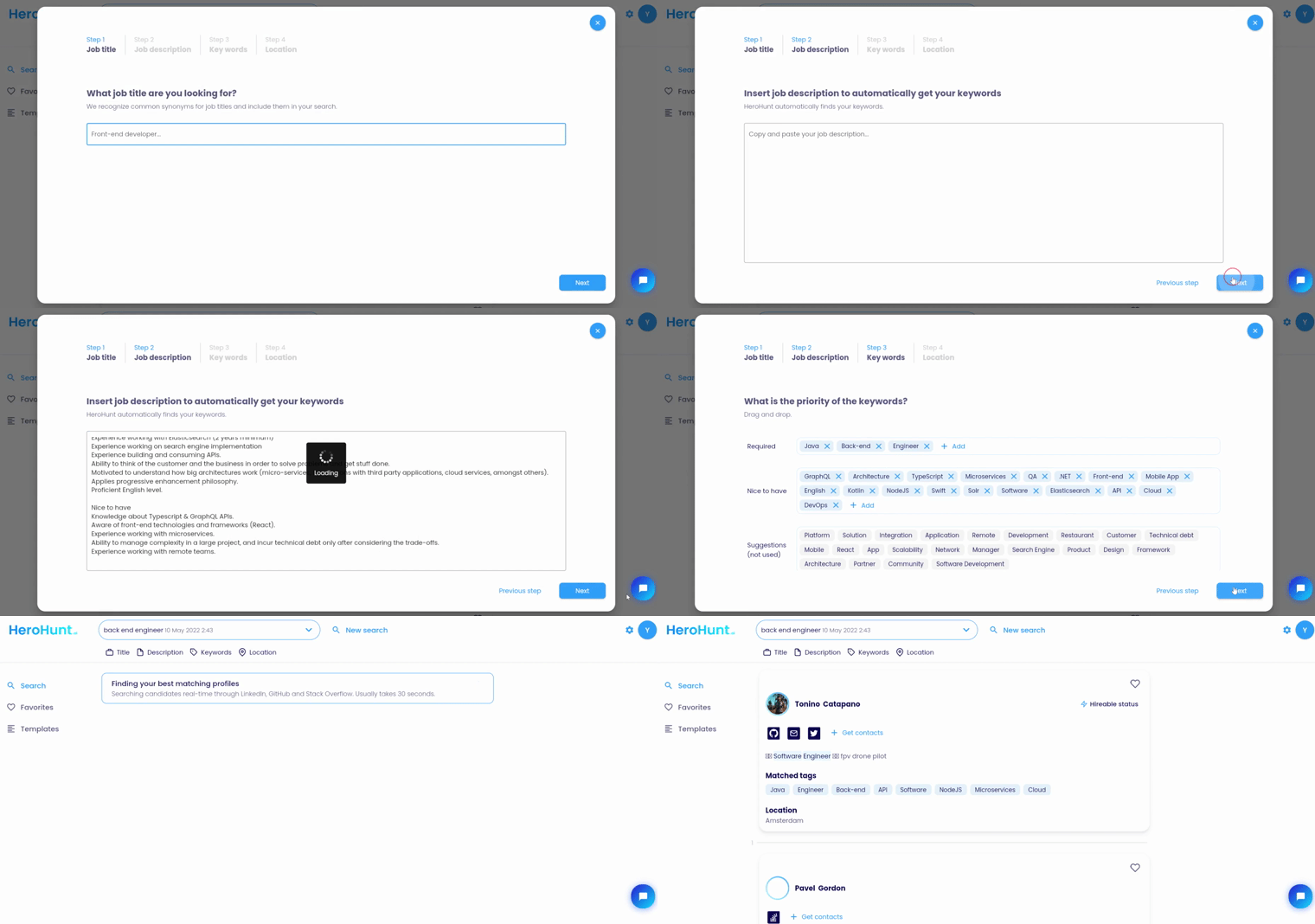
Tools like HeroHunt.ai take your job description and give you the set of best matching candidates so you can focus on the deeper level candidate screening.
HeroHunt.ai
Step 1 sets the cost of every step after it, so it is worth being concrete about the tool this guide is built around. HeroHunt.ai is an AI recruiter rather than a database you write boolean strings against: you hand it the job description, and it returns a ranked set of matching candidates with the detail step 2 needs already attached, including the summary, skills and top matched skills, years of experience, job history, languages and the social links that make step 3 fast. Two honest limits. It ranks people from what is visible in their public profile data, so a strong engineer with a thin online footprint will sit lower than they deserve, which is exactly the case worth reviewing by hand. And no profile match, however good the score, proves that someone can actually build the thing: that is what the assessment in step 4 is for.
2. Initial screening
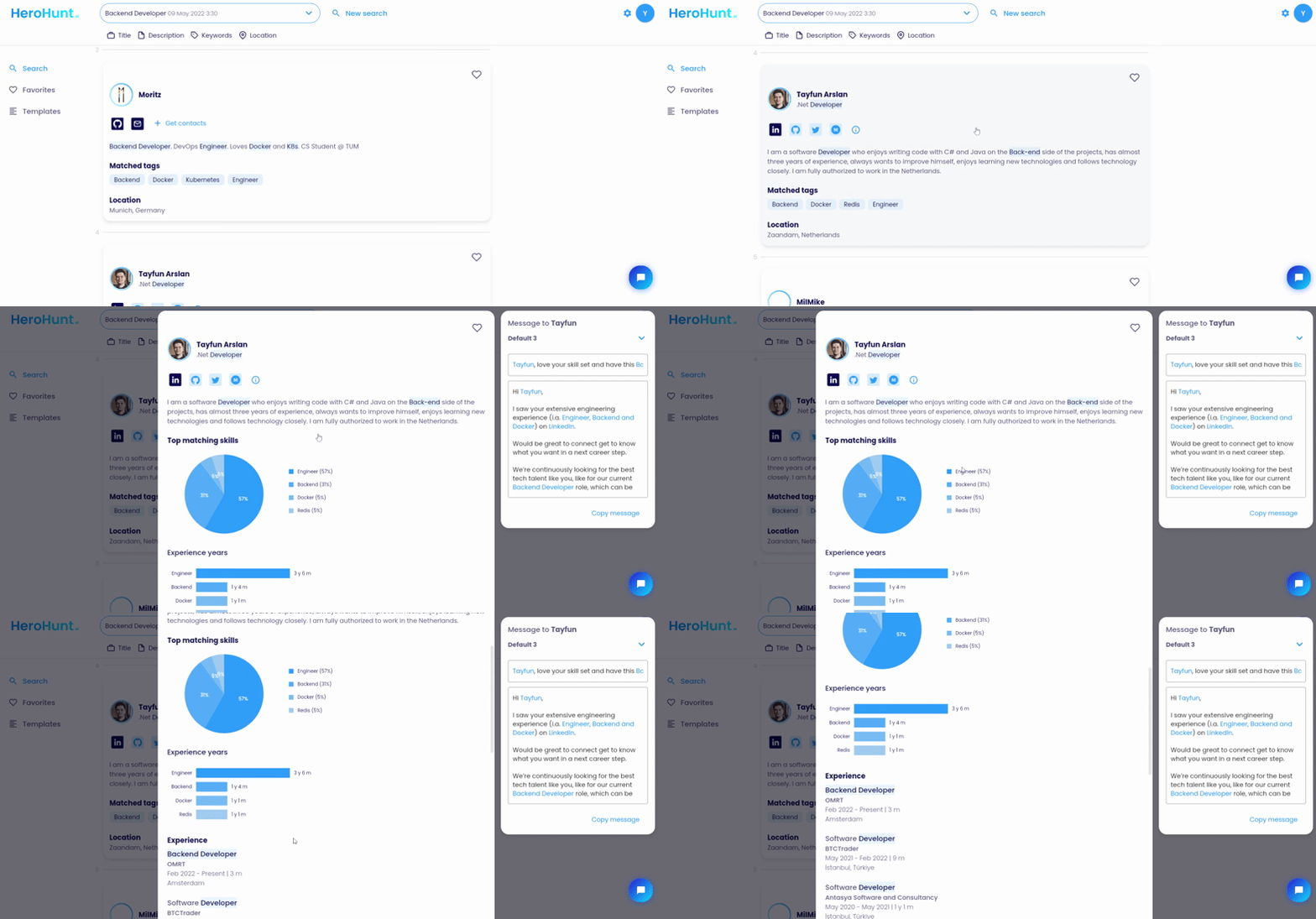
After HeroHunt.ai has found the selection of best matched candidates for your job position, you can start your own screening of the profiles. By clicking on a profile, you get to see the extended candidate information including summary, skills and top matched skills, experience years, job history, languages and social links.
This information can be used to assess whether the candidate is indeed a good fit so you can reach out to them.
Screening a handful of profiles by hand is fine. Screening a few hundred, or re-screening the candidates already sitting in your database every time a new role opens, is where recruiters lose days. This is the point to let software score for fit before you read anything. An applicant tracking system with AI candidate scoring, such as Manatal, reads each candidate against the criteria pulled from the job (skills, years of experience, education, languages, location) and returns a 0-100 fit score with a line by line breakdown of what matched and what did not, so you open the top of the ranked list first instead of the top of the alphabet.
3. Further research
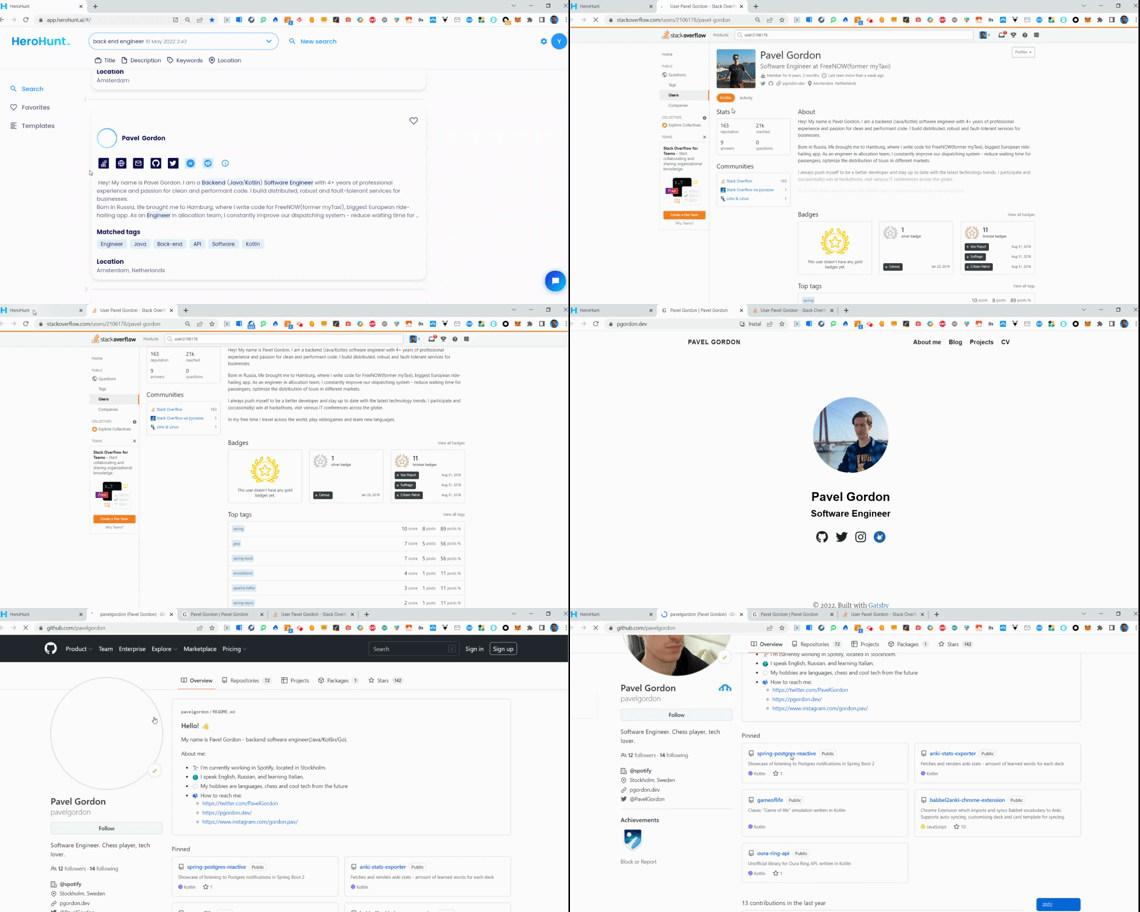
If you want to deep dive into the background and online presence of the candidate you can follow their social links which HeroHunt.ai finds for you and includes in the profiles. This way you can really get a good sense of who the candidates are and what they have been contributing so far to the tech community and companies they worked for.
If it’s a software engineer candidate, you can look at the code that they shared with other engineers for example. If it’s a marketeer you’re looking for, you can see what content they have created.
4. Optional: candidate assessment
You can have the candidate do an assessment before you invite them for an interview. For a software engineer this is typically a coding test that checks the core technical skills the job actually needs. Treat it as the step that verifies what earlier screening could only estimate: a fit score or a strong CV tells you someone is worth a closer look, an assessment tells you whether they can do the work.
One thing has changed since take-home tests became standard: candidates now have AI coding assistants. A generic algorithm puzzle that a model solves in seconds no longer tells you much. Screening for real ability in 2026 leans towards work-sample tasks that mirror the actual job, short live or pair-programming sessions, and specific questions about the candidate's own past code, all of which are far harder to fake than a solved LeetCode-style prompt.
Screening tech candidates, in short
Efficient screening is a funnel, not a single act. You filter millions of profiles down to a relevant few with a matching tool like HeroHunt.ai, you rank and screen that shortlist by fit (by hand for a few, with an ATS scoring engine once the pile is large), you research the strongest candidates through their real work, and you verify the finalists with an assessment. Each step removes noise the previous one could not, so by the time you reach out you are spending your effort on the people genuinely likely to be a match.