



Start with the thing most of these tools will not tell you: an AI resume score is the vendor's own number, not the employer's. When a tool says your resume is a 92% match, that figure came out of that vendor's algorithm. It did not come from Workday, Greenhouse, Lever or whichever applicant tracking system the employer actually runs, and none of those systems return a grade like it. Recruiters search and filter inside their ATS, they do not sort by a match percentage.
That does not make these tools useless. It makes them useful for a narrower job than they advertise. The real problems they catch are concrete: a resume that parses into garbage because it was built in a two-column template, and a resume that never uses the words the job description uses. Both are genuine reasons good candidates get missed, and both are cheap to fix. Treat the score as a checklist, not a verdict.
Below are four tools worth the time, ordered by how well they do the assessment job. Every price was checked against the vendor's own pricing page in July 2026. Two of the four are free, which is worth knowing before you subscribe to anything.
- Jobscan
- ResyMatch.io
- Rezi
- Zety
| Tool | What it is really for | Free option | Paid entry price |
|---|---|---|---|
| Jobscan | Keyword gap analysis against one job description | 5 scans per month | $49.95/mo, or about $29.98/mo billed quarterly |
| ResyMatch.io | The same job, free | Yes, credit-based scans | Optional unlimited upgrade |
| Rezi | Building an ATS-safe resume from scratch | 1 resume, 3 PDF downloads | $29/mo, or $149 lifetime |
| Zety | Templates and formatting | Preview only, no formatted download | Paid trial that auto-renews |
1. Jobscan
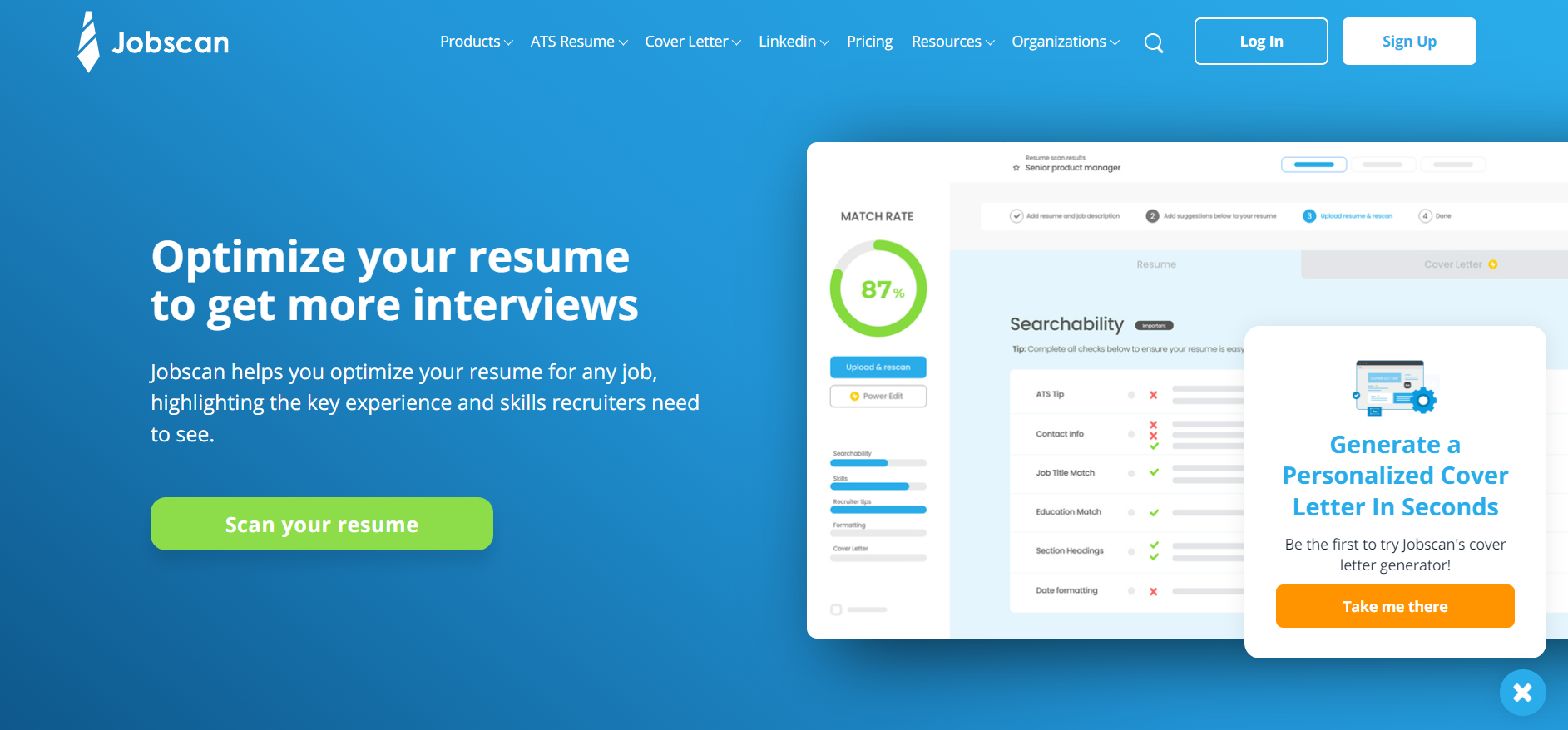
Jobscan is the most established tool in this category. You paste in a resume and a job description, and it returns a Match Rate plus a list of hard skills, soft skills and job titles that appear in the posting but not in your resume. That keyword gap list is the part with real value, because it is objective: either the posting says "Kubernetes" and your resume does not, or it does not.
Price: Premium is $49.95 per month, or roughly $29.98 per month when billed quarterly - Jobscan pricing. The free tier gives you 5 scans per month with no watermark and no expiry, which is enough for most people applying to a handful of carefully chosen roles.
The honest caveat: $49.95 a month is a lot for keyword matching, and the Match Rate is Jobscan's own metric rather than anything an employer sees. Chasing a higher number by stuffing in keywords produces a resume that reads badly to the human who ultimately makes the call. Use the gap list, ignore the score once it clears the obvious misses, and cancel when you stop applying.
2. ResyMatch.io
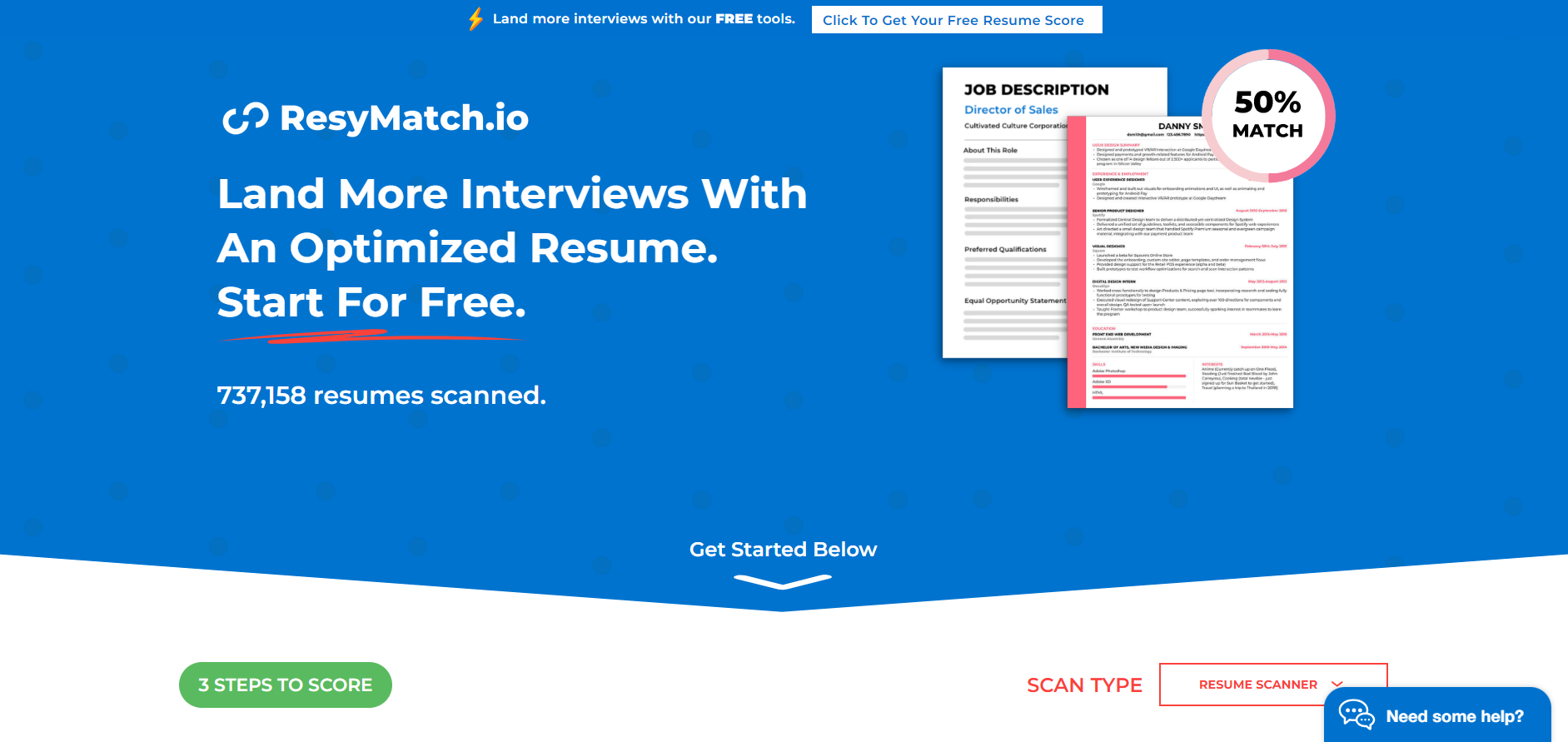
ResyMatch.io, built by Cultivated Culture, does substantially the same job as Jobscan and does it for free. It scores a resume against a target job description on ATS formatting, keyword matching and what it calls value illustration, meaning whether your bullets contain quantified results rather than duties. That last check is the one thing here that pushes on writing quality instead of keyword overlap, and it is the check most likely to change whether a human reads past your first bullet.
Price: Free. A free account gets you credit-based scans that refresh, and you can run a sample scan without an account at all. There is an optional paid unlimited plan if you are scanning constantly.
The honest caveat: it is a smaller operation than Jobscan, the interface is less polished, and full results require creating an account. If you only ever try one tool on this list, try this one first, because it costs nothing to find out whether the category helps you at all.
3. Rezi
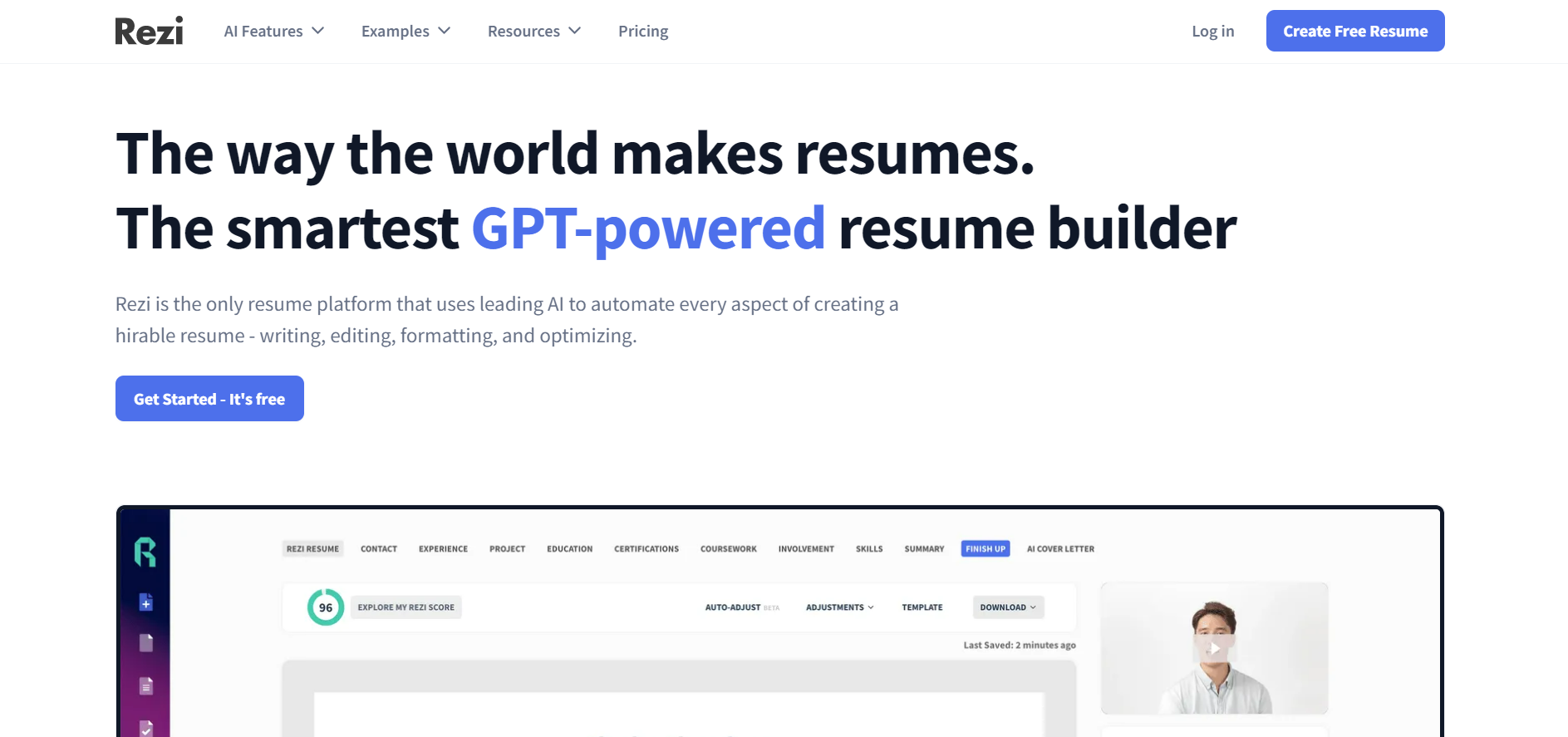
Rezi is a builder rather than a pure scanner, and it belongs here because its templates are built single-column and text-first, which is what actually survives resume parsing. Its AI writer drafts bullets from a job title and its Keyword Targeting tool flags terms from the posting you have not used. If your resume is currently a designed PDF that parses badly, rebuilding it in Rezi fixes the root cause instead of scoring the symptom.
Price - Rezi pricing: the free plan covers 1 resume, 3 PDF downloads and 1 AI interview. Pro is $29 per month for unlimited resumes, downloads and a monthly expert review by a human. There is a $149 lifetime plan (same features, no monthly expert review) and an Enterprise plan at $99 per month per 200 users. All paid plans carry a 30-day money-back guarantee.
The honest caveat: the free plan's 3-download cap is the real limit, since every edit-and-re-download burns one. AI-written bullets also arrive generic by default, so the output needs your actual numbers put into it. If you want it long-term, the $149 lifetime plan beats Pro after five months.
4. Zety
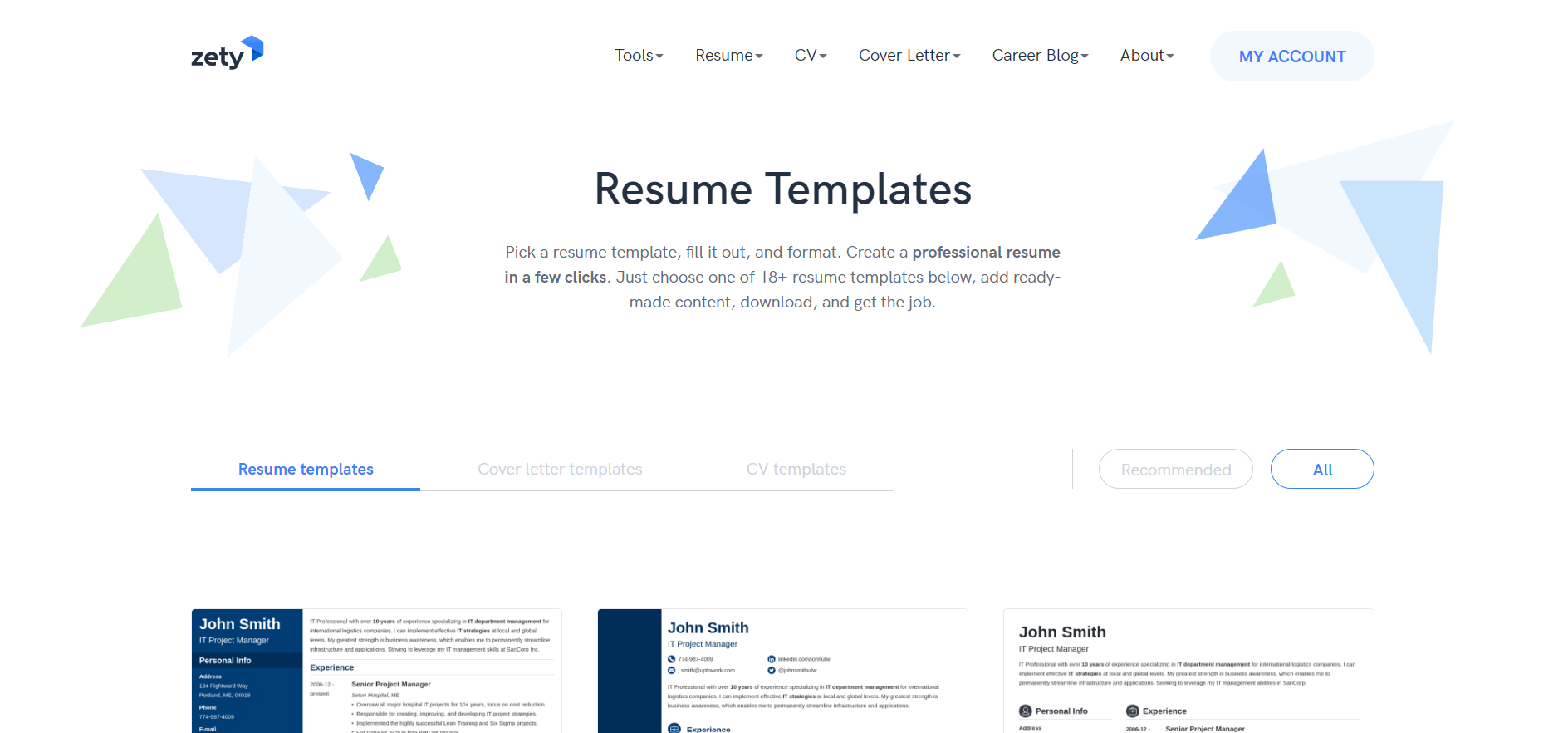
Zety is the weakest fit for this list and is included because it is the one people land on first. It is a template-driven resume builder with a Resume Check feature that flags length, word choice and missing sections. The templates are genuinely good looking and the guided editor is the easiest of the four to use, which is a real advantage if a blank page is what is stopping you.
Price: Zety does not publish a flat monthly rate the way Rezi does. Access to a formatted download runs through a low-cost paid trial that then auto-renews on a rolling cycle until you cancel, and the renewal amount is substantially higher than the trial. Read the renewal terms on the checkout screen before entering a card, and check the current figures on Zety's pricing page rather than trusting any third-party number, this one included.
The honest caveat: that billing model is the reason Zety ranks last here. The free tier lets you build and preview but not download a formatted file, so the "free" resume is not free at the moment you need it. Its assessment is also the thinnest of the four: it reviews your resume in isolation and does not compare it against a specific job description, which is the actual task the other three do.
How to use these without wasting money
The sequence that works: run one free scan on ResyMatch.io to see whether your resume has a formatting or keyword problem at all. If it parses cleanly and already mirrors the posting's language, you do not need any of these tools and no subscription will help you. If it does not, fix the format first (single column, real text, standard section headings, no tables or text boxes), then fix the vocabulary against each specific posting.
One more thing changed since these tools launched. A general-purpose AI assistant will now do a competent job of comparing a resume against a job description for free if you paste in both and ask what is missing. It has no ATS-specific parsing check, which is the one thing the dedicated tools do that a chatbot does not, but for the keyword and phrasing half of the work it is a real substitute. That is worth knowing before you pay $49.95 a month for the same comparison.
For recruiters, the takeaway runs the other way. If candidates are optimizing resumes against your postings, the resume is a progressively weaker signal of who is actually good, and the vocabulary in your job description quietly becomes a filter on who gets through. The fix is not a better resume scanner. It is sourcing and evaluating people on evidence outside the resume, and writing postings whose language does not exclude the people you want.