



LinkedIn recently announced their new generative AI features for LinkedIn Recruiter. Of course, many of these features are enabled by GPT, the algorithm from OpenAI which is partly owned by Microsoft, which owns LinkedIn...
After a lot of new platforms in the market launched generative AI in their recruitment tools, AI messaging tools and completely automated ways of recruitment, LinkedIn had to follow.
The new LinkedIn features are introduced to support the recruitment process by automating tasks with features powered by GPT.
In this blog we provide an overview of the new features:
AI-assisted candidate discovery
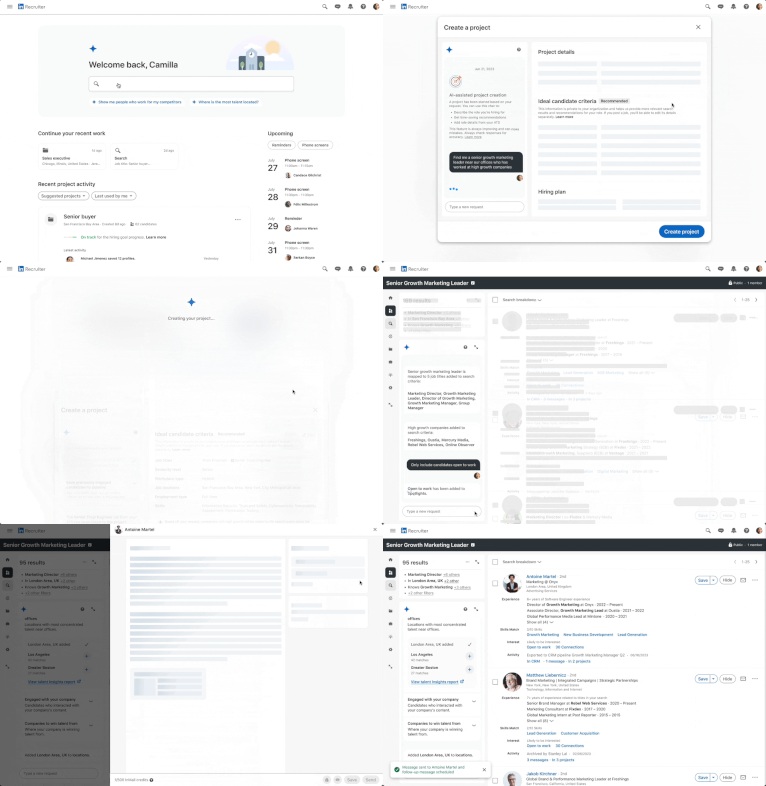
Sourcing, filtering, and selecting suitable candidates is a time-consuming process for recruiters. With AI-assisted candidate discovery, LinkedIn Recruiter aims to streamline this process. Although the features seem very similar to the filters that were already in place in LinkedIn Recruiter, there are some new features that stand out like autogenerated keywords.
What's new in LinkedIn Recruiter:
- Chat based interface to talk to LinkedIn Recruiter to get to your search results instead of using filters and boolean strings
- Location suggestions to identify talent in nearby areas
What the new LinkedIn Recruiter does not offer:
- Search across several platforms to find candidates, like developer platforms, CV databases or other social media platforms
Smarter suggestions
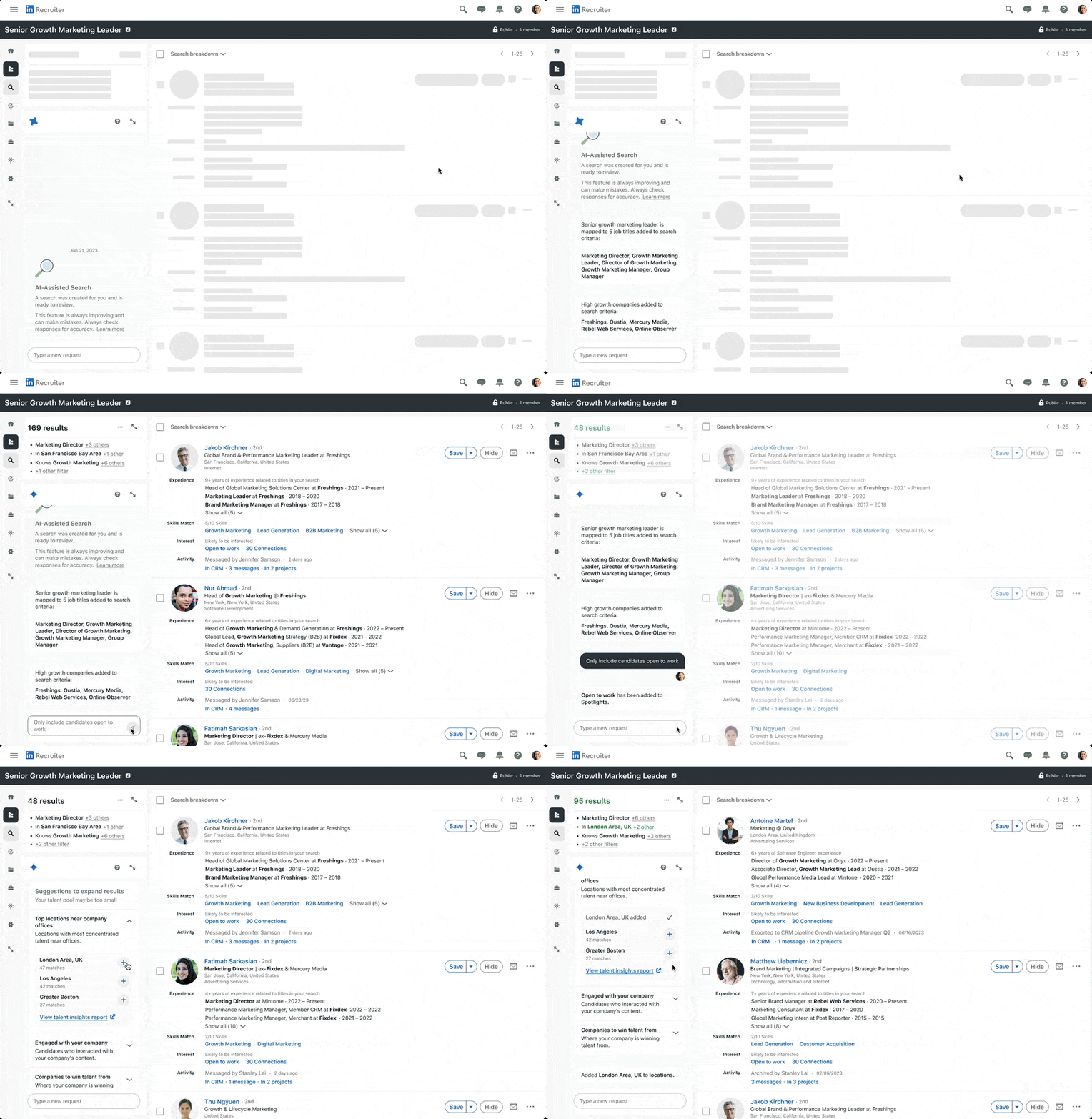
LinkedIn Recruiter now offers smarter suggestions to expand search results. These suggestions cover various criteria such as locations, job titles, skills, and companies.
What's new in LinkedIn Recruiter:
- Recommendations for additional parameters that recruiters may not have considered
- Search broadening to potentially uncover hidden talent
What the new LinkedIn Recruiter does not offer:
- Completely automated search and recruitment is not something LinkedIn offers, other recruitment tools still offer a higher level of automation in the recruitment process
Update: what LinkedIn shipped after 2024
Since this article first ran in April 2024, LinkedIn moved from GPT-assisted filters to a full recruiting agent. The headline release is Hiring Assistant, which LinkedIn calls its first AI agent for recruiters. It was announced to charter customers in October 2024 and became globally available in English at the end of September 2025 - LinkedIn News.
Hiring Assistant goes further than the chat-based search covered above. It takes an intake brief, runs dozens of searches on its own, pre-screens candidates over InMail (confirming things like location and availability), and drafts outreach. LinkedIn reports that charter customers reviewed 62% fewer profiles, saved 4+ hours per role, and saw a 69% improvement in InMail acceptance after switching it on. Named early adopters include Microsoft, Siemens, AMD, Chewy and Expedia Group.
The chat-based discovery this article described in 2024 also matured into AI-Assisted Search, now available to English-speaking Recruiter customers. You describe the candidate in plain language, LinkedIn prepopulates the search fields, suggests skills and locations you may have missed, and still lets you paste a Boolean string when you want precision. It draws on LinkedIn's graph of more than 1 billion professionals, 65 million companies and 40,000 skills. AI-assisted messaging was expanded too, so a sourcer can personalise outreach to 25 prospects at once with tone and length controls.
What LinkedIn still does not do
The core limitation flagged in 2024 has not changed: every one of these features works inside LinkedIn's own graph. Hiring Assistant and AI-Assisted Search do not reach into developer platforms, CV databases, or other social networks, and they surface LinkedIn profiles rather than verified contact details you can email or call directly. The agent is assistive by design, it drafts and shortlists while a recruiter still runs the project, and all of it sits behind a paid LinkedIn Recruiter seat.
That gap is what other tools compete on. Fully autonomous platforms such as HeroHunt.ai's RecruitGPT source across many platforms from a single prompt and return candidates with contact data, rather than keeping the search locked to one network. For a current, feature-by-feature walkthrough of everything LinkedIn has added since, see our LinkedIn Recruiter AI features guide for 2026, and for the 2025 rollout the 2025 overview.
Written by Yuma Heymans (@yumahey), who built HeroHunt.ai, the world's first AI Recruiter, now used by 15,000+ recruiters to source and reach candidates across platforms on autopilot.
This update reflects LinkedIn Recruiter as of July 2026. Features and availability change often, so verify current details with LinkedIn before you buy.