


A field guide to the hiring marketplace OpenAI announced, the one it has not shipped yet, and the recruiting moves that pay off either way.
OpenAI has committed to certify 10 million Americans by 2030 and match them to jobs by their AI skills rather than their resumes - TechCrunch. That is a remarkable thing for a research lab to announce, because it means the company that convinced the world AI would reshape work now wants to run the marketplace where the reshaped work gets hired. The OpenAI Jobs Platform, unveiled on September 4, 2025, was pitched as a direct challenge to a hiring establishment that most recruiters use every single day.
Here is the problem, and it is the reason this guide exists: the platform is not live. As of this writing in August 2026, the standalone marketplace has slipped past its own mid-2026 target with no public beta, no waitlist, and no revised date - Talent Acquisition Leader. Meanwhile the parts that did ship, a certification program and a job-search app living inside ChatGPT, are already changing how candidates find work. A recruiter who waits for the marketplace to appear will be late. A recruiter who understands the strategy behind it can act now.
This guide covers what OpenAI actually announced versus what has shipped, how the matching model is meant to work, the certification program that is quietly becoming a hiring signal, the partners and incumbents in play, and a practical recruiter playbook you can run this quarter. It leans entirely on late 2025 and 2026 sources, because in this market a year-old take describes a product that no longer exists.
Written by Yuma Heymans (@yumahey), who built HeroHunt.ai and has spent the last five years building autonomous recruiting software, which is mostly an education in how hard the matching problem OpenAI just took on really is.
Contents
- What OpenAI Actually Announced
- The State of Play: What Shipped, What Slipped
- How the Jobs Platform Is Meant to Work
- OpenAI Certifications: The Credential Trying to Become the Screen
- The Partners: Walmart, Indeed, and the Coalition Behind It
- Why This Is Aimed at LinkedIn (and the Microsoft Paradox)
- The Incumbent Landscape OpenAI Is Walking Into
- AI Fluency as a Hireable Skill: The Signal Everyone Is Chasing
- What Changes for Recruiters: Inbound Platform, Outbound Sourcing
- The Playbook, Part 1: Prepare Your Employer Footprint for AI Matching
- The Playbook, Part 2: Hire on Skills and Read the Certification Signal
- The Playbook, Part 3: Pair the Platform With Proactive AI Sourcing
- When Both Sides Automate: The AI-versus-AI Problem
- Risks, Unknowns, and Reasons for Caution
- Future Outlook: Agent-to-Agent Hiring and the 2027 Market
- The Decision: A 90-Day Recruiter Playbook
1. What OpenAI Actually Announced
OpenAI announced two connected products on September 4, 2025, and the distinction between them is the single most important thing for a recruiter to hold onto. The first is the OpenAI Jobs Platform, an AI-powered hiring marketplace that promises to match employers and candidates on demonstrated skill. The second is OpenAI Certifications, a credentialing program that lets people learn and prove AI fluency inside ChatGPT. Both were introduced in a blog post titled "Expanding economic opportunity with AI," written by Fidji Simo, OpenAI's CEO of Applications and the former chief executive of Instacart - OpenAI.
The framing was deliberately grand and deliberately defensive. OpenAI has spent years arguing that its models will change the nature of work, which invites an obvious question about who gets hurt in the transition. The Jobs Platform is the company's answer: an attempt to position itself as both the cause of the disruption and part of the cure. Simo wrote that the goal is to "help everyone, at every level, take advantage of the opportunities that come with AI" rather than a fortunate few - The AI Insider. For talent leaders, the marketing is less important than the mechanism, and the mechanism is a bet that skills, not pedigree, should drive matching.
The most concrete promise concerned the matching itself. OpenAI said it would "use AI to help find the perfect matches between what companies need and what workers can offer," matching on demonstrated AI competency rather than keyword-stuffed resumes or inflated job titles - Entrepreneur. The platform was also promised a dedicated track for small and local businesses and for local governments, so that a county office or a family firm could compete for AI talent against companies with recruiting budgets a hundred times larger. That small-business angle is easy to skim past, but it is where OpenAI thinks the incumbents are weakest.
The person behind the pitch matters here, because a project this ambitious lives or dies on executive sponsorship. Fidji Simo joined OpenAI in May 2025 into a newly created number-two role, consolidating product, operations, and finance under a single applications chief reporting to Sam Altman - TechCrunch. She was the public face of the Jobs Platform, the executive who framed it, defended it, and staked her credibility on it. As we will see in the state-of-play section, her situation changed in a way that matters for anyone forecasting when the marketplace actually ships.
The executive who announced it

Notice how much of the announcement was intent rather than product. There was no demo, no screenshot of a working matching engine, and no candidate you could search. That is normal for a strategy announcement, but it should set your expectations: what OpenAI shipped on September 4 was a thesis about hiring, backed by a certification program and a roster of partners, not a marketplace you could log into. The rest of this guide takes that thesis seriously while keeping the ship dates honest.
2. The State of Play: What Shipped, What Slipped
Start with the fact that changes how you should read every other claim in this article: the OpenAI Jobs Platform marketplace is not live, and its stated mid-2026 launch window came and went without a beta, a waitlist, or a new date - Talent Acquisition Leader. This is a single-source observation from a trade outlet rather than an OpenAI delay statement, so treat it as the current best read rather than a confirmed cancellation. But the absence of any launch signal, ten-plus months after the announcement, is itself information. If you are building a hiring plan around this platform for the current quarter, build it around what exists, not around the roadmap.
What exists is real and worth using. The Certifications program shipped, with its first course, "AI Foundations," launching in December 2025 and three free public certificate courses opening in mid-2026 - Analytics Vidhya. Separately, OpenAI and Indeed launched the Indeed app inside ChatGPT on February 10, 2026, which lets a job seeker discover roles conversationally in ChatGPT and then complete the application on Indeed's own site - Indeed. That app is not the Jobs Platform, but it is the clearest live glimpse of OpenAI's real advantage: hundreds of millions of people already open ChatGPT, and job search is now one of the things they can do there without leaving.
The delay risk got materially worse in the summer. On July 9, 2026, Fidji Simo announced she would step down from her operational number-two role to a part-time advisory position while retaining a board seat, after a roughly three-month medical leave for a chronic illness - CNBC. The human story deserves respect and is not the point here. The organizational point is that the platform's principal champion moved part-time before the product she announced had shipped, and initiatives lose momentum when their sponsor steps back. None of this means the project is dead, and no such statement exists, but it does mean a prudent recruiter should not assume an imminent launch.
There is also an informed-skeptic case worth internalizing, because it comes from someone who has watched this movie before. The industry analyst Josh Bersin greeted the announcement by noting how familiar the language sounded: "This is the same language LinkedIn used in March of 2008 when they launched LinkedIn Recruiter," he wrote, adding that Google Jobs and even Facebook tried to crack hiring and discovered "it's quite complex" - Josh Bersin. His verdict was that the Jobs Platform "may be one of the good ideas at OpenAI that demands more product management than they realize." Hold both truths at once: the strategy is serious and the distribution is real, and the execution risk is also real. A working matching marketplace is one of the hardest products in HR technology to build well.
The Firstpost segment below, aired within days of the announcement, is a useful primer on why the market reacted the way it did, and on the LinkedIn-challenger framing that dominated the coverage. It is a good ninety-second orientation before we get into the mechanics.
OpenAI Takes on LinkedIn with a New AI-first Jobs Platform
The takeaway for planning is simple. Treat the Jobs Platform as announced but unshipped, treat the Certifications and the Indeed-in-ChatGPT integration as live and usable today, and treat the leadership change as a reason to keep your near-term hiring plan independent of OpenAI's roadmap. Everything in the playbook chapters is designed to pay off whether the marketplace launches next quarter or next year.
3. How the Jobs Platform Is Meant to Work
The core design idea is to replace resume-and-title matching with skill-and-evidence matching, and to let a language model do the reading. In OpenAI's description, the platform "uses AI to help find the perfect matches between what companies need and what workers can offer," which in practice means the model interprets a candidate's demonstrated abilities against an employer's actual requirements rather than counting keyword overlaps - TechCrunch. Anyone who has run a Boolean search on a job board knows why this is appealing. Keyword matching rewards people who write good resumes, not people who do good work, and it misses candidates who describe the same skill in different words.
The second design idea is that the credential and the marketplace are meant to reinforce each other. If millions of workers earn an OpenAI Certification that proves a specific level of AI fluency, and if the marketplace can read those certifications as structured evidence, then matching gets a verified signal that a self-reported skills list never provides. This is the mechanism behind the small-business track OpenAI emphasized: a local employer who cannot afford a sourcing team could, in theory, post a role and let the platform surface certified, skill-matched candidates automatically - UNLEASH. The promise is that AI does the sourcing work that only large teams can currently afford.
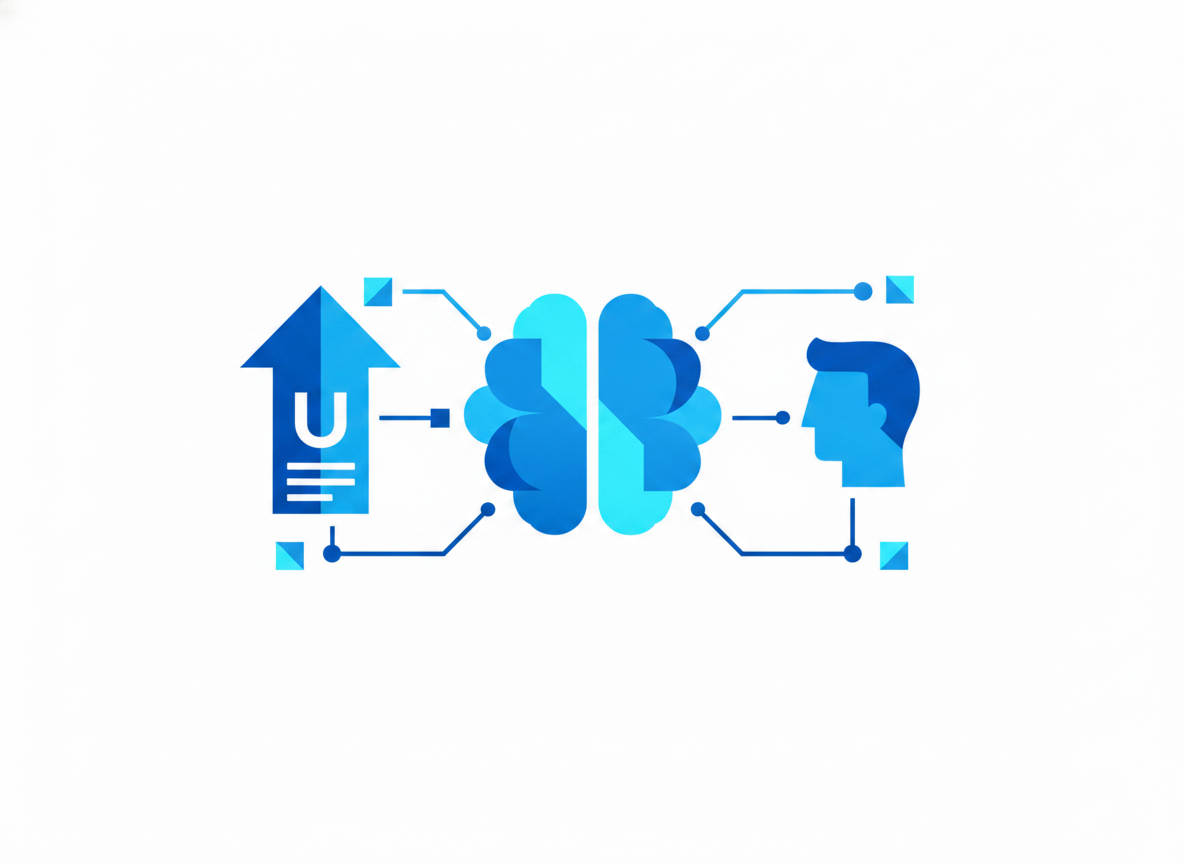
It helps to see the intended flow as a pipeline, because it clarifies where the human decisions still live and where OpenAI wants the model to take over. The diagram below sketches the design as described, not a shipped product, so read it as OpenAI's blueprint rather than a feature you can test today.
Trace the path and you can see both the ambition and the missing pieces. The left branch, where a worker studies in the Academy and earns a certification, is the part that actually shipped. The right branch, where an employer posts a role and a model returns a ranked shortlist, is the part that has not. The connective tissue between them, the matching engine that reads verified skill evidence against a live requisition, is the hardest thing to build and the thing OpenAI has not shown. That is precisely the gap Josh Bersin flagged: the credential is straightforward, and the marketplace is where the complexity hides.
The deeper reason the marketplace is hard is that it is two-sided, and two-sided markets fail on the empty side first. A jobs platform is worthless to candidates until enough employers post real requisitions, and worthless to employers until enough qualified candidates are present, which is the cold-start problem that has sunk most challengers. OpenAI's answer is to seed both sides at once: the certification program manufactures a supply of skill-verified candidates, and the partner coalition supplies early employer demand. Whether that seeding produces genuine liquidity, the point at which the platform matches better than the network a recruiter already uses, is the open question, and it is not one that better models alone can answer.
For recruiters, the practical implication is that skill-first matching is the direction of travel regardless of who ships it. LinkedIn, Indeed, and a wave of startups are all building toward the same model, so the tactics in this guide (writing requirements as demonstrable skills, reading credentials as evidence, and pairing inbound matching with outbound sourcing) apply no matter which platform wins. OpenAI's version is notable because of its distribution and its data, not because the concept is unique to it.
4. OpenAI Certifications: The Credential Trying to Become the Screen
The certification program is the part of the announcement that shipped, and it is the part most likely to touch your screening process first. OpenAI Certifications extend OpenAI Academy, the company's free learning hub, which already counted more than 2 million users at the time of the announcement - Campus Technology. The program spans tiers, from the basics of using AI at work up through prompt engineering and AI-custom roles, with study and assessment happening inside ChatGPT itself. The stated ambition is to certify 10 million Americans by 2030, a number that only makes sense given OpenAI's consumer reach - TechCrunch.
The mechanics matter, because they determine how much a certification is actually worth as a hiring signal. The first public course, "AI Foundations," is not a timed multiple-choice quiz. It is a scenario-based, hands-on assessment in which the learner completes work-sample tasks inside ChatGPT, with the assessment design built alongside ETS and badges issued through Credly, the Pearson-owned credentialing service - TechRepublic. A work-sample credential is inherently more informative than a knowledge quiz, because it measures whether someone can do the task rather than whether they can recognize the right answer. That is a meaningful difference when you are deciding how much weight to give the badge on a resume.
It is important not to conflate the free courses with the full certification, because they are gated differently. In mid-2026, OpenAI opened three self-paced certificate courses to the general public with no employer sponsorship, no waitlist, and no payment: AI Foundations, Applied AI Foundations, and Agents and Workflows - Analytics Vidhya. The full, proctored OpenAI Certification, the one designed to be a rigorous and portable credential, has stayed gated to employer pilots. So when a candidate lists an OpenAI credential in 2026, your first question should be which one, because a free self-paced course completion and a proctored certification are not the same evidence.
Adoption has been concentrated in a few large employers rather than spread across the open market, which tells you where the signal is real today. The most concrete rollout number came in early December 2025, when OpenAI confirmed the certification pathway had reached more than 10,000 Accenture employees, the largest single cohort upskilled through the program at that point - Forbes. That is a genuine milestone, but it is one enterprise's internal training program, not a market-wide credential yet. The gap between the 10-million goal and a five-figure early cohort is the distance the program still has to travel.
It is worth situating this against the credentials recruiters already know. Cloud certifications from AWS, Google, and Microsoft became hiring signals precisely because they were standardized, verifiable, and backed by companies whose scale made the credential ubiquitous. OpenAI is attempting the same move for AI fluency, and it has two of those three ingredients in abundance: verifiability through work-sample assessment, and the scale to make the badge common. The missing ingredient is time. A credential earns its weight in the market slowly, as enough hires who hold it succeed that employers learn to trust it, and no amount of distribution shortcuts that seasoning. Expect the OpenAI certification to be a soft positive in 2026 and a stronger one only if the cohorts who carry it visibly perform.
For a recruiter, the actionable stance is to start treating a proctored OpenAI Certification as a real, work-sample signal of AI fluency, while treating a free-course badge as a weaker positive that shows initiative more than mastery. Do not over-index on either. A certification tells you someone can use AI tools competently, which is increasingly table stakes, but it says nothing about the domain skills, judgment, and collaboration that actually determine whether a hire works out. The credential is a useful new input to your screen, not a replacement for it.
5. The Partners: Walmart, Indeed, and the Coalition Behind It
OpenAI did not launch this alone, and the partner roster is the strongest evidence that the initiative is serious rather than a press release. The anchor partners named at launch included Walmart, John Deere, Boston Consulting Group, Accenture, Indeed, and the State of Delaware, with community and government groups such as the Texas Association of Business and the Bay Area Council also involved - Open Data Science. Over the following months the certification-backing list grew to include names like Lowe's, Hearst, and Russell Reynolds Associates. This is a coalition that spans retail, industrials, consulting, and state government, which is exactly the breadth OpenAI needs if the credential is going to mean something across industries.
The Walmart commitment is the headline, because scale is the whole story. Walmart is the largest private employer in the United States, and it said it would offer free OpenAI certification to its US associates through Walmart Academy starting in 2026 - Entrepreneur. One number is worth getting exactly right here, because it is easy to inflate. The relevant figure for the OpenAI cohort is Walmart's roughly 1.6 million US associates, not the 3.5 million total participants sometimes cited for Walmart Academy as a whole, which is a broader and largely global training program. Walmart's US CEO John Furner framed the effort as putting "the most powerful technology of our time" into associates' hands so they could "rewrite the playbook" for retail.
Government participation gives the credential a different kind of legitimacy, though it comes with thinner numbers. Delaware became the first US state to partner with OpenAI on the certification program, running it through its Office of Workforce Development, with Governor Matt Meyer saying "Delawareans of all ages can learn these tools and put them to work" - State of Delaware. Notice the asymmetry: Delaware set no numeric target, and John Deere and BCG disclosed no headcounts. Only Accenture has attached a concrete rollout number so far. The honest reading is that this is a coalition of announced intentions with one confirmed large cohort, which is genuinely promising but not yet proof of mass adoption.
Indeed's role deserves a closer look, because it is the clearest example of the coopetition running through this whole story. Indeed is a named launch partner, and in February 2026 it shipped an Indeed app inside ChatGPT that lets job seekers discover roles conversationally and complete the application on Indeed's own site - Indeed. At the same time, Indeed builds and sells hiring products that compete head-on with the Jobs Platform's ambitions. Partnering with the company trying to disrupt you, while also arming yourself against it, is a rational hedge, and it tells you the incumbents take OpenAI seriously enough to keep one foot in each camp.
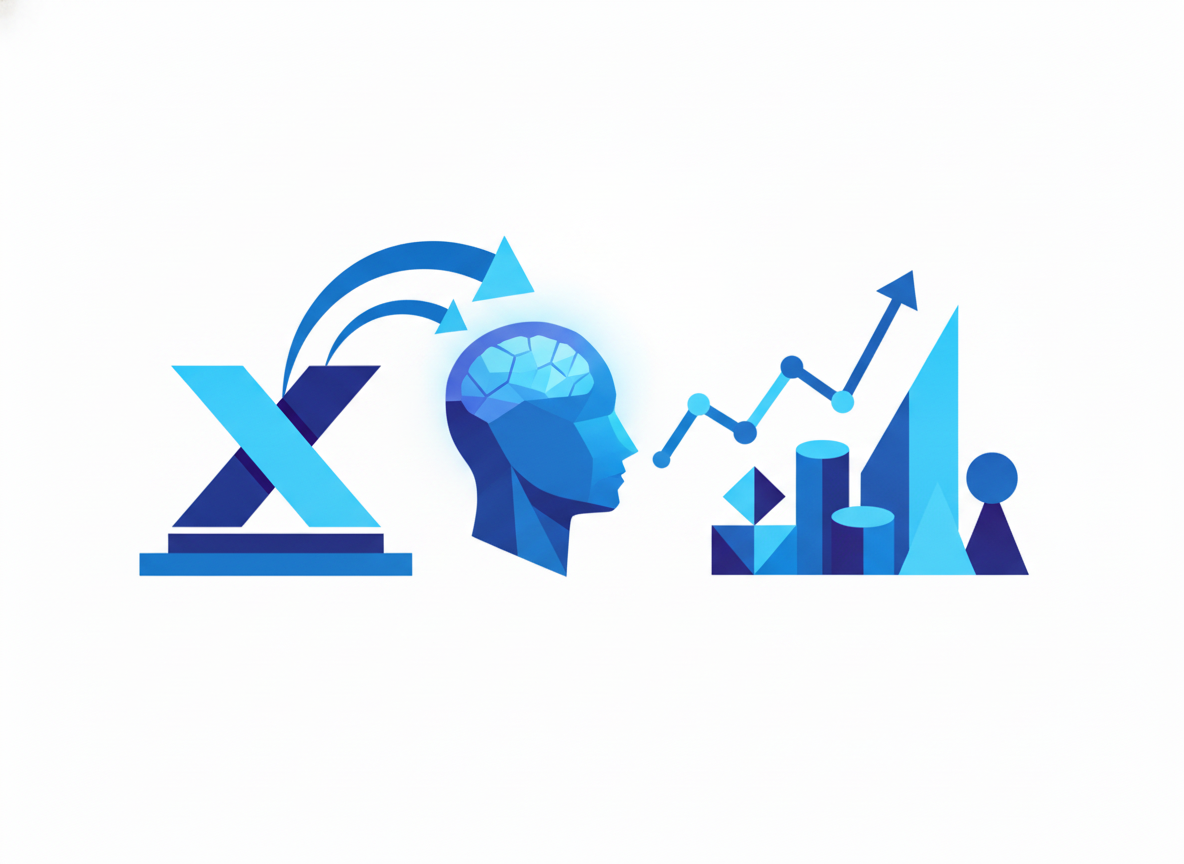
One announcement, two products
The pairing in that illustration is the strategic point: the certification is not a side project but the supply engine for the marketplace, which is why OpenAI announced them together. One more piece of context makes the coalition easier to interpret. The whole effort is aligned with the current administration's "America's AI Action Plan," released in late July 2025 to accelerate US AI adoption and literacy, which is why the language leans so heavily on national competitiveness and workforce readiness - UNLEASH. Read together, this is best understood as a serious but early-stage alliance of intentions, with real money behind the training side and a genuine hedge from the incumbents on the platform side. Why LinkedIn is the real target, and why that is complicated, is where we turn next.
6. Why This Is Aimed at LinkedIn (and the Microsoft Paradox)
Every serious outlet read the Jobs Platform as a shot at LinkedIn, and the read is correct even though OpenAI never used the word. LinkedIn is the default place where professional hiring happens, and a skill-matched, AI-native marketplace attacks the exact function LinkedIn monetizes most heavily. The press framing was immediate and consistent: OpenAI is "building an AI jobs platform that could rival Microsoft's LinkedIn" - CNBC. For a recruiter, the interesting question is not whether it is aimed at LinkedIn, but whether it can dislodge a product that is woven into your daily workflow.
The strategic wrinkle is a genuine paradox, and it is worth sitting with because it shapes how this rivalry can play out. Microsoft is OpenAI's largest financial backer, having invested on the order of 13 billion dollars, and Microsoft also owns LinkedIn, which it acquired in 2016 for roughly 26 billion dollars - CNBC. So OpenAI's biggest investor owns the incumbent OpenAI is attacking. Microsoft has already acknowledged the friction formally, listing OpenAI as a competitor in AI and search in its 2024 annual filing - TechCrunch. This is not a clean David-and-Goliath story. It is a company partly funded by the giant whose crown jewel it wants to disrupt.
The framing that dominated the coverage

The incumbent OpenAI is challenging is not weak, and the numbers explain why displacement is hard. LinkedIn reported 1.2 billion members in Microsoft's fiscal 2025 annual report, with four straight years of double-digit member growth - Microsoft. Its total revenue crossed 17 billion dollars for the first time in fiscal 2025, and its Talent Solutions segment, the recruiter licenses and job postings that talent teams pay for, is by most estimates the largest slice of that revenue - Yahoo Finance. LinkedIn is not standing still either: its newer agentic AI hiring products reportedly passed a 450-million-dollar annualized run rate by early 2026, according to industry reporting, so the incumbent is shipping AI features while the challenger is still pre-launch.
The distribution asymmetry is the fact most worth internalizing, because it is what makes this attempt different from the last one. Google Jobs and Facebook both tried to enter hiring from a position of enormous general traffic, but neither had a product people already used for work tasks the way people use ChatGPT. When a candidate is already inside ChatGPT drafting a cover letter or researching a company, surfacing a matching role is a small step rather than a new habit, and habits are the moat that job boards defend. OpenAI does not have to win a brand-new audience; it has to convert an audience it already owns into a hiring one, which is a materially easier problem than the one LinkedIn spent two decades solving.
That is the crux of the competitive picture. OpenAI has something LinkedIn cannot easily replicate, a consumer funnel of hundreds of millions of weekly users who already trust its product, and LinkedIn has something OpenAI has not built, a live hiring graph with a decade of recruiter workflows, a professional identity for over a billion people, and a shipping AI roadmap of its own. Whoever wins does so by closing their specific gap faster than the other closes theirs. The next chapter widens the lens to the rest of the field, because LinkedIn is not the only incumbent with something to lose.
7. The Incumbent Landscape OpenAI Is Walking Into
Before you weigh OpenAI's odds, it helps to see the full board, because the online-hiring market is large, fragmented, and already under AI-driven stress. The US online recruitment sites industry alone is worth roughly 18.8 billion dollars, and global estimates run higher depending on how the category is scoped - IBISWorld. This is a big prize, which is why so many players are chasing it, but it is also a mature market where distribution and data compound, and where new entrants have repeatedly underestimated how sticky recruiter habits are.
The incumbents differ enormously in scale and health, and the honest way to compare them is to be explicit that the metrics are not identical. LinkedIn counts members, Indeed counts job-seeker profiles and monthly visitors, and the smaller players count their own populations. The chart below places them side by side purely to show orders of magnitude of reach, with each bar labeled by the metric it represents, so read it as a rough sense of scale rather than an apples-to-apples ranking.
Reach of the major hiring platforms (mixed metrics, 2025-2026)
The health of these platforms is diverging in a way that reveals where OpenAI sees an opening. Indeed remains enormous, with hundreds of millions of monthly visitors and a vast profile database, but its parent company Recruit Holdings cut about 1,300 jobs in July 2025, citing AI, and folded Glassdoor into Indeed the same month - TechCrunch. ZipRecruiter's trailing revenue fell to roughly 446 million dollars by early 2026, down sharply from a peak near 905 million, a stark illustration of job-board revenue pressure - Zippia. Handshake, the campus-recruiting platform, has quietly pivoted a large part of its business into AI-training data. The pattern is a two-speed market: several incumbents shrinking or repositioning while LinkedIn keeps growing.
Handshake's pivot is the most telling of these repositionings, because it shows where smart money thinks the value is moving. The campus-recruiting platform, built on a network of roughly 20 million students across around 1,600 universities, has increasingly leaned into supplying AI-training data rather than relying on job-board economics alone - Sacra. When a company sitting on a large, engaged talent audience decides its most valuable asset is the data that audience generates for training models, it is quietly conceding that the old job-board business is under pressure. That is the same pressure OpenAI is betting it can convert into an opening, and it is why the incumbents' discomfort matters more to your planning than any single platform's feature list.
There is a revealing sign of ambivalence even among the incumbents about how far AI will actually go. Recruit Holdings' CEO justified the 2025 layoffs on AI grounds, then by January 2026 was publicly arguing that AI is not replacing workers, a notable softening of tone from a leader who runs the world's largest job board - Fortune. For a recruiter, the lesson is not to pick a winner but to notice the instability. When the biggest players are cutting staff, merging brands, pivoting into new businesses, and reversing their own public messaging, the market is genuinely in flux, and flux is when a well-funded entrant with a new distribution channel has its best shot.
8. AI Fluency as a Hireable Skill: The Signal Everyone Is Chasing
OpenAI's entire thesis rests on a labor-market shift that is measurable and real: AI fluency has become a priced, sought-after skill rather than a nice-to-have. The clearest evidence comes from Lightcast, whose July 2025 analysis of more than 1.3 billion job postings found that jobs requiring AI skills carry a 28 percent salary premium, worth roughly 18,000 dollars a year, and that roles requiring two or more AI skills pay 43 percent more - Lightcast. That 28 percent figure appears in OpenAI's own framing of the Jobs Platform, which is not a coincidence. The company is building a marketplace around exactly the premium its own technology helped create.
The demand curve is steep, and it explains the urgency behind a 10-million-certification goal. The number of workers in occupations that explicitly require AI fluency grew roughly sevenfold in two years, from about 1 million in 2023 to around 7 million in 2025, and AI fluency ranks near the top of employers' stated hiring priorities for 2026 - Gloat. The chart below shows that trajectory, and it is worth pausing on because it is the demand signal every hiring platform is now racing to serve.
Workers in AI-fluency-required occupations (US, millions)
This shift dovetails with a broader move toward skills-based hiring that predates OpenAI and gives its credential a ready-made home. Surveys in 2026 report that a large majority of employers now treat skills-based hiring as the future, that more than half have dropped degree requirements for some roles, and that companies including IBM, Google, and Bank of America have removed four-year-degree requirements from many postings - iMocha. When degrees stop functioning as the default filter, something has to replace them as a signal of capability. A verified, work-sample AI credential is a plausible candidate for that role, which is precisely why OpenAI, LinkedIn, and Indeed are all investing in credential-and-skill matching at the same time.
The practical consequence for recruiters is that AI fluency is becoming a first-class screening dimension, not a bonus line on a resume. If a role genuinely benefits from AI-assisted work, and most knowledge roles now do, then you should be defining what "AI fluent" means for that specific job, looking for demonstrable evidence of it, and being willing to pay the premium the market has already set.
That premium has a direct budgeting consequence most compensation plans have not caught up to. If the market pays 28 percent more for a single AI skill and 43 percent more for two or more, then a comp band built on last year's benchmarks will quietly price you out of exactly the candidates you most want, and you will lose them without ever learning why. The fix is to benchmark AI-fluent roles as their own category rather than folding them into a generic salary band, and to decide deliberately which roles justify the premium and which do not. Treating AI fluency as free is the fastest way to a pipeline full of people who could not command it. The teams that treat AI fluency as a vague plus will lose candidates to the teams that define it precisely and screen for it deliberately. OpenAI's certification is one way to read that signal, but it is not the only one, and the next chapters turn the analysis into an operating plan.
9. What Changes for Recruiters: Inbound Platform, Outbound Sourcing
The most useful mental model for the whole OpenAI shift is the oldest distinction in recruiting: inbound versus outbound. An AI-native jobs platform, whether it is OpenAI's, LinkedIn's, or Indeed's, is fundamentally an inbound system. It helps the right candidates find and match to your open roles, and it improves the quality of applicants who come to you. That is genuinely valuable, and for high-volume roles where enough qualified people are actively looking, a better inbound match engine can be most of the job. But inbound has a structural ceiling, and understanding that ceiling is the key to using these platforms well.
The ceiling is this: an inbound platform can only match you to people who are on it and open to moving. It does nothing for the candidate who is not looking, not certified, and not searching, which describes most of the best people for most senior and specialized roles. This is why the smartest talent teams run two channels at once, and the diagram below shows how they fit together rather than compete. The inbound platform handles matching and volume; a proactive outbound sourcing function goes and finds the people who will never fill out an application.
The reason this matters more in 2026 than it did two years ago is that outbound sourcing itself has been transformed by AI, so the outbound channel is no longer the slow, manual grind it used to be. Autonomous sourcing agents now read a role brief, plan searches, screen candidates against written requirements, and draft outreach without a recruiter triggering each step. The appetite for this is real: 52 percent of talent leaders told Korn Ferry they plan to add autonomous AI agents to their recruiting teams in 2026 - Recruiterflow. So the modern two-channel model is not inbound-AI plus manual-outbound. It is inbound-AI plus outbound-AI, with the recruiter supervising both.
The strategic point for the playbook is that OpenAI's platform, even once it ships, addresses only the inbound half. It will make your job postings smarter and your applicant matching better, and it will do nothing for the roles that fail because the right person never applied. If your hardest requisitions are the ones where qualified people are scarce and passive, an inbound platform is the wrong tool for those specific roles no matter how good its matching gets. The next three chapters build the playbook around exactly this split: prepare for the inbound platform, hire on skills, and pair it with proactive sourcing for the roles inbound cannot reach.
10. The Playbook, Part 1: Prepare Your Employer Footprint for AI Matching
The first move costs nothing and pays off regardless of which platform wins: rewrite how you describe roles and your employer brand so that a language model can read them accurately. AI matching engines interpret meaning, not keywords, which means the quality of your inputs determines the quality of your matches. A vague, jargon-heavy job description that lists ten years of buzzwords will produce a technically correct and commercially useless match, because the model has nothing concrete to reason about. A description written in terms of demonstrable skills and real responsibilities gives the model the evidence it needs to find people who can actually do the work.
Start with your requirements, because they are the program the matching engine runs on. Rewrite each role as a short set of demonstrable skills and outcomes rather than a wish list of titles and tenure. Instead of "senior marketing manager with 8 or more years of experience," specify what the person must be able to do, such as owning a demand-generation budget, running lifecycle campaigns, and using AI tools to produce and test content at volume. This is the same discipline that skills-based hiring demands, and it happens to be exactly what an AI matcher reads best. The more your requisition looks like a description of the job to be done, the better any model, OpenAI's included, will match it.
A concrete example makes the difference tangible. Suppose you are hiring what you have always called a "senior content strategist." The title-based version of that requisition asks for a degree, seven years of experience, and a familiar list of tools, and an AI matcher will dutifully return people whose profiles echo those words back. The skills-and-outcomes version asks for someone who can own an editorial calendar, has shipped content that measurably moved pipeline, and can use AI tools to draft and test variations at volume. The second version takes longer to write and is far more useful, because it gives the model concrete, checkable capabilities to reason about, and it surfaces the strong candidate who happens to describe their background in different words. That rewrite is the single highest-leverage hour you can spend before any platform launches.
Your public employer footprint matters just as much, because AI-native discovery increasingly happens outside your careers page. When a candidate asks ChatGPT about roles at your company, or when an AI agent scans the open web to evaluate you as an employer, the model reads whatever is publicly available: your careers site, your reviews, your team's public work, your engineering blog. A thin or inconsistent footprint gives the model little to work with, while a rich, accurate one lets it represent you well. This is not traditional SEO, but it rhymes with it: you are optimizing not for a search ranking but for how accurately a language model can describe you to a candidate who never visits your site.
There is a defensive dimension too, because AI-native platforms make employer reputation legible in new ways. The same models that match candidates to you can summarize what it is like to work for you, drawing on public reviews and commentary. That raises the stakes on the parts of employer brand that recruiters often treat as marketing's problem: response times, interview experience, and how candidates describe you after a rejection. In a world where a model synthesizes your reputation on demand, the gap between your employer-brand claims and your actual candidate experience becomes visible instantly, which is a reason to close it now rather than after the platform ships.
The final preparation step is data hygiene inside your own systems, because inbound matching is only as good as what flows into your ATS. If your pipeline is full of duplicate records, stale statuses, and unstructured notes, an AI layer bolted on top will amplify the mess rather than fix it. Spend the pre-launch window cleaning your requisition templates, standardizing how you capture must-haves versus nice-to-haves, and making sure the structured fields a matching engine would rely on are actually populated. None of this depends on OpenAI shipping anything. It makes every AI hiring tool you touch, present and future, work better, which is the definition of a no-regret move.
11. The Playbook, Part 2: Hire on Skills and Read the Certification Signal
The second play is to operationalize skills-based hiring in a way that is ready for verified credentials, because that is the direction every major platform is pulling. This is more than dropping degree requirements, though that is a reasonable start given that a majority of employers have already loosened them for some roles - iMocha. It means building a real competency model for each role: defining the specific skills that predict success, deciding how you will assess each one, and weighting them deliberately rather than letting resume pattern-matching do it by default. A marketplace that matches on skills rewards employers who have actually defined their skills, and penalizes those who have not.
Reading the AI-fluency signal well requires knowing what the credentials actually mean, which is where the certification detail from earlier becomes operational. When a candidate lists an OpenAI credential, distinguish between a free self-paced course badge, which mostly signals initiative, and a proctored certification built as a work-sample assessment, which signals demonstrated competence - TechRepublic. Treat the proctored, work-sample version as a genuine positive input, because a task-based assessment is far more predictive than a knowledge quiz. But keep it in proportion: a certification tells you someone can use AI tools competently, not that they have the domain judgment the role requires.
Be deliberate about how much weight AI fluency should carry for each specific role, because the premium is real but uneven. The market pays a 28 percent premium for a single AI skill and 43 percent for two or more, according to Lightcast's analysis of 1.3 billion postings, which tells you AI fluency is genuinely valuable but also that it stacks - Lightcast. For a role where AI-assisted work is core, weight it heavily and be prepared to pay the premium. For a role where it is peripheral, treat it as a tiebreaker rather than a gate, so you do not screen out excellent candidates whose strengths lie elsewhere. The discipline is matching the weight to the job, not applying a blanket AI-fluency filter everywhere.
Building the competency model that underpins all of this is less daunting than it sounds, and it is the work that makes everything else legible. For each role, list the three to five skills that genuinely predict success, write one observable behavior that would demonstrate each, and decide how you will check it, whether through a work sample, a structured interview question, or verifiable past output. That artifact becomes the brief you hand to an AI matcher, the rubric your interviewers score against, and the lens through which you read any external credential. Most teams skip this step and then wonder why their AI tools return plausible-looking but weak shortlists. A matching model is only ever as good as the definition of "good" you give it.
Finally, design your own assessments so you are not dependent on any single vendor's credential, because the credential landscape will stay fragmented for years. Whatever OpenAI, LinkedIn, or a coursework provider certifies, your most reliable signal is still a well-designed work sample tied to your actual role: a short, realistic task that shows how a candidate uses AI tools to solve a problem you actually face. This protects you against credential inflation, gives you a signal no competitor can read for you, and works identically whether or not the OpenAI Jobs Platform ever launches. A verified external credential is a useful input; a role-specific work sample is your ground truth.
12. The Playbook, Part 3: Pair the Platform With Proactive AI Sourcing
The third play is the one that separates teams who will thrive from teams who will wait, and it follows directly from the inbound-versus-outbound split. An AI jobs platform, once it launches, will improve your inbound flow, but your hardest roles almost always fail on the outbound side, where the right person is not looking, not certified, and not on the platform. For those roles, the answer is proactive AI sourcing that goes and finds passive candidates rather than waiting for them to match. This is not a future capability. Autonomous sourcing tools ship today, and the appetite for them is why more than half of talent leaders plan to add AI agents to their teams this year - Recruiterflow.
The category is crowded and uneven, so it pays to know the real options. On the enterprise side, LinkedIn's Hiring Assistant automates intake, sourcing, and pre-screening inside LinkedIn's graph, with charter customers reporting meaningfully fewer profiles reviewed per role - SHRM. Indeed has shipped its own Talent Scout sourcing agent, and a wave of specialists, from SeekOut and hireEZ to newer agent-first tools like Juicebox, compete on price and coverage. Pricing spans a wide range, from roughly 169 to 199 dollars per recruiter seat per month for hireEZ to five-figure annual enterprise contracts, and most figures are quote-based estimates rather than published rates, so verify before you buy - Pin.
It helps to know the rough shape of the pricing before you shop, while remembering that most of these numbers are third-party estimates rather than published rates. On the network-bound end, LinkedIn Recruiter Lite runs around 170 dollars per month for a single seat, with full Recruiter Corporate contracts commonly landing in the five-figures-per-seat range once seat minimums are factored in - Litespace. Among the standalone sourcing tools, SeekOut has listed a self-serve tier near 2,150 dollars a year, while agent-first newcomers like Juicebox start closer to 119 dollars per seat per month with autonomous agent capacity priced separately - Paraform. The spread is wide enough that the right choice depends far less on sticker price than on whether the tool searches your existing network or the open web.
Where these tools differ most is whether they search inside one network or across the open web, and that difference maps directly onto OpenAI's blind spot. A platform that matches within its own membership, however good its model, is limited to people who joined and are open to moving. A sourcing agent that screens the open web can find the engineer with no resume but a strong public code history, or the operator who never updated a profile. This is the specific gap that a proactive, web-wide sourcing layer fills, and it is where a tool like HeroHunt.ai sits relative to an inbound marketplace.
HeroHunt.ai
An inbound platform, OpenAI's included, only helps with roles where qualified people are already searching, and OpenAI's is not even live yet, so it does nothing for the requisition no applicant is chasing. That is the exact gap HeroHunt.ai fills today: its AI Recruiter searches over 1 billion public profiles, screens each one against your written brief with a language model, and runs personalized outreach end to end, with a free tier and no credit card so a single hard-to-fill role is a cheap experiment. The honest caveat: it is a sourcing layer, not an ATS, so it sits alongside your system of record, and its coverage is thinnest in fields where people never publish their work online.
The operating discipline matters more than the tool you pick, and it is the same whether you are running an inbound platform or an outbound agent. Write a real brief instead of three lines of buzzwords, keep a human gate on the shortlist and on every rejection, measure qualified-candidate rate rather than raw volume, and assign one person to supervise the automation rather than trusting it blindly. Teams that follow that discipline get results from mediocre software, and teams that skip it are disappointed by the best product on the market. The tool is a multiplier; the operating model is what it multiplies.
13. When Both Sides Automate: The AI-versus-AI Problem
There is a failure mode building underneath all of this, and ignoring it would make the playbook naive. As recruiters deploy AI to screen and source, candidates deploy AI to write resumes, tailor applications, and pass screens, which means the hiring process is increasingly AI talking to AI. Forbes captured the dynamic bluntly under the headline "hiring is now AI versus AI," describing what happens when human signal gets engineered out of both sides of the transaction - Forbes. When both sides automate, volume explodes and signal degrades, which is the opposite of what a matching platform is supposed to deliver.
The data suggests automation alone has not fixed recruiting, and may have made parts of it worse. Despite a surge in generative AI use, SHRM's benchmarking found that both average cost-per-hire and time-to-hire rose over the prior three years, a period that coincided with the AI boom - SHRM. If AI were straightforwardly fixing hiring, those numbers would be falling. Instead, cheap AI-generated applications flood job postings, cheap AI screens reject them at scale, and the human moments that actually predict a good hire get squeezed. A skill-and-evidence matching model like OpenAI's is partly a response to this: if you match on verified, demonstrated skill rather than on documents both sides can fake, you restore some signal.
The candidate side of this arms race is worth spelling out, because it is what degrades the signal fastest. AI now writes resumes, tailors cover letters to each posting, and auto-fills applications at a scale no human applicant could match, which means a single opening can draw hundreds of polished, keyword-perfect submissions that reveal almost nothing about the people behind them. Recruiters respond with AI screens that reject at the same scale, and the result is an escalating volume war in which both sides optimize for the machine rather than the match. A matching model that grades verified skill evidence is one escape hatch, because it measures something an applicant cannot trivially fabricate, which is exactly why the certification half of OpenAI's announcement may outlast the marketplace half.
This is exactly why a verified credential and a work-sample assessment matter more as AI-generated content gets cheaper. A resume is now trivially easy to generate and embellish, so it carries less information than it used to. A proctored, task-based credential and a role-specific work sample are much harder to fake, which is why they become disproportionately valuable in an AI-versus-AI environment. The strategic implication for OpenAI's platform is that its certification layer may end up being the more durable half of the announcement, precisely because it produces evidence that survives the automation of everything around it.
For your own process, the defensive move is to protect the human decisions that AI cannot fake and should not make. Keep a person in the loop at the two points that matter most, the decision about who makes the shortlist and the decision about who gets rejected, and design at least one genuine human interaction into every pipeline. Use AI to handle volume, matching, and drafting, and reserve judgment, relationship, and final calls for people. The teams that win the AI-versus-AI era are not the ones that automate the most; they are the ones that automate the right things and defend the human moments that still carry the real signal.
14. Risks, Unknowns, and Reasons for Caution
The honest assessment is that the OpenAI Jobs Platform is a strong strategy wrapped around significant execution risk, and a recruiter should plan for a range of outcomes rather than a single confident forecast. The most immediate unknown is simply whether and when it ships. The mid-2026 target passed without a launch, a beta, or a new date, and the platform's principal champion moved to a part-time advisory role before the product appeared - CNBC. Neither fact means the project is dead, and no such statement exists, but together they justify keeping your near-term plans independent of OpenAI's roadmap.
The second risk is that building a hiring marketplace is genuinely one of the hardest products in the sector, which is the substance behind Josh Bersin's skepticism. His point that Google Jobs and Facebook both tried and retreated is not a cheap shot; it reflects how much unglamorous product work a two-sided hiring marketplace requires, from trust and safety to employer verification to the messy realities of matching at scale - Josh Bersin. OpenAI has extraordinary models and distribution, but neither of those has ever been the hard part of building a jobs marketplace. The hard part is the operational depth, and OpenAI has not yet demonstrated it in this domain.
There is also a set of adoption and trust questions that OpenAI's scale does not automatically answer. Convincing employers to post real requisitions on a brand-new platform, convincing candidates to trust its matching over the networks they already use, handling bias and fairness in AI-driven matching under active regulatory scrutiny, and defining who is liable when a model makes a bad match are all unsolved. The partner coalition helps with the cold-start problem, but announced partnerships are not the same as active usage, and so far only Accenture has attached a concrete adoption number to the certification side - Forbes. The gap between a coalition of intentions and a liquid marketplace is wide.
The regulatory dimension deserves particular attention, because automated hiring is one of the most scrutinized applications of AI anywhere. Jurisdictions have begun requiring bias audits and candidate notifications for automated employment decision tools, and the rules are still being written, which creates real uncertainty for any platform that ranks and filters candidates at scale. A model that decides who makes a shortlist sits squarely inside that scrutiny, and a misstep on fairness is not only a product problem but a legal one. OpenAI will have to solve this in every market it operates in, and the answer is neither obvious nor uniform across jurisdictions. For recruiters, the takeaway is to keep human accountability for hiring decisions no matter how capable the automation becomes, because the liability does not transfer to the tool.
None of this is a reason to dismiss the initiative, and dismissing it would be its own mistake. OpenAI has the strongest consumer distribution in software, a credential program that is already shipping, and a partner list that spans the economy. The correct posture is neither hype nor cynicism but readiness: understand the strategy, use the parts that work today, prepare for the marketplace so you can move fast if it launches well, and keep your hiring engine independent so you are not exposed if it launches late or badly. That balanced stance is exactly what the final chapters translate into a concrete plan.
15. Future Outlook: Agent-to-Agent Hiring and the 2027 Market
Look past the launch-date question and the direction of the whole market is clear: hiring is moving toward autonomous agents on both sides of the table, and OpenAI's platform is one expression of a shift that is already underway. The incumbents are not waiting. Indeed launched a full AI hiring suite, including its Career Scout job-seeker agent and Talent Scout employer agent, in September 2025 - Indeed. LinkedIn kept expanding its Hiring Assistant through early 2026 with collaboration features and bulk personalized outreach - Influencer Marketing Hub. The agentic hiring future is not a forecast; it is a product category shipping now.
The claimed results are already aggressive enough to reset expectations. Indeed says its Career Scout helps job seekers apply seven times faster and makes them 38 percent more likely to be hired, and that employers combining several of its new products report faster time-to-hire - Indeed. LinkedIn's charter customers for Hiring Assistant reported reviewing far fewer profiles per role and saving hours of recruiter time - SHRM. Treat vendor numbers with appropriate skepticism, since they are marketing until independently verified, but the direction is unmistakable: the incumbents are shipping autonomous agents with measurable claims attached, which is why OpenAI's still-unshipped marketplace is entering a race that is already in motion.
The plausible 2027 endpoint is genuinely strange to contemplate: a candidate's AI agent negotiating with an employer's AI agent, screening for fit, scheduling interviews, and surfacing only the highest-signal matches to the humans on each side. The economics already point this way. Mercor, an AI talent-vetting startup, reportedly reached a 20-billion-dollar valuation discussion by mid-2026 on the strength of an AI-driven vetting model and a run rate above 2 billion dollars annualized - Forbes. When a vetting-and-matching company is valued like a major platform, the market is betting heavily that agent-mediated hiring is where the value moves next.
OpenAI's specific advantage in that future is distribution, and it is worth taking seriously even amid the execution doubts. ChatGPT grew from 700 million weekly active users in August 2025 to around 900 million by early 2026, a consumer funnel no hiring incumbent can match - CNBC. The chart below shows that trajectory, and it is the single strongest argument for why OpenAI's entry cannot be dismissed. If even a fraction of those users begin their job search inside ChatGPT, as the Indeed integration already lets them do, OpenAI starts with a candidate-side audience that took LinkedIn two decades to build.
ChatGPT weekly active users (millions)
The likeliest outcome is not a single winner but a reshaped market, and planning for that is more useful than betting on one platform. Inbound matching gets commoditized as OpenAI, LinkedIn, and Indeed all converge on skill-and-evidence models, verified credentials become a standard hiring input, and the durable advantage for recruiters shifts to the things AI cannot commoditize: proactive sourcing for scarce talent, genuine human relationships, and the judgment to make the final call. The recruiters who thrive will treat every AI platform, OpenAI's included, as one input into a hiring engine they own, rather than as an engine they outsource their function to.
16. The Decision: A 90-Day Recruiter Playbook
The decision framework is simpler than the landscape suggests, and it does not depend on OpenAI hitting any particular ship date. Do not wait for the OpenAI Jobs Platform to launch, and do not bet your hiring plan on it. Instead, use the next 90 days to get ready for a skill-and-evidence hiring world that is arriving regardless of which vendor delivers it, and to build an outbound capability that pays off no matter what happens to any single platform. Everything below is a no-regret move: each one improves your hiring today and positions you for the platform if and when it ships.
In the first 30 days, fix your inputs, because they gate the quality of every AI tool you will touch. Rewrite your highest-priority requisitions as demonstrable skills and outcomes rather than titles and tenure, clean the structured data in your ATS so a matching engine would have something reliable to read, and audit your public employer footprint for how accurately a language model would describe you to a candidate. This is unglamorous and entirely within your control, and it is the foundation the next two months build on. None of it is wasted if OpenAI never ships, because it makes LinkedIn, Indeed, and every other AI tool work better too.
In the following 60 days, build the two capabilities the platform will not hand you. Operationalize skills-based hiring by defining real competency models and role-specific work samples, so you can read credentials like an OpenAI certification as one input rather than a mystery, and so you have a fakeable-proof signal of your own - iMocha. Then stand up a proactive sourcing function for your hardest roles, using an AI sourcing agent to reach the passive candidates an inbound platform will never surface. Pilot it on one or two genuinely difficult requisitions, measure qualified-candidate rate rather than volume, and keep a human on the shortlist and the rejection.
Run the experiment on one role you have failed to fill: brief it in plain language, and let an AI recruiter search and screen the open web while you wait for the platform to arrive.
The strategic bottom line fits in a paragraph. OpenAI's Jobs Platform is a serious bet, backed by unmatched distribution and a real partner coalition, aimed squarely at a hiring establishment that is genuinely in flux, and it is also unshipped, championed by an executive who has stepped back, and facing the same brutal marketplace complexity that defeated Google and Facebook before it. Treat it as one signal of where hiring is going, not as a savior or a threat. Prepare your inputs, hire on verified skills, pair any inbound platform with proactive outbound sourcing, and defend the human decisions that still carry the real signal. Do those things and you win whether OpenAI's marketplace launches next quarter, next year, or not at all.
This guide reflects the OpenAI Jobs Platform and the AI hiring landscape as of August 2026. The platform had not launched at the time of writing, and pricing, product names, launch dates, and features in this category change on a near-monthly cadence, so verify current details against each provider's own pages before you act.