


Disclosure: some links in this article are affiliate links. If you sign up through one, HeroHunt may earn a commission at no extra cost to you.
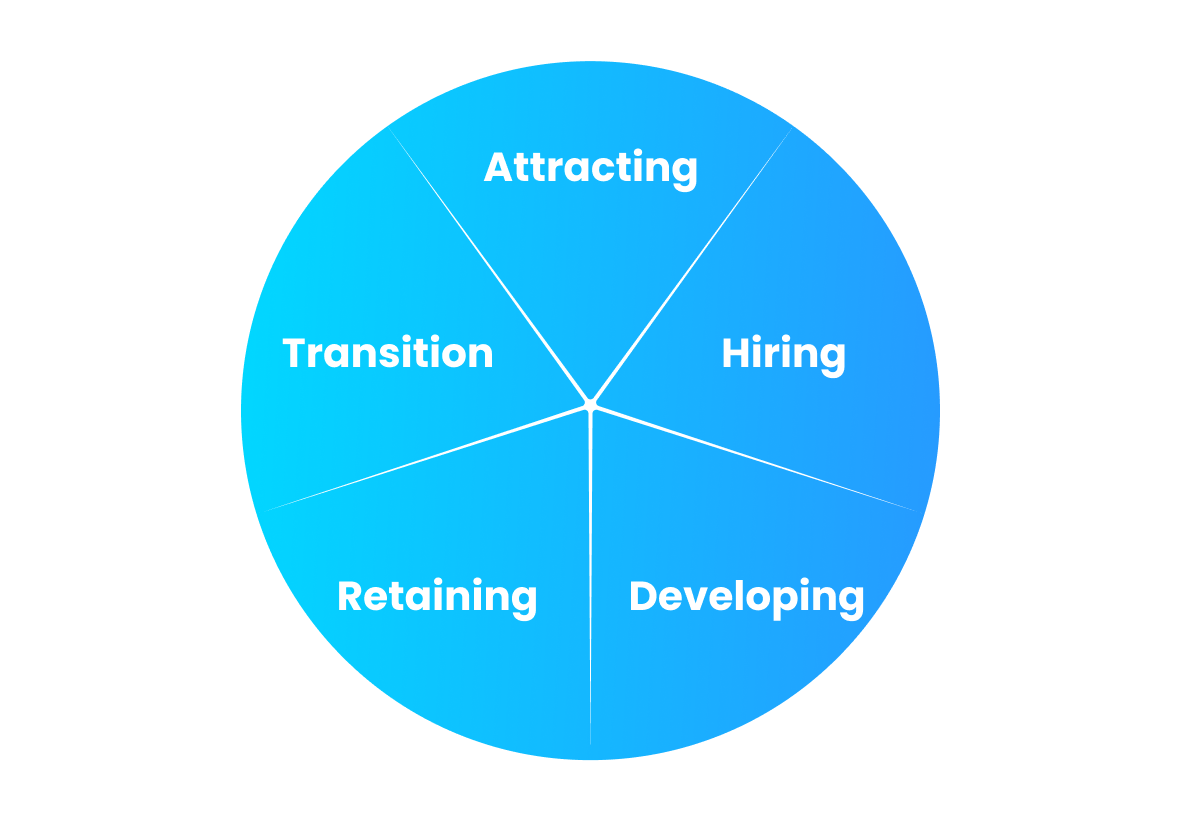
The talent lifecycle refers to the various stages an employee goes through within an organization, from the initial consideration as a potential recruit to the eventual exit or retirement.
Understanding and managing this lifecycle is crucial for HR professionals and business leaders to attract, retain, and develop the best talent.
In this blog, we'll delve into the key phases of the talent lifecycle, offering insights and practical approaches to optimize each stage for organizational and employee success.
Attracting
The first phase is all about attracting the right talent to your organization. This involves more than just posting a job opening; it's about creating a compelling employer brand that resonates with potential candidates. Companies should focus on showcasing their values, culture, and the opportunities they offer for growth and development.
- Employer Branding: Develop a strong employer brand that reflects your company's culture and values. Highlight employee testimonials, success stories, and workplace awards. Use social media, your company website, and other platforms to communicate your brand effectively. Google, for instance, uses its 'Life at Google' social media campaigns to highlight its innovative culture, employee testimonials, and workplace perks. To achieve similar branding, companies can use platforms like LinkedIn, Glassdoor, and even Instagram to share their stories and attract potential candidates.
- Recruitment Marketing: Implement targeted recruitment marketing strategies. Understand where your ideal candidates spend their time online and offline, and use those channels to promote your job openings. Engaging content, virtual career fairs, and interactive job postings can draw in more prospective candidates. HubSpot, known for its inbound marketing approach, creates engaging content and uses SEO strategies to attract potential candidates through blogs, social media posts, and interactive webinars. Tools like HubSpot's own marketing platform, as well as Indeed and Monster, can help disseminate job postings and attract a wide array of candidates.
- Candidate Experience: From the first interaction, ensure that candidates have a positive experience. Simplify the application process, maintain clear communication, and provide feedback. A positive candidate experience can improve your offer acceptance rate and enhance your reputation in the job market. SAP uses sophisticated ATS like SuccessFactors to provide timely communications, feedback, and an easy application process, ensuring candidates have a positive impression from the start. Platforms like Greenhouse and Lever also offer robust ATS features for improving candidate experience, and more affordable options like Manatal bring similar candidate-tracking capabilities within reach for smaller teams.
- Sourcing: Sourcing is about proactively identifying and engaging potential candidates through various channels and methods. It's a crucial step for building a talent pool even before specific positions open up. EY (Ernst & Young), for example, uses advanced AI candidate search to identify potential candidates with the right skills and experience. Tools like HeroHunt.ai can help companies source candidates by providing AI candidate search capabilities and engagement features.
HeroHunt.ai
Sourcing is the one part of the attracting stage that does not wait for applicants to arrive, and it is what HeroHunt.ai is built for: it searches across roughly a billion public profiles (LinkedIn, GitHub, job boards and the open web rather than one database), screens the shortlist with language models against your actual requirements, then runs personalized outreach to the people who pass. The honest limit: it is a sourcing and outreach tool, not a system of record. It covers the attracting stage of this lifecycle and nothing after it, so you still need an ATS or HRIS for hiring, onboarding and everything downstream.
Hiring
Once you've attracted candidates, the next step is selecting the right fit and integrating them into your company. A structured hiring and onboarding process can set the tone for a successful tenure.
- Selective Hiring: Use structured interviews, assessments, and reference checks to ensure the candidate's skills, experiences, and values align with the job's requirements and company culture. Diversity should be a key consideration in this process, ensuring a varied and vibrant workforce. Zappos famously offers candidates a financial incentive to leave after the initial training period if they feel the company isn't a good fit, emphasizing the importance of cultural fit. Tools like Workday can help companies streamline the hiring process and ensure they're selecting the right candidates.
- Effective Onboarding: Develop an onboarding program that helps new hires understand their role, the company culture, and how they fit into the larger picture. This should include not just paperwork and procedures but also mentorship programs and social integration. For example, IBM uses its own AI technology, Watson, to create a personalized onboarding experience for each new employee. Platforms like BambooHR, Trello, and even custom solutions developed in-house also can assist in managing onboarding tasks and ensuring new employees have a positive start.
Manatal
Hiring and onboarding are where an applicant tracking system becomes the system of record, and the Workday or Greenhouse quotes above are out of reach for most small teams. Manatal is the entry point that is not: $15 per user per month billed annually ($19 month to month), with a 14-day trial and no card. Worth knowing before you commit: that $15 tier caps at 15 active jobs and 10,000 candidates, so once you are running more than 15 open roles at once you are really comparing against the $35 tier ($39 monthly) that lifts both limits.
Developing
Once people are in the door, the lifecycle shifts from acquisition to growth, and this is the stage most organizations underinvest in. Development is more than formal training: it is career pathing, coaching, stretch assignments and internal mobility. It pays off directly in retention. LinkedIn's research found that companies which excel at internal mobility retain employees for an average of 5.4 years, nearly twice as long as companies that struggle with it (2.9 years) - LinkedIn 2024 Workplace Learning Report.
- Learning and development: Give employees structured ways to build new skills, whether through a learning management system, mentorship, or a learning stipend. AT&T's multi-year reskilling initiative is a large-scale example, retraining tens of thousands of workers for new technical roles rather than hiring externally. Platforms like LinkedIn Learning, Coursera for Business and Udemy Business bring similar access to smaller teams.
- Career pathing: Show people a realistic path forward inside the company. Clear competency frameworks and regular growth conversations reduce the sense that the only way up is out.
- Internal mobility: Fill open roles with existing talent first. An internal move preserves institutional knowledge and signals to everyone else that growth is possible without leaving.
The practical takeaway is that development is a retention lever, not a perk. When employees can see themselves growing where they are, they are far less likely to start answering recruiter messages, which quietly lowers the cost of every other stage of the lifecycle.
Engaging and Retaining
Retention is almost always cheaper than replacement, and the maths is stark: Gallup estimates that replacing an employee costs between one-half and two times their annual salary once recruiting, onboarding and lost productivity are counted - Gallup. Engagement is what prevents that cost, and it comes from recognition, meaningful work and good management rather than perks alone.
- Recognition and feedback: Regular, specific recognition keeps people motivated. Tools like Bonusly and Culture Amp help formalize recognition and measure engagement over time.
- Manager quality: Managers drive a large share of the variance in team engagement, so building management capability is one of the highest-leverage retention moves available.
- Compensation and wellbeing: Fair pay, benefits and a sustainable workload matter. Regular benchmarking stops your best people from discovering they are underpaid only when a competitor tells them.
The point of this stage is to act before people decide to leave, not after. Engagement surveys, stay interviews and pay reviews are early-warning systems: they surface the problems you can still fix while the person is still on the team.
Offboarding
Every employee eventually leaves, and how they leave shapes both your reputation and your future talent pool. A structured offboarding process protects the organization through knowledge transfer, access revocation and compliance, and it leaves the departing employee as an advocate rather than a critic. It is also one of the most honest sources of feedback you will ever get.
- Exit interviews: Ask departing employees what really drove the decision. Patterns across exit interviews are one of the clearest early-warning signals for retention problems you can act on.
- Knowledge transfer: Capture what the leaver knows before their last day, from documentation to warm handovers, so their departure does not create a single point of failure.
- Graceful transitions: Handle the logistics of final pay, equipment and access cleanly and respectfully. People remember how they were treated on the way out.
Offboarding is where the lifecycle either closes cleanly or leaks value. Handled well, a departure becomes a referral source and a possible future rehire; handled badly, it becomes a negative review and a warning to other candidates.
Alumni
The lifecycle does not end at the exit interview. Former employees are a high-value, underused talent pool, and treating them as alumni rather than lost causes pays off in referrals, business and rehires. Boomerang employees, people who return to a former employer, have become a meaningful hiring channel: at large US firms they grew to roughly 3% of all new hires by 2024, and they typically ramp faster and cost less to recruit than external hires - HR Brew.
- Alumni networks: Firms like McKinsey and Deloitte run formal alumni programs that keep former staff connected, generating referrals and client relationships for years after departure.
- Boomerang rehires: Stay in touch with strong performers who leave on good terms. A returning employee already knows your culture and needs far less onboarding than a new hire.
- Advocacy: Happy alumni become brand ambassadors who refer candidates and speak well of you in the market, feeding straight back into the attracting stage.
Alumni close the loop. A well-run offboarding and alumni program turns former employees into a pipeline, which is why the smartest talent teams treat the exit not as an ending but as the start of a longer relationship.
Bringing the lifecycle together
The talent lifecycle is a loop, not a line: a well-run offboarding and alumni stage feeds directly back into attracting through referrals and boomerang hires. The organizations that get the most from it treat every stage as connected and pay attention to the handoffs between them. For the front half of that loop, from first application to a productive new hire, a modern applicant tracking system is the system of record that ties it together, which is why smaller teams so often start there.
Written by Yuma Heymans (@yumahey), founder of HeroHunt.ai. He builds AI recruiting tools that automate the attracting and sourcing stages of the lifecycle, and writes about how talent teams manage the full arc from candidate to alumni.
Running the front half of the lifecycle on a lean budget? Manatal is the ATS most small teams start with: $15 per user per month billed annually, with a 14-day trial and no card. Remember the $15 tier stops at 15 active jobs.