




The practical 2026 field guide to every channel where you can actually source the humans who train AI models.
Anthropic's leaders have discussed spending more than $1 billion on reinforcement-learning environments in a single year - TechCrunch. That one number captures how much the question of "where do I find data annotators" has changed. The work that used to mean a few people in a back office drawing boxes around pedestrians is now a global supply chain worth billions, ranging from gig workers paid two dollars an hour to practicing physicians paid four hundred. The hard part is no longer believing you need human data. It is knowing exactly where to go to get it, at the quality and price your project actually requires.
The problem is that the market is deliberately opaque, and the obvious answers are usually the wrong ones. Most "best data labeling companies" lists are recycled vendor marketing, the headline providers may be half-owned by a competitor you do not want seeing your roadmap, and the cheapest crowd platforms can quietly poison a training run with machine-generated fakes. Sourcing annotators well in 2026 is less about finding a single vendor and more about matching each kind of task to the right channel, because the channels have split into at least eight distinct markets with different economics, geographies, and risks.
This guide is the practical map of those channels. It covers the managed vendors that run the whole project for you, the expert marketplaces where the PhDs and professionals live, the self-serve crowd platforms you can launch in an afternoon, the tooling that comes with its own workforce, the freelance boards and sourcing tools for building your own team, the geography of where annotation labor actually sits, the specialist networks for medicine and code and rare languages, and the new frontier of reinforcement-learning environments and synthetic data. For each, you get who the players are, what it really costs, how you access it, and where it wins or fails. The audience is anyone who has to actually buy this work, not just read headlines about it.
Written by Yuma Heymans (@yumahey), who built HeroHunt.ai and its autonomous AI Recruiter to source scarce specialists from over a billion online profiles. Finding qualified people who are not on any job board, which is the central problem of expert annotation, is the exact problem he works on every day.
Contents
- The 2026 Landscape: Two Markets Hiding Under One Name
- Start Here: Decide What You Actually Need
- Managed Vendors: Hand Off the Whole Problem
- Expert-Data Marketplaces: Where the PhDs and Professionals Are
- Self-Serve Crowd Platforms: Launch Tasks in an Afternoon
- Annotation Tooling With a Built-In Workforce
- Freelance Boards and Sourcing Tools: Build Your Own Bench
- The Geography of Annotation: Regions and Impact Sourcing
- Specialist Networks: Finding Niche Experts
- RL Environments: The 2026 Frontier of Human Data
- The Synthetic and AI-Assisted Alternative
- How to Choose: A Sourcing Playbook by Budget and Use Case
1. The 2026 Landscape: Two Markets Hiding Under One Name
The single most useful thing to understand before you source anyone is that "data annotation" now describes two almost unrelated businesses that happen to share a name. At the bottom sits commodity labeling: drawing bounding boxes, transcribing audio, tagging images, and moderating content, work that still exists at enormous scale but pays a few dollars an hour and is increasingly automated. At the top sits frontier data: getting credentialed experts to write reasoning chains, design evaluation rubrics, and grade model outputs, work that routinely pays fifty to several hundred dollars an hour. These two tiers are recruited, priced, and quality-controlled in opposite ways, and the most expensive mistake buyers make is treating them as one purchase.
The reason this split matters for sourcing is that the right channel depends entirely on which tier you are buying. The bulk tier is a volume-and-cost game best served by self-serve crowds and offshore BPOs, where you optimize for throughput per dollar. The expert tier is a scarcity-and-trust game best served by vetted marketplaces and managed networks, where you optimize for credential verification and the integrity of the output. Sending an expert task to a cheap crowd produces confident garbage, and sending a bulk task to an expert marketplace burns your budget for no quality gain. Knowing the line between them is half of sourcing well.
The money has moved decisively toward the top tier, which is why so much of the action and noise is there. The overall data collection and labeling market was valued at $3.77 billion in 2024 and is forecast to reach $17.1 billion by 2030, a compound growth rate of roughly 28% - Grand View Research. Other analysts size it differently, with one 2026 forecast putting the market at $6.12 billion this year on its way to $22.7 billion by 2032 - GlobeNewswire. Treat any single market-size figure as directional rather than precise, because these are paid analyst projections with wide spreads. What is not in dispute is the slope: demand for the people who produce training data is growing fast enough to roughly double every two to three years.
Global Data Collection and Labeling Market
The chart understates the strategic weight of this category, because the dollars are small relative to compute but decisive for model quality. A lab can spend hundreds of millions on chips and still ship a mediocre model if its post-training data is weak, which is why human data moved from procurement to research strategy in the space of two years. For a buyer, the lesson is that sourcing annotators is now a capability worth building deliberately rather than a one-off task to delegate and forget. The rest of this guide treats that capability as a series of channels, and the next section gives you the framework for choosing among them before any money changes hands.
The clearest way to feel the bifurcation is the pay ladder itself, which now spans two full orders of magnitude. At the bottom, crowd workers in the Global South still label images for around $2 an hour, while at the very top the rarest specialists, former VC partners and startup founders, can command $500 to $1,000 an hour to teach models the judgment of their professions - Pin. The pool underneath the bulk tier is enormous, with the World Bank estimating between 154 million and 435 million online gig workers worldwide, which is why commodity labeling has always been a buyer's market on price - World Bank. Where a given task lands on that ladder depends almost entirely on credential scarcity and how hard the output is to fake, not on hours or effort, and that single principle explains most of what follows.
The clearest single voice on why this shift happened belongs to Edwin Chen, founder of Surge AI, the bootstrapped company that quietly became the highest-grossing data labeler in the world. His argument, that quality human data rather than raw headcount or leaderboard scores is what actually advances models, is the intellectual center of the whole expert-data movement, and the conversation below is the best non-technical primer available on what this work really is.
The $1B AI company training ChatGPT, Claude & Gemini | Edwin Chen (Surge AI)
2. Start Here: Decide What You Actually Need
Before you compare a single vendor, you need to characterize your own task, because the channel that is perfect for one job is wasteful or dangerous for another. The biggest sourcing failures come from skipping this step and defaulting to whichever provider showed up first in a search. A useful way to scope the work is to answer five questions in order: what kind of judgment the task requires, how much volume you need, how sensitive the data is, how much control you want over the workers, and what your real budget per unit is. Those five answers point almost deterministically to a channel.
The most important of the five is the kind of judgment required, because it sets the floor on who can do the work at all. If a reasonably careful adult can complete the task after a short briefing, such as tagging objects or rating obvious correctness, you are in bulk territory and your problem is throughput and quality control at scale. If the task requires a credential that takes years to earn, such as reading a chest scan or judging a legal argument, no amount of crowd volume substitutes for the right person, and your problem becomes verification and recruitment of scarce specialists. Most real projects are a blend, with a large bulk layer and a thin but critical expert layer, and the mistake is sourcing both from the same place.
To make the framework concrete, the decision tree below maps the major task types to the channels covered in this guide, and you can use it as a first cut before reading the detailed sections. Treat the branches as starting points rather than rules, because budget and data sensitivity frequently override the obvious path.
The other three questions act as filters that can move you off the default branch. Data sensitivity is the most common override: if your data is regulated, confidential, or competitively dangerous, you avoid open crowds entirely and pay the premium for a managed vendor with security guarantees and named, vetted workers, regardless of how simple the task is. Control matters when you have ongoing, evolving work rather than a one-time batch, because a dedicated trained team you manage directly will outperform a churny crowd on anything that requires accumulated context. Budget per unit is the final reality check, and it is worth setting before you talk to anyone so that a polished sales deck does not talk you into a tier you do not need.
In practice, the disciplined buyer writes down a one-line spec for each of the five answers and only then opens the vendor sections. That spec prevents the two classic errors: over-paying for expert labor on commodity tasks, and under-resourcing genuinely hard judgment to save money that you will lose many times over when the model trained on bad labels underperforms. With the framework in hand, the rest of the guide walks each channel from the most hands-off option to the most do-it-yourself, so you can stop at whichever level of involvement fits your team.
To make this concrete, consider a team building a customer-support model. Their five answers might be: the task is mostly bulk rating of response quality with a thin layer of expert escalation review, volume is high at tens of thousands of examples, the data contains customer information so sensitivity is moderate, the work is ongoing as the model evolves, and the budget is real but not unlimited. Those answers route them cleanly to a hybrid stack: a vetted crowd or nearshore team for the bulk ratings, a small directly-sourced bench of support experts for the escalation layer, and a managed vendor only if the customer data proves too sensitive for an open channel. The same task sent entirely to one premium vendor would cost several times more for no quality gain on the bulk layer, which is exactly the waste the framework prevents.
3. Managed Vendors: Hand Off the Whole Problem
Managed full-service vendors are the right starting point for any team that wants results rather than a workforce, because you hand over the project and they handle staffing, training, tooling, quality control, and delivery. You describe what you need labeled or judged, agree on a quality bar and a price, and receive finished data. This is the most expensive channel per unit, but it is also the lowest-effort and the safest for sensitive work, since reputable vendors offer security guarantees, dedicated trained teams, and accountability that an open crowd cannot. For a buyer without an in-house data-operations function, a managed vendor is usually the correct default for anything beyond a trivial pilot.
The catch in 2026 is that the biggest name in the category comes with a structural problem. Scale AI remains one of the largest and most capable operations on earth, with deep infrastructure through its Outlier and Remotasks platforms and genuine strength in autonomous-vehicle and sensor data. But in June 2025 Meta paid roughly $14.3 billion for a 49% stake and pulled founder Alexandr Wang onto its superintelligence team, after which Google, OpenAI, and Microsoft moved to cut ties over the obvious neutrality problem - CNBC. Google alone had been on track to pay Scale around $200 million in 2025. The takeaway for buyers is not that Scale is bad, it is that any vendor partly owned by a competitor is a poor choice if your data could benefit that competitor, and Scale has since leaned toward government and defense work where that conflict matters less.
A quieter and increasingly attractive group of vendors competes on running dedicated, trained teams rather than open crowds, and they are worth knowing by name because they map to different needs.
| Vendor | Model | Best for | How you engage |
|---|---|---|---|
| Scale AI | Crowd plus platform | AV, sensor, government, Meta-aligned work | Sales-led |
| iMerit | Trained managed teams | Medical, AV, geospatial, expert "Scholars" | Enterprise sales |
| CloudFactory | Dedicated remote teams | Long-term, high-oversight projects | Managed services |
| Innodata | Public AI-data services | Enterprise and frontier-lab data at scale | Sales-led |
| Labelbox | Platform plus Alignerr network | Tooling plus a frontier expert workforce | Self-serve or sales |
These vendors trade away the rock-bottom price of a raw crowd in exchange for consistency, security, and continuity, which is exactly what evolving projects need. iMerit runs a workforce of more than 10,000 trained resources across 60-plus countries, claims accuracy above 98%, and has been profitable without raising capital since 2020, and in July 2025 it brought an expert "Scholars" network out of beta specifically to fine-tune generative models - TechCrunch. Innodata, a publicly traded vendor, reported $251.7 million in 2025 revenue, up 48%, with first-quarter 2026 revenue of $90.1 million, a useful signal of how fast enterprise demand for managed data services is growing - StockTitan. The practical implication is that the managed tier is not one homogeneous option but a spectrum from raw-scale crowd brokers to high-touch expert-team operators, and you should pick based on how much hand-holding and security your project genuinely requires.
A useful newer entrant that blurs the line between managed vendor and marketplace is Micro1, which crossed $100 million in annualized revenue in 2025 and counts Microsoft among its clients, built on an AI recruiter that screens applicants and enforces a minimum integrity score with anti-cheat monitoring - TechCrunch. Its rise illustrates the broader pattern in the managed tier: the vendors winning new business in 2026 compete on the speed and trustworthiness of their vetting funnel, not on raw headcount, because labs learned the hard way that scale without verification invites fraud. When you evaluate a managed vendor, the most revealing question is not how many workers they have but how they prove each worker is who they claim to be, since that is precisely where the cheap end of the market fails.
Managed delivery is not always the right call even when you can afford it, and knowing when to avoid it saves real money. If your task is simple and high-volume, a managed vendor's per-unit price buys you overhead you do not need, and a self-serve crowd will do the same work for a fraction of the cost. If your work is constant and evolving, a vendor's project-based model fights against the accumulated context a dedicated in-house team would build over months. Managed vendors earn their premium on three things specifically: sensitive data, genuinely hard quality bars, and projects where you have no internal capacity to manage labor. Outside those conditions the cheaper channels usually win, which is exactly why the rest of this guide exists.
The honest risk with managed vendors is concentration and ethics exposure, which surfaced violently in 2026. Sama, the impact-sourcing vendor long marketed as the "ethical" choice, laid off 1,108 Nairobi workers in April 2026 after Meta terminated a major contract, a collapse triggered when workers reported reviewing private footage captured by Ray-Ban smart-glasses users - TechCabal. That episode is a warning for buyers as much as for workers: a vendor whose business leans on a single large client carries continuity risk, and a vendor's labor conditions are now your reputational exposure too. The lesson is to diversify, to ask hard questions about where the work is done and what workers are paid, and to treat a polished social-impact narrative as a claim to verify rather than a guarantee.
4. Expert-Data Marketplaces: Where the PhDs and Professionals Are
When the task requires a credential that no crowd can supply, expert-data marketplaces are where you go, and they are the fastest-growing channel in the entire sector. These platforms have spent years building vetted networks of doctors, lawyers, quants, and senior engineers, and they rent that network to you on demand, usually with their own vetting, payment, and quality infrastructure layered on top. The reason they exist is that the ideal expert annotator is a busy professional with a lucrative day job who never applied to a labeling platform and would never describe themselves as looking for annotation work. Reaching those people at scale is a recruiting problem, and these marketplaces solved it first.
The defining company here is Mercor, which started as an AI hiring platform and pivoted its candidate-vetting engine into a labor supplier for AI labs. In October 2025 it raised $350 million at a $10 billion valuation, a fivefold jump in eight months, and it now reports paying out more than two million dollars a day to over 30,000 weekly-active experts who average around $85 an hour - TechCrunch. Its pitch is precise: labs hire former employees of the exact industries they want to automate, because the companies that own that expertise will never hand it over directly. The trade-off is that Mercor is young and still hardening, having disclosed a supply-chain data breach in April 2026 that briefly paused some lab work, so buyers should weigh its speed and breadth against its relative immaturity on security and compliance.
The marketplaces differ enough that the right one depends on which experts you need and how they are sourced, and the comparison below captures the leaders at a glance.
| Marketplace | Who it sources | Reported pay | Sourcing edge |
|---|---|---|---|
| Mercor | All domains, ex-industry pros | ~$85/hr avg | AI video-interview vetting |
| Surge AI | Credentialed experts, RLHF | Premium, project-based | University and expert communities |
| Handshake AI | 500k+ verified PhDs | Up to $100-125/hr | Owned academic network |
| Turing | Software and reasoning experts | Project-based | 4M+ vetted engineers |
| Prolific | Representative real humans | From ~$12/hr | Anti-bot vetted panel |
Each marketplace wins on a different axis, and the axis matters more than the brand. Surge AI is the quality leader, the bootstrapped vendor that reportedly hit around $1.2 billion in revenue while profitable and is widely described as Anthropic's core human-feedback partner, having raised its first outside capital in 2025 at a valuation reported between $15 billion and $25 billion - Reuters. Handshake AI owns the cleanest moat, having spent twelve years building a verified network of more than 500,000 PhDs that it now rents directly to eight top labs, posting expert pay up to $125 an hour - Handshake. Turing specializes in code and reasoning data and reached roughly $300 million in run-rate, while Prolific is the integrity specialist, offering a vetted, bot-resistant panel for evaluation and safety work at lower rates than the elite domain platforms. The practical guidance is to match the platform to your scarcest input: Mercor for breadth and speed, Surge for the highest-quality RLHF, Handshake for verified academics, Turing for engineering, and Prolific for representative evaluation.
Two more independents round out the serious options and suit specific needs. Invisible Technologies helped fine-tune the model behind ChatGPT's original launch and now blends RLHF with broader process automation, reporting profitability that is rare in this sector, and it raised $100 million in 2025, at a valuation above $2 billion - SiliconANGLE. Snorkel AI, spun out of Stanford, takes a different path entirely, pioneering programmatic labeling where code and expert heuristics generate labels at scale, then layering an expert network on top branded Expert Data-as-a-Service, and it raised $100 million at a $1.3 billion valuation in 2025 - BusinessWire. For encodable labeling problems Snorkel's approach can be dramatically cheaper than per-item human work, a reminder that "marketplace" is not the only shape this channel takes.
One caution applies across this whole tier: the headline revenue and valuation figures are slippery, and you should read them skeptically when comparing vendors. Many of these companies quote gross marketplace volume, the entire sum a customer pays before the contractor's cut, so a billion-dollar run-rate can correspond to much smaller net revenue once payouts are removed. The labor side carries real friction too, with Handshake facing a 2026 contractor-pay dispute in which workers on lab projects had accounts suspended without payment, and similar complaints recurring across the sector - AOL. The practical takeaway is to judge a marketplace by the quality of its vetting and the reliability of its worker payments, not by its press-release valuation, because both directly affect the data you receive.
The newest current voice on how this channel actually works is Brendan Foody, Mercor's co-founder, whose 2026 Stanford talk explains the marketplace logic and the rise of "agentic data" in plain terms. It is a useful watch because it reframes annotation sourcing as a matching problem between scarce human expertise and lab demand, which is exactly the lens a buyer should adopt.
Brendan Foody (Mercor) - Agentic Data and the Future of AI
What every marketplace in this tier shares is a recruiting engine, and understanding it helps you judge them. The winners source experts through three channels: owned pre-credentialed networks that collapse acquisition cost to near zero, referrals that convert because experts trust other experts, and AI-driven outbound that screens candidates at machine scale. Mercor reportedly drew more than 60% of its expert hires through referrals, paying bounties from a few hundred dollars up to fifteen thousand per successful hire - Mercor. The implication for a buyer is that you are not just renting labor, you are renting a sourcing machine, and the marketplace that finds and verifies the rarest specialists fastest is the one worth paying for when your project hinges on a cohort you could never assemble yourself.
The Mercor founding team

5. Self-Serve Crowd Platforms: Launch Tasks in an Afternoon
If your task is genuinely bulk and your data is not sensitive, self-serve crowd platforms are the fastest and cheapest way to start, because you can sign up, post tasks, and have thousands of workers on them within hours without talking to a salesperson. This channel is built for volume: object tagging, transcription, simple categorization, survey responses, and the kind of repetitive judgment where the answer is obvious to any careful person. The trade-off you accept in exchange for that speed and price is that you own the quality control, the worker management, and the very real risk of fraud, because open crowds attract people who will cut corners or quietly use a chatbot to fake their answers.
The two questions that separate these platforms are how their fees work and how seriously they fight cheating, and both vary widely. Amazon Mechanical Turk, the original microtask marketplace, charges a 20% fee on the reward, which doubles to an effective 40% on tasks with ten or more assignments, plus extra for qualified workers - MTurk. Prolific, by contrast, was built for research integrity and charges a steeper 42.8% platform fee for commercial customers on top of participant pay, but enforces a real hourly floor and aggressive anti-bot safeguards, which is why labs use it for evaluation work where data quality matters more than raw cost - Prolific. The gap between those two models is the whole story of this tier: you are choosing between cheap-and-noisy and pricier-but-clean.
The platforms below cover the practical range of self-serve options in 2026, from raw microtask crowds to vetted research panels.
| Platform | Fee model | Strength | Watch out for |
|---|---|---|---|
| Mechanical Turk | 20-40% of reward | Speed, huge crowd | Heavy cheating risk |
| Toloka | Quote and usage | Bulk plus expert layer | Microtask quality |
| Clickworker | Managed crowd | Multilingual volume | Variable consistency |
| Prolific | 42.8% commercial | Vetted, bot-resistant | Lower domain depth |
| Appen (Mindrift) | Contributor app | Global contributor base | Pay and churn complaints |
The most interesting evolution in this tier is that several crowd platforms have added an expert layer to escape the commodity trap. Toloka, which spun out of Yandex and re-domiciled in Amsterdam, raised $72 million, led by Jeff Bezos's investment firm, in May 2025 and now spans cheap microtasks and vetted expert work for clients including Anthropic, Amazon, and Microsoft - SiliconANGLE. This matters for buyers because a single platform that flexes from broad-and-cheap to deep-and-expensive can simplify procurement, though you should verify that its expert tier is genuinely vetted rather than relabeled crowd work. The general rule for this channel is to start small, build in redundancy and gold-standard checks from the first batch, and never assume the humans on the other end are who the platform says they are until your quality controls prove it.
The remaining self-serve options fill specific gaps worth knowing. Clickworker and Appen's contributor app, now branded Mindrift, both run large managed crowds spanning many languages, which makes them useful when you need multilingual volume rather than the absolute lowest price. These platforms also double as the place workers themselves find annotation gigs, which is the supply side of the same market, and the steady churn and pay complaints reported across them are a signal of how thin the margins are at the bottom of this industry. (If you are reading this as a worker rather than a buyer, the better-paid alternative to these open crowds is the vetted platforms that hire and screen AI-training talent directly, such as micro1 and AfterQuery, which route qualified people into steadier, higher-rate work rather than an anonymous task queue.) For a buyer, the implication is that worker experience and your data quality are linked: platforms that treat contributors poorly tend to suffer the attrition and disengagement that show up later as inconsistent labels, so even on a pure cost play it pays to choose a crowd with a functioning reputation rather than the cheapest possible one.
A critical caveat for anyone using open crowds is the contamination problem, which is now the defining quality risk of bulk sourcing. Researchers estimated that a large share of crowdworkers on text tasks were quietly using large language models to complete them, meaning a meaningful fraction of supposedly human data was machine-generated - arXiv. On platforms like DataAnnotation.tech, run by Surge, and Outlier, run by Scale, this same dynamic plays out from the worker side, with steady complaints about account deactivations and the cat-and-mouse of fraud detection. The practical defense is to treat every open-crowd batch as untrusted until verified, to seed tasks with known-answer gold questions, and to reserve crowds for work where a wrong label is cheap to catch and correct rather than catastrophic to a training run.
6. Annotation Tooling With a Built-In Workforce
A channel many buyers overlook is annotation tooling, the software platforms you run with either your own team or a workforce the vendor connects you to. This is the right starting point when you want control over the labeling process itself, when you have an in-house team to manage, or when you want to keep humans and automation in one loop. The defining shift in 2026 is that pure tooling vendors have bolted managed and marketplace workforces onto their software, so the line between "buy a tool" and "buy labor" has blurred. You can now sign up for a labeling platform and, in the same account, hire the people to use it, which makes this channel a genuine one-stop option for teams that fall between full DIY and full managed delivery.
The second defining shift is that AI-assisted labeling has become table stakes rather than a premium feature. Foundation models like Segment Anything and Grounding DINO now pre-label images automatically, model-in-the-loop workflows draft annotations for humans to correct, and the real differentiators have moved to quality-review workflows, data curation, and evaluation tooling - Mordor Intelligence. The annotation tools software market reflects the momentum, growing from an estimated $2.32 billion in 2025 toward $12.4 billion by 2031. For a buyer, the headline is that you can label far more data per human hour than you could two years ago, which changes the math on whether to build a small in-house team versus outsourcing entirely.
Pricing transparency splits this market cleanly, which is unusually helpful when comparing options.
| Tool | Entry pricing | Workforce option | Best for |
|---|---|---|---|
| Labelbox | $0.10 per unit, 500 free/mo | Alignerr expert network | Tooling plus frontier experts |
| Roboflow | $79/mo Core (free tier) | Managed services add-on | Computer vision teams |
| CVAT | $23-33/user/mo (open source) | Self-source | Budget and open-source-first |
| Label Studio | $99/mo + $49/user (OSS free) | HumanSignal Services | Flexible multi-type labeling |
| Encord / SuperAnnotate | Quote-based | Built-in managed teams | Multimodal and physical AI |
The screenshot below shows a representative modern labeling workspace, the kind of interface your team or a connected workforce would actually work in day to day.
A modern annotation workspace
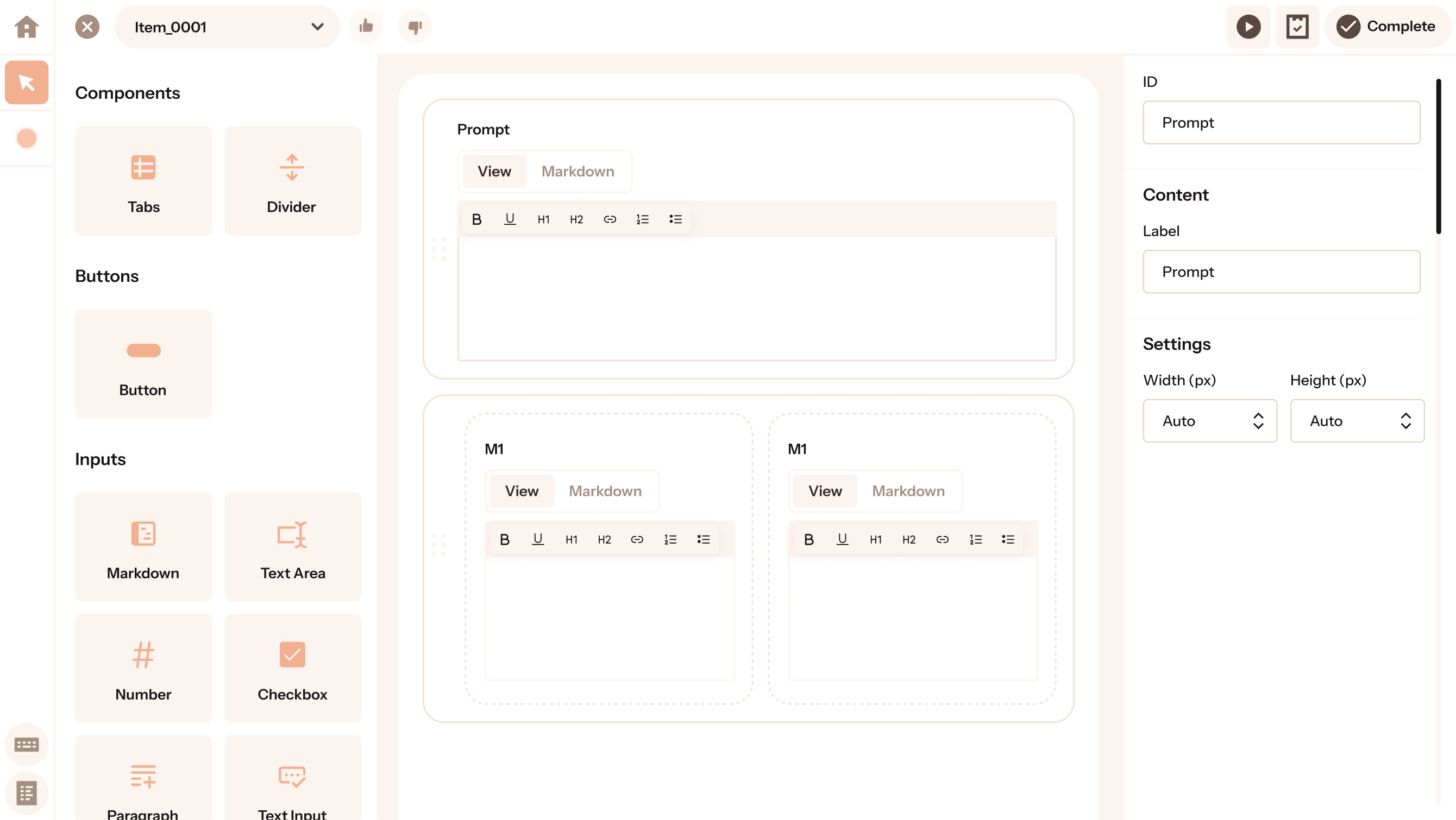
The standout strategic move in this tier is Labelbox fronting Alignerr, its managed expert network, which the company says spans 2.6 million contributors across 70-plus countries, with 11% holding PhDs, paying between $35 and $125 or more an hour - Labelbox. That makes Labelbox a hybrid: a labeling tool and a frontier-grade workforce in one account. At the other end, Encord raised a $60 million Series C at a $550 million valuation in early 2026, funded explicitly by tenfold growth in robotics and sensor data, which signals where tooling demand is heading - Encord. The practical guidance is to pick by data type and team shape: open-source tools like CVAT and Label Studio if you have engineers and want control, Roboflow for transparent self-serve computer vision, and the quote-based platforms when your data is multimodal, medical, or physical-AI work that needs a connected expert team.
The consolidation underway in this tier is worth factoring into a buying decision, because the vendor you choose may not stay independent. Dell acquired Dataloop at the end of 2025, and Dell Technologies Capital had earlier backed SuperAnnotate, signalling that the big infrastructure players now treat annotation tooling as strategic - PitchBook. On the self-serve side the pricing is refreshingly concrete: Roboflow's managed labeling services start at $0.10 per bounding box, and Segments.ai publishes a $9,600-per-year entry plan for 3D and sensor data, which makes budgeting far easier than the quote-only enterprise vendors - Roboflow. The practical guidance is to weigh both acquisition risk and pricing transparency: an independent tool with published prices is easier to plan around than a quote-only vendor that may be absorbed into a larger platform mid-contract.
Build-your-own is genuinely viable at the low end, and it is worth saying plainly because it is the cheapest path for the right team. CVAT under an open-source license, Label Studio in its community edition, and Argilla running free on Hugging Face are all production-grade tools you can self-host at no software cost - Hugging Face. The catch is that "free tool" does not mean "free annotation," because you still have to source, train, and quality-control the humans yourself, which is exactly the problem the next section addresses. If you have the engineering capacity to run the infrastructure and the management capacity to run a team, the open-source path plus your own sourcing can be dramatically cheaper than any managed vendor at steady-state volume.
7. Freelance Boards and Sourcing Tools: Build Your Own Bench
If you want maximum control and the lowest per-hour cost, and you are willing to do the management work yourself, hiring annotators directly through freelance boards is the most flexible channel of all. This is the build-your-own-bench path, where you recruit individuals, set your own quality bar, and pay them directly without a vendor's markup. It is the natural complement to the open-source tooling from the previous section, and together they form the cheapest possible production stack at scale. The cost you pay for that economy is the management tax: vetting dozens of freelancers, standardizing their work, and running quality control are real jobs, and underestimating them is the classic mistake of the DIY route.
Demand on these platforms confirms how mainstream the approach has become. Upwork's own data found that AI data annotation and labeling was the fastest-growing data-science skill on the platform, up 154% year over year - Upwork. The three main board types serve different needs and charge very differently, which is the first thing to understand before posting a job.
| Channel | Fee model | Typical rate | Best for |
|---|---|---|---|
| Upwork | ~10% client fee | $15-30/hr US, $5-10 offshore | Large global pool, fast |
| Fiverr | 24-35% combined | Fixed gig packages | One-off labeling jobs |
| OnlineJobs.ph | Flat $69-99/mo | $1,000-2,000/mo entry | Dedicated Filipino team |
| Toptal | Markup, vetted | Premium | Pre-screened specialists |
| LinkedIn / Wellfound | Sourcing tools | Varies | Direct outreach to talent |
The economics favor different boards depending on whether you want a one-time job or a standing team. Upwork is the large open marketplace where you post and get bids within a day, with a variable client fee around 10% and a 2026 average rate near $39 an hour for skilled work. Fiverr suits discrete packaged gigs but takes a heavier combined cut. OnlineJobs.ph is the interesting outlier for team-builders, charging a flat monthly subscription with no per-hour markup so you hire dedicated Filipino annotators directly, where entry pay runs $1,000 to $2,000 a month and senior or RLHF-capable workers run $3,000 to $6,000, a large saving versus US rates - Second Talent. The practical pattern that works is to use a board to recruit a small dedicated team, invest heavily in a paid test and clear guidelines up front, and measure inter-annotator agreement so you catch quality drift early.
The fees these channels charge vary more than their headline rates, and they directly shape your effective cost, so the chart below puts them side by side alongside two self-serve crowd platforms for comparison.
Platform Fees Across DIY Sourcing Channels
The pattern is that direct-hire boards charge the least and packaged or vetted marketplaces charge the most, which inverts the usual intuition that doing more work yourself should cost more. A flat-subscription board like OnlineJobs.ph takes nothing on top of wages but leaves you to run payroll and management, while a vetted research panel like Prolific charges over 40% precisely because it handles vetting and integrity for you. The right choice depends on whether your scarce resource is money or management time, and a team with operational capacity can capture the entire spread between a zero-markup board and a high-take marketplace by building its own bench, which is the core economic argument for the DIY channel.
The hidden challenge of DIY sourcing is finding qualified people who are not actively browsing job boards, which is the same passive-talent problem that expert marketplaces solve internally. This is where AI-powered sourcing tools have changed what a small team can do, because they let you search across large profile databases and reach out at scale rather than waiting for applicants. Tools like Micro1's Zara agent screen candidates automatically, Wellfound offers reach features for startups, and platforms such as HeroHunt.ai let you source candidates from over a billion profiles and run automated outreach, which is useful when you need to assemble a niche annotator bench, say medical reviewers or speakers of a rare language, that no public board will surface. The point is not any single tool but the shift it represents: recruiter-grade sourcing is now available to teams that would once have had no choice but to use a managed vendor.
When the bench you need is genuinely specialized, the sourcing-tool approach often beats both the open boards and the managed vendors on cost and fit, because you can target the exact credential you require. A small team building a medical model can use a sourcing platform to find and contact licensed clinicians directly, vet them with a domain-specific test, and pay them as direct contractors, capturing most of the margin a marketplace would otherwise take. The trade-off remains the management overhead, so this path makes the most sense for teams that either have ongoing annotation needs that justify building the muscle, or specialized requirements that off-the-shelf channels serve poorly. For a one-off bulk job, a crowd platform is simpler; for a standing expert bench, owning the sourcing is often worth it, and signing up for a free sourcing tool costs nothing to test.
8. The Geography of Annotation: Regions and Impact Sourcing
Where annotation labor physically sits is a sourcing decision in its own right, because cost, language coverage, data security, quality, and ethical risk all vary enormously by region. For most of the industry's history this was a pure cost-arbitrage question, with labs routing bulk work to whichever country was cheapest. In 2026 it has become a five-way trade-off, and getting it wrong can mean anything from a reputational scandal to a model that lacks the cultural or linguistic nuance you needed. Understanding the geography lets you place each layer of work in the right place: bulk volume where it is cheap and scalable, sensitive or nuanced work where governance and quality are strongest.
The dominant supply base remains India, which analysts estimate could service a data-annotation market worth more than $7 billion, home to large vendors and a deep English-speaking talent pool - NASSCOM. The Philippines is a mature outsourcing hub with roughly 1.8 million BPO workers and strong English skills, while Kenya and East Africa offer the lowest raw cost, and Latin America and Eastern Europe serve as higher-trust nearshore options for buyers who want timezone alignment and stronger data governance. The chart below shows representative hourly rates by region, the single most useful reference when you are deciding where to place work.
Representative Annotation Pay by Region
Those numbers come from current cross-region rate surveys, and the spread of more than ten times between the cheapest and most expensive bulk regions is the whole reason geography matters - Second Talent. India and the Philippines occupy the value sweet spot for English bulk work, combining low cost with process maturity and scale. Kenya and Venezuela have historically offered the lowest prices but carry the highest reputational and continuity risk. Eastern Europe and Mexico cost more but buy you EU-adjacent governance, timezone overlap with the US, and stronger intellectual-property control, which is why security-sensitive and European-language work increasingly lands there as the EU AI Act's traceable-data obligations phase in.
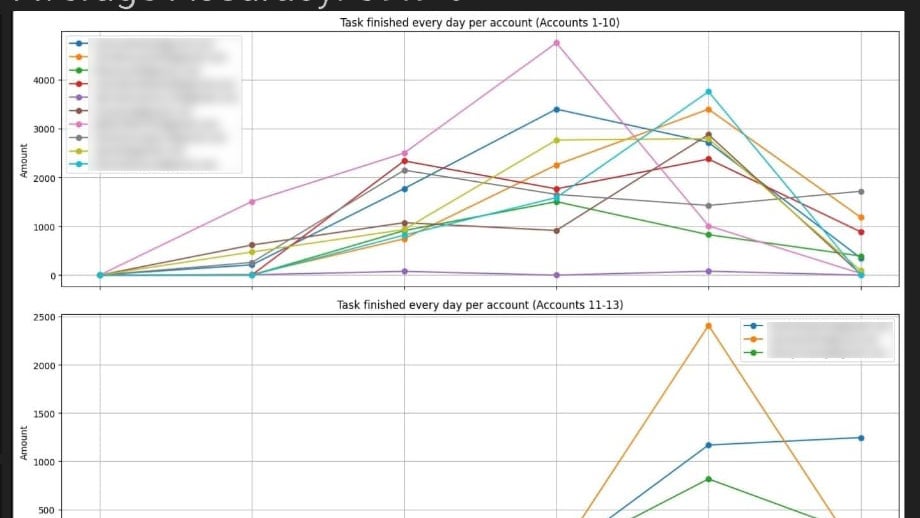
The defining 2026 story in this channel is the East African labor reckoning, and it is essential context for anyone considering low-cost African sourcing. Kenyan workers formed a Data Labelers Association in February 2025 to fight underpayment and the psychological toll of content moderation, and reporting found Chinese firms recruiting Kenyan labelers off-platform via WhatsApp for as little as $5.42 for twelve-hour days - Rest of World. The Sama collapse, the resulting $1.6 billion moderator lawsuit, and documented PTSD among content moderators together make the point that the cheapest labor often carries hidden costs that surface later as legal exposure, attrition, and brand damage. The dashboard image below, from a Kenyan annotator's own workflow, illustrates the piecework reality that governs this tier.
The piecework reality of bulk annotation
A more hopeful model exists, and it is worth knowing for buyers who want both quality and a defensible labor story. Karya, an Indian nonprofit, pays rural workers roughly $5 an hour, about twenty times the local minimum wage, routes 81% of contract revenue to workers, and even lets them earn royalties on their data, having scaled to more than 130,000 workers across 28 states - TIME. Karya specializes in low-resource Indian languages that generic crowds cannot supply, which makes it both an ethical and a practical choice for buyers needing authentic dialect data. The broader lesson is that impact sourcing is contested rather than a clean badge, so if a fair-labor story matters to you, verify wages and conditions directly rather than trusting marketing, and recognize that the most ethical option is sometimes also the only one that can produce the specific data you need.
Two 2026 developments show how fluid this geography has become. In a striking move, Uber began converting its roughly 1.4 million Indian driver partners into an on-demand labeling workforce through micro-tasks in the Uber app, competing directly with the established crowd platforms - Computerworld. At the same time, the cautionary archetype of pure cost arbitrage remains Venezuela, where during its economic collapse around 200,000 people signed up for labeling work paying as little as fifty cents to two dollars an hour with no protections. Together these show that "where" is not fixed: new supply pools open as fast as companies can reach them, and the cheapest new pool is rarely the safest or highest-quality one, so the disciplined buyer weighs continuity and governance alongside the hourly rate rather than chasing the lowest number.
9. Specialist Networks: Finding Niche Experts
When your model needs domain expertise that general platforms cannot reliably supply, specialist networks are where you go, and knowing they exist saves you from the trap of asking a generalist crowd to do an expert's job. These are vendors and platforms built around a single vertical, whether medicine, law, finance, code, or rare languages, and their value is that they have already solved the credential-verification problem for that field. A general marketplace can find you a doctor, but a medical-specific platform can find you a board-certified radiologist, verify the certification, and route the right sub-specialty to the right scan. For high-stakes domains, that difference is the difference between usable training data and confident error.
Medicine is the clearest example of a vertical with dedicated infrastructure, because clinical judgment is both scarce and consequential. Platforms like Centaur Labs, through its DiagnosUs app, aggregate opinions from thousands of medical students and clinicians to produce high-confidence labels for medical imaging and diagnostics, while expert marketplaces route practicing physicians into clinical-evaluation work at premium rates. On the pay side, this is where the ladder reaches its top: medical fellows on Surge have been reported earning $250 to $450 an hour, and the most rarefied specialists command four figures - Built In. The reason these rates hold is simple scarcity, because you cannot crowdsource a valid cardiology read, and the supply of people who can produce one is small and busy.
The major domains each have their natural sourcing channels, and the table below maps where to look first.
| Domain | Where to source | Representative pay |
|---|---|---|
| Medical | Centaur Labs, expert marketplaces | $130-450/hr |
| Legal | Mercor, Handshake | $110-130/hr |
| Software / code | Turing, Mercor | $40-80/hr |
| Low-resource languages | Karya, Shaip, specialist BPOs | Region-based |
| Robotics / physical AI | Encord, teleoperation vendors | Falling fast |
Beyond the headline domains, two specialist niches deserve attention because they are growing fast and poorly served by general channels. The first is low-resource and dialect languages, where authentic native speakers are the bottleneck and community-rooted providers like Karya or Shaip outperform any generic crowd, because the data simply does not exist on the open internet and must be produced by the right speakers. The second is physical AI and robotics, where the "annotation" is increasingly teleoperation and demonstration data, and the economics are shifting fast: the fully loaded cost of teleoperation data reportedly fell from around $340 an hour in early 2024 to about $118 by March 2026 as the tooling matured - Silicon Valley Robotics Center. The takeaway is that specialist sourcing is not one channel but a set of vertical-specific ones, and the time spent finding the right network for your domain pays for itself in data you can actually trust.
The practical way to use specialist networks is to separate your task into its expert core and its bulk periphery, then source each appropriately. A medical-imaging project might route the final diagnostic judgments to a verified-clinician platform while sending the routine pre-segmentation to a cheaper general workforce, capturing expert quality only where it is needed and paying bulk rates everywhere else. This hybrid approach is how sophisticated buyers control cost without compromising the labels that matter, and it depends entirely on knowing which specialist channels exist for your field. When in doubt, the expert marketplaces from Section 4 can usually reach most professional domains, but a dedicated vertical platform will almost always verify credentials more rigorously and route sub-specialties more precisely than a generalist one.
The failure mode to guard against in specialist sourcing is the unverified credential, because the cost of a wrong expert label is highest precisely where expertise is scarcest. A general marketplace that lets workers self-report a medical degree is not the same as a platform that checks the license against a registry, and the gap between them is invisible until a model trained on bad clinical labels fails in a way that matters. This is why dedicated vertical platforms, which verify against professional bodies and route by sub-specialty, justify their premium on high-stakes work. A practical safeguard is to run your own domain-specific qualification test on any expert before they touch production data, regardless of the credential a platform claims, since a short screening task in the actual domain catches impostors that paperwork alone misses.
10. RL Environments: The 2026 Frontier of Human Data
The newest and most cutting-edge channel is reinforcement-learning environments, and it is worth understanding even if you are not a frontier lab, because it signals where all human-data sourcing is heading. An RL environment is a sandboxed, interactive task, a working replica of a real application or workflow, in which an AI agent attempts a job and gets graded on whether it succeeded. Instead of labeling static data, experts here design the task, define what success looks like, and build the grading logic, which is a fundamentally more demanding and more valuable kind of human contribution. As models shift from answering questions to taking actions, this is the data that teaches them to do so, and demand has exploded accordingly.
The spending tells the story. Anthropic's leaders have discussed allocating more than $1 billion to RL environments in a single year, and analysts report that custom "UI gym" environments, replicas of real apps built for agent training, sell for around $20,000 each, with OpenAI reported to have purchased hundreds of them - SemiAnalysis. This is a different procurement model from anything else in this guide, closer to commissioning bespoke software than hiring labelers, and it commands premium rates because the people who can design a faithful environment and a valid reward function are rare. For a buyer, the relevant question is whether your training goal is agentic, because if it is, static annotation will not get you there.
The providers in this emerging channel are distinct from the older annotation vendors, and the early leaders are worth knowing.
| Provider | What they offer | Notable signal |
|---|---|---|
| Prime Intellect | Open Environments Hub | Community RL-environment marketplace |
| Mechanize | Bespoke agentic environments | Built explicitly for agent training |
| Fleet | RL gyms (app replicas) | ~$1M to $60M run-rate surge |
| Surge AI / Mercor | Expert-built RL environments | Existing networks moved upmarket |
| Veris AI | Enterprise agent environments | Domain-specific task simulators |
The funding momentum confirms how seriously the market takes this. Fleet, a startup building RL gyms that replicate applications like Salesforce and Excel, reportedly grew its annualized run-rate from around $1 million to more than $60 million and entered talks at a $750 million valuation - Phemex. Prime Intellect launched an open Environments Hub to let the community build and share RL environments, while the established expert marketplaces moved upmarket, with Mercor acquiring an RL-environment specialist in early 2026. The image below, from Prime Intellect's launch, captures the shift from static labeled datasets toward interactive environments as the unit of training data.
From datasets to environments

For most buyers, the practical relevance of RL environments is directional rather than immediate, but it is a signal you should act on. The trajectory of the whole field is away from labeling fixed answers and toward producing the interactive, gradable tasks that teach models to act, which means the experts you source increasingly need to be people who can design problems rather than just judge solutions. Even if you are not commissioning a UI gym today, the lesson is to favor sourcing channels and experts capable of this higher-order work, because the value in human data is migrating up the stack from annotation to environment design faster than almost anyone expected.
For a buyer who is not a frontier lab, the accessible end of this channel is the open and community infrastructure rather than bespoke six-figure commissions. Prime Intellect's open hub lets teams build and share environments without a custom vendor contract, and the same expert marketplaces that supply RLHF can increasingly staff people who design tasks rather than just judge them. The way to start is small and specific: define one narrow workflow you want an agent to master, build or commission a single environment that faithfully simulates it, and use it to evaluate before you invest in scale. That keeps the cost bounded while you learn whether agentic training is worth it for your use case, which is the right posture for any buyer not yet operating at lab scale.
11. The Synthetic and AI-Assisted Alternative
No honest guide to sourcing human annotators can skip the obvious counter-question: do you even need humans, and if so for what? Synthetic data and AI-assisted labeling have advanced far enough that for many tasks the cheapest, fastest "annotator" is now another model. Understanding where machines can replace humans, and where they decisively cannot, is essential to sourcing efficiently, because spending expert rates on work a model could do is waste, and trusting a model with work that genuinely needs human judgment is risk. The right 2026 strategy is rarely all-human or all-synthetic but a deliberate blend, with humans concentrated where their judgment is irreplaceable.
The cost gap that drives this is stark. A single human preference label costs roughly a dollar, while AI-generated feedback can cost well under a cent, a difference of one to two orders of magnitude that makes machine labeling irresistible for high-volume, lower-stakes work - arXiv. Synthetic data generation has matured into real infrastructure, with Nvidia acquiring the synthetic-data startup Gretel in 2025 and later open-sourcing the technology, a strong signal that machine-generated training data is now a mainstream tool rather than a research curiosity - TechCrunch. On the labeling side, foundation-model auto-labeling and model-in-the-loop pre-annotation have made human labelers far more productive, shifting their role from drawing every box to correcting a machine's first draft.
Beyond Nvidia's Gretel, a cluster of vendors now sells synthetic data as a product, ranging from privacy-safe tabular generators to synthetic-image engines for computer vision, and adoption has spread far enough that the technique is a default first step for augmenting scarce real data. The boundary that matters for sourcing is that synthetic generation works best when you can precisely describe the distribution you want, and worst when you need genuine novelty or certified ground truth. That boundary is exactly where human sourcing stays essential, which is why the rise of synthetic data has narrowed the bulk tier from below without touching the expert one, concentrating human demand at the high end rather than eliminating it.
The honest framing is to map which work goes to machines and which stays human, because the boundary is what determines your sourcing budget.
- Best left to machines - high-volume pre-labeling, data augmentation, synthetic edge cases
- Human-verified machine output - model-assisted labeling with human review on top
- Still firmly human - expert judgment, safety red-teaming, novel reasoning, ground-truth evaluation
- Increasingly human-designed - RL environments and reward functions
The reason humans remain essential at the top of that list is that models cannot reliably generate data that does not already exist in their training distribution, and they cannot certify their own ground truth. A model can draft a thousand labels, but a human still has to decide which are correct, especially for the high-stakes evaluation and safety work where a wrong answer is expensive. There is also a genuine risk, widely discussed as model collapse, that training too heavily on machine-generated data degrades quality over time, which keeps a floor under demand for fresh human judgment. The practical synthesis is that automation has raised the productivity of human annotators rather than eliminated them, so the sourcing question has shifted from "how many labelers" to "which humans, for which irreducible judgments."
Even Gartner's widely cited prediction that most businesses would use generative AI to create synthetic data by 2026 should be read as a statement about the bulk tier, not the frontier - Nvidia. Synthetic and AI-assisted methods are eating the commodity layer from below, which is exactly why the human work that remains has concentrated and become more expensive and more expert. For a buyer, the strategic implication is clear: automate the bulk aggressively, because the tools are good and cheap, and reserve your human-sourcing budget for the expert judgment, evaluation, and novel-task design that machines still cannot do. That is where the channels in this guide earn their cost.
12. How to Choose: A Sourcing Playbook by Budget and Use Case
The right way to use everything above is to start from your task, not from a vendor, and let the five questions from Section 2 route you to a channel. The most common and costly error is to pick a provider first and then bend your project to fit it, when the discipline that works is the reverse: characterize the judgment, volume, sensitivity, control, and budget your task demands, then choose the channel that matches. Almost every sourcing failure traces back to a mismatch, whether sending expert work to a cheap crowd, paying expert rates for commodity tagging, or handing sensitive data to an open marketplace. Getting the match right is most of the battle.
A few decision rules cover the large majority of real situations, and they are worth committing to memory before any sales call. None of them is absolute, but each points you at the channel that fits a given combination of task, stakes, and budget, and following them prevents the expensive mismatches that sink most first attempts. Read each rule as the default you adopt unless a specific constraint, usually data sensitivity or an unusually tight budget, gives you reason to override it.
- High volume, low stakes, non-sensitive - go self-serve crowd or offshore BPO, and invest in gold-standard quality checks
- Scarce expertise, high stakes - go to a vetted expert marketplace or specialist network and pay for verification
- Sensitive or regulated data - choose a managed vendor with security guarantees and named workers, whatever the task
- Ongoing, evolving work - build a dedicated team via freelance boards plus open-source tooling and sourcing tools
- Agentic or RL training - engage the environment providers, because static annotation will not get you there
These rules interact with budget in ways worth making explicit, because cost is usually the binding constraint. The cheapest viable path for a capable team is open-source tooling plus a directly sourced bench, which trades money for management effort. The most expensive but lowest-effort path is a high-touch managed vendor that runs everything. Between them sits a wide middle of self-serve crowds for bulk and expert marketplaces for the thin expert layer, which is where most well-run projects land: automate and crowd-source the commodity work, and concentrate human budget on the judgments that determine model quality. The single highest-leverage move for most teams is that split, sending each layer of the task to the channel built for it rather than forcing one vendor to do everything.
It helps to translate this into budget tiers, because the right stack looks different at each. A bootstrapped startup with engineering talent and little cash should default to open-source tooling plus a directly sourced offshore bench, accepting management overhead in exchange for the lowest cost. A funded scale-up usually wants a hybrid: self-serve crowds or a tooling platform for bulk, an expert marketplace for the thin specialist layer, and sourcing tools to build any standing bench it needs. A large enterprise with sensitive data and no appetite for managing labor should lean on managed vendors and platform-plus-workforce providers, paying the premium for security and accountability. The mistake at every tier is copying the stack of a company in a different one, because a startup cannot afford the enterprise approach and an enterprise should not accept the startup's risk.
Looking ahead, the clearest trend is that AI agents are reshaping both sides of this market at once, which changes how you should build your sourcing capability. On the supply side, vendors increasingly use AI to recruit, screen, and even partially perform annotation, with companies like Micro1 screening hundreds of thousands of candidates a month through an AI agent. On the demand side, the same recruiter-grade sourcing technology is now available to ordinary teams, so building your own expert bench is more feasible than it has ever been, and tools that source candidates from over a billion profiles put capability once reserved for large vendors within reach of a small team. The strategic conclusion is to treat annotator sourcing as a durable in-house capability worth investing in, because human data is not getting less important, it is getting more expert, more expensive, and more central to whether your model works at all.
The final word is that there has never been a better-mapped market for finding the humans who train AI, nor a more important one to get right. The channels are clear, the prices are increasingly transparent, and the tools to reach scarce specialists directly are now widely available, whether through a managed vendor, an expert marketplace, or a sourcing platform you run yourself. Match the channel to the task, verify quality relentlessly, treat labor ethics as your own exposure, and concentrate your human budget where judgment is irreplaceable. Do that, and the hardest input in artificial intelligence becomes a solved problem rather than a bottleneck.
This guide reflects the data-annotation and human-data landscape as of July 2026. Valuations, pricing, and vendor relationships in this market change quickly, so verify current details directly with each provider before committing budget.