


The 2026 field guide to candidate drop-off in AI interviews: the real numbers, the new disclosure laws, and the design fixes that keep good people in your pipeline.
Nearly four in ten job seekers have already walked out of a hiring process because it used an AI interview. That is not a projection or a sentiment score. It is a completed action, measured across 2,950 active candidates in the United States, United Kingdom, Germany, Ireland and Australia, and reported by Greenhouse in its 2026 Candidate AI Interview Report. In the same survey, 63% of candidates said they had now been interviewed by an AI at least once, up 13 points in six months, and another 12% said they would quit a process that required one. Read those together and roughly half of the people you most want to hire are willing to disengage the moment an algorithm shows up in the room.
Here is the part that matters, and the part most vendors get wrong: candidates are not quitting because the interviewer is a machine. They are quitting because of how the machine is used. The top trigger for walking away is a pre-recorded video graded by AI with no human present anywhere in the process. The second is not being told AI was involved at all. Only 21% of candidates believe employers use AI responsibly, yet just 19% actually want less AI in hiring - Greenhouse. The problem is a design problem and a trust problem, which means it is fixable without ripping the technology out.
This guide is the full picture for 2026. It quantifies exactly how many candidates quit and why, separates the three generations of "AI interview" that get lumped together, names the platforms running these interviews and what they cost, maps the two-sided arms race in which candidates now bring their own AI to beat yours, and walks through the disclosure laws that turned soft advice into compliance in the European Union, Illinois, New York City and California. Then it gives you the fix: the specific, evidence-backed design choices that raise completion and protect your employer brand, and the honest map of where AI interviewing belongs and where a human still has to sit down.
Written by Yuma Heymans (@yumahey), who built HeroHunt.ai and has spent five years shipping autonomous recruiting software, which mostly means learning, candidate by candidate, exactly where an automated process earns trust and where it quietly destroys it.
Contents
- The Number: How Many Candidates Actually Quit, and How Fast It Grew
- What People Mean by "AI Interview": Three Generations, One Label
- Why They Quit: The Seven Failure Modes
- The Platform Landscape: Who Actually Runs These Interviews in 2026
- The Other Side of the Arms Race: Candidates Bring Their Own AI
- The Law Caught Up: What You Must Tell Candidates in 2026
- The 2026 Fix: How to Run AI Interviews Candidates Do Not Quit
- Where AI Interviewing Genuinely Belongs (and Where It Does Not)
- The Future: Voice Agents, Liveness Checks, and Re-Humanized Judgment
- The Decision, in Five Sentences
1. The Number: How Many Candidates Actually Quit, and How Fast It Grew
The single most important fact for any talent leader in 2026 is that AI-interview drop-off is now large, measurable and growing, not a fringe complaint from a few loud applicants. In Greenhouse's 2026 study, 38% of candidates said they had abandoned a hiring process specifically because it included an AI interview, and a further 12% said they would if one were required - Greenhouse. Only about 12% said they would willingly sit through a required AI-led interview. When half your funnel is signaling it will walk over a single process choice, that choice has stopped being an operational detail and become a talent-acquisition strategy decision.
The speed of change is what should reframe the urgency. The share of candidates who had faced an AI interview climbed 13 percentage points in six months to reach 63%, which means most job seekers now encounter this format routinely rather than occasionally. Adoption on the employer side explains why: an older but still-cited ResumeBuilder survey of 948 business leaders found 23% already using AI to conduct interviews and 24% letting AI run the entire interview process, and the market has only accelerated since. The exposure is nearly universal, the tooling is spreading, and the candidate reaction is hardening at the same time.
What makes the drop-off dangerous rather than merely annoying is that it is concentrated among the people you can least afford to lose, and it is invisible in most hiring dashboards. A candidate who abandons a one-way video before recording a single answer usually shows up as a non-response, not as a rejection of your process, so the loss is silently absorbed into your funnel math. Worse, the pain lands hardest on strong applicants who have options. When qualified people have five other interviews booked, the AI-only screen is the easiest one to skip, so the format quietly filters for availability and desperation rather than for talent.
There is a measurement trap hiding in this. Because an abandoned AI interview registers as a non-response rather than a decline, most funnel dashboards never attribute the loss to the format at all; the numbers simply show a lower-than-expected completion rate at the screen, which teams then try to fix by sending more reminders or sourcing more applicants. That treats the symptom and feeds the disease, pouring more candidates into the same leaky step. The only reliable way to see the real cost is to ask the people who dropped why they did, and the surveys that bother to ask keep returning the same answer: the format itself was the reason, not the effort and not the timing. An organization that never runs that survey can lose its strongest applicants at the AI screen for years and read its own dashboard as evidence that everything is working.
Trust is the deeper story under the abandonment number, and it is strikingly low. Only about 26% of candidates trust AI to evaluate them fairly, according to a Gartner survey of roughly 3,000 job seekers, and 25% say they trust an employer less simply for using AI to evaluate them. The gap between how many candidates now face an AI interview and how many trust it to judge them fairly is the real headline, and it is widening as adoption outruns trust.
This distrust did not begin with the current wave of tools, which is why better technology alone will not argue it away. Well before conversational agents arrived, Pew Research found that 66% of Americans would not want to apply for a job with an employer that uses AI to help make hiring decisions, and 71% opposed letting AI make the final call. That survey predates the products in this guide, so treat it as a baseline rather than a current reading, but its message has aged well: the resistance is rooted in a belief about who should judge a person, and beliefs like that move slowly.
What the resistance is not is a rejection of rigor, and confusing the two leads employers to exactly the wrong fix. In Criteria's 2026 candidate-experience report, 68% of job seekers said they would happily drop the traditional resume in favor of skills assessments and structured interviews, even as overall optimism about the job market fell to just 20%, down twelve points in a year - Criteria. Candidates will embrace a more scientific, structured process. What they will not embrace is one that removes the human and hides the criteria. The answer is not to retreat from structure; it is to deliver structure transparently, with a person still in the loop.
The drop-off is also landing in an environment that was already low on trust, which amplifies every misstep. Candidates walk into 2026 processes expecting to be ignored: 61% have been ghosted after an interview, a nine-point rise in under two years, and 44% now admit to ghosting employers right back - The Interview Guys. When both sides are already primed to disengage, an interview that feels cold or opaque is not a small irritation; it is the final nudge a candidate needed to stop replying.
The chart below puts that gap in one frame. Exposure has raced ahead while trust has barely moved, which is the structural tension every 2026 hiring process now has to manage.
The AI-Interview Trust Gap (2026)
The practical takeaway is that adoption is not permission. The fact that most candidates have now experienced an AI interview does not mean they have accepted it, and treating exposure as consent is exactly the miscalculation that produces the drop-off. Every subsequent chapter in this guide is really an answer to one question raised by this chart: how do you close the distance between the 63% who face these interviews and the 26% who trust them?
2. What People Mean by "AI Interview": Three Generations, One Label
Before diagnosing why candidates quit, it is worth being precise about what they are quitting, because "AI interview" now covers three genuinely different experiences that provoke very different reactions. Lumping them together is how employers end up fixing the wrong thing. The three generations, in order of appearance, are the one-way recorded video, the text-based structured chat, and the live conversational voice agent. Each automates a different part of the interview, and each fails candidates in a different way.
The first and most reviled generation is the asynchronous one-way video interview. The candidate records answers to fixed, pre-set questions into a webcam, alone, often against a countdown timer, with no interviewer on the other end. Platforms such as HireVue, Spark Hire, VidCruiter, Willo and myInterview built this category, and for high-volume hiring it scaled beautifully on the employer side. The candidate side is where it struggles: performing to a lens with no human reaction, no ability to ask a clarifying question, and frequently no idea whether a person or an algorithm will ever watch the result. This is the format candidates most often describe as a red flag.
The second generation is the text or chat-based structured interview, a category essentially defined by Sapia.ai, whose Smart Interviewer asks five role-specific questions in writing, untimed, with no camera. Because it removes the recording-performance anxiety that video creates, it posts dramatically higher completion. Sapia reports its chat interviews earn nearly double the completion of one-way video in the first 24 hours, and that 78% of candidates who express a preference choose chat over video. Its blind, text-only design is also the clearest accessibility and bias-reduction play in the market, which is why very large employers route enormous volumes through it. It is still an AI interview, but it is the one candidates complain about least.
The mechanism behind that difference is worth understanding, because it explains most of the drop-off gap between formats. One-way video forces candidates to manage a dozen anxieties that have nothing to do with their qualifications: eye contact with a lens, body language, background noise, lighting, whether their equipment is even working, and the knowledge that a single awkward take is permanent. Chat strips all of that away, letting people answer in their own words, untimed, on their own schedule. Across a combined pool of chat and video flows, Sapia reports an average completion rate around 75%, with candidate sentiment on its chat interviews running overwhelmingly positive. The point is not that one vendor is superior; it is that the format itself carries an anxiety tax, and one-way video pays the highest one.
It helps to remember why one-way video spread in the first place, because that history explains its stubborn persistence. For an employer, recording is close to free and infinitely parallel: a thousand candidates can answer the same five questions overnight while nobody is at the keyboard, and a recruiter can skim them at double speed the next morning. That efficiency is real, and it is why the format scaled through the 2010s. The catch is that every ounce of convenience it buys the employer is paid for by the candidate, who does all the performing and gets none of the interaction, and the 2026 data is simply the bill for that trade coming due.
The third generation, and the story of 2025 and 2026, is the live conversational voice agent: an AI that holds a real two-way spoken conversation, asks adaptive follow-ups based on your answers, and runs at any hour. The image below shows what that looks like from the candidate's seat, a turn-by-turn voice exchange with software rather than a person.
What a third-generation AI interview looks like
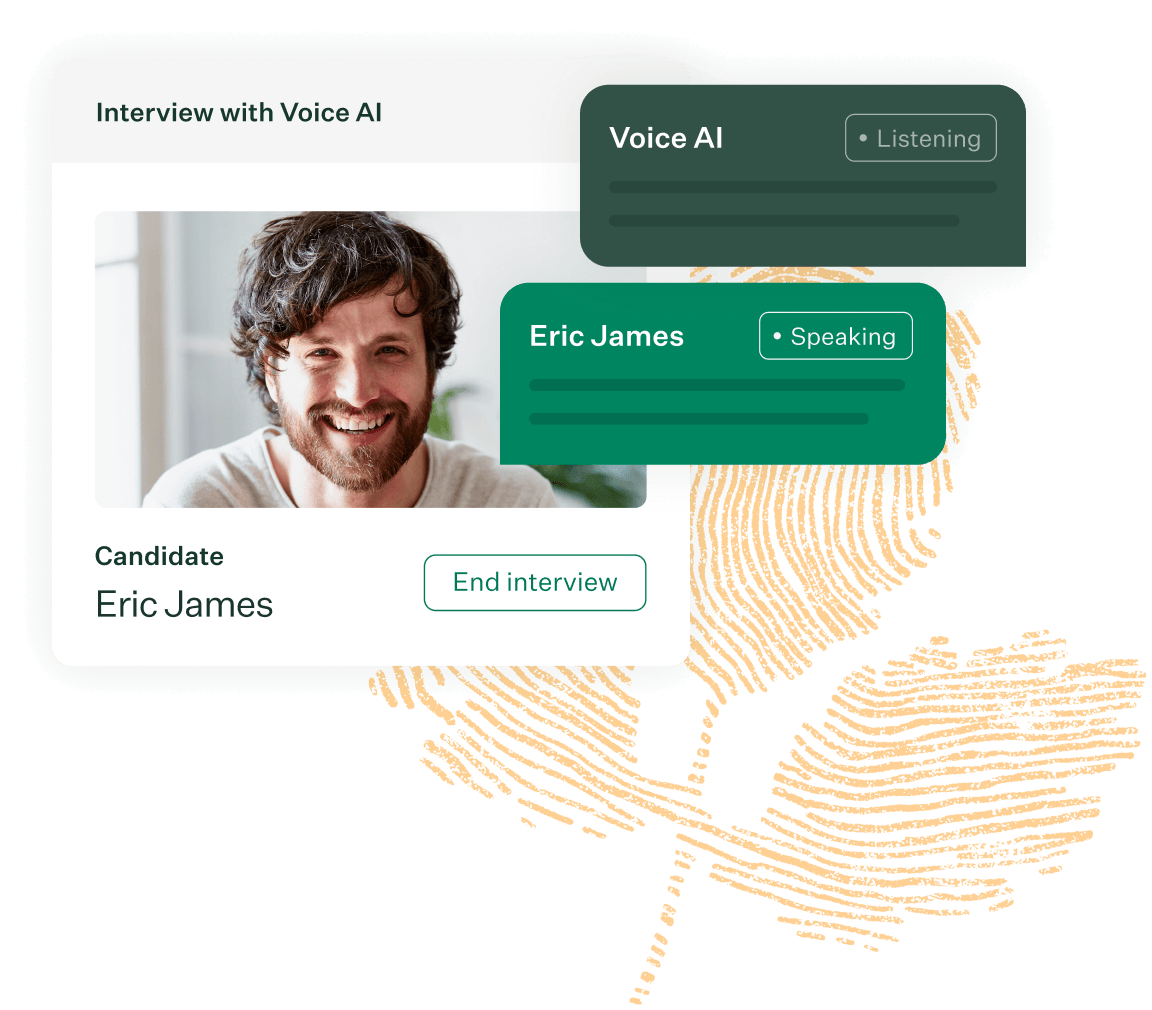
Notice that the interface is designed to feel like a conversation, with the AI listening and speaking in turn, which is exactly the point and exactly the risk. When it works, a voice agent feels closer to a phone screen than a video assignment. When it stumbles, the same conversational framing that was supposed to reassure the candidate becomes the thing that unnerves them, because a glitch in something pretending to be human reads as uncanny in a way a broken web form never does. The rest of this guide treats these three generations separately wherever their failure modes diverge, because a fix for one-way video anxiety does very little for a voice agent that talks over people, and vice versa.
3. Why They Quit: The Seven Failure Modes
Candidates abandon AI interviews for reasons that are specific, nameable and, crucially, addressable, which is the whole reason this chapter exists. The Greenhouse data lets us rank the triggers rather than guess at them. The clear leader is dehumanization: 33% of candidates said the thing that made them quit was a pre-recorded video scored by AI with no human present, followed by failure to disclose AI use at 27%, AI monitoring during the interview at 26%, and being forced into an AI-led interview with no human alternative, also 26% - HR Dive. These are not vague anxieties. They are grievances about how the process treats the person, and each maps to a design decision an employer made.
The chart below ranks the four biggest triggers. Every bar is a choice you can reverse, which is why the drop-off is a design problem rather than a technology problem.
Why Candidates Walk Away From an AI Interview
The first failure mode, dehumanization, is the emotional core of the entire backlash. Candidates read an AI-only interview as a statement about how much the employer values them, and the statement they hear is "not much." That interpretation shows up verbatim in interviews. A writer named Debra Borchardt told Fortune she would not "sit here for 30 minutes and talk to a machine," calling it an "added indignity" and adding that she did not want to work somewhere the HR team could not spare the time to speak with her. The objection is not to automation in the abstract. It is to being asked to invest effort in a company that will not invest a human minute back.
The same reporting surfaced that feeling from very different candidates, which is what makes it a pattern rather than a personality quirk. A 56-year-old technical writer said he simply wanted "some sort of a guarantee that we are going to interview you with a human being later," and another candidate, Alex Cobb, said being handed to an AI "makes me feel like they don't value my learning and development" - Fortune. Notice that none of them is objecting to hard questions or rigorous assessment. Each is reacting to the signal the format sends about their worth to the organization, which is why no amount of interviewer polish fixes it: the problem is not the quality of the AI, it is the absence of the human it replaced.
The second failure mode is non-disclosure, and it is the one that most reliably converts a neutral experience into a betrayal. Seventy percent of candidates were never clearly told upfront that AI would evaluate them, and roughly one in five discovered it only after the interview had already begun - Greenhouse. The feeling of being surprised mid-process is corrosive. A Houston candidate, Leo Humphries, told Newsweek he was caught off guard to learn mid-call he was talking to an AI, first assuming the repeated, glitchy phrases were a bad connection, then feeling "a sense of disappointment." Disclosure is nearly free to provide, which makes its absence read as either carelessness or concealment, and candidates assume the worse of the two.
The third failure mode is the uncanny-valley glitch, and it produces the viral moments that shape public perception far beyond the survey data. The defining incident happened in May 2025, when an AI interviewer named "Alex," built by the startup Apriora, malfunctioned during a real front-desk interview and repeated the phrase "vertical bar Pilates" fourteen times; the clip drew millions of views - 404 Media. The candidate, Ohio State student Kendiana Colin, said she was creeped out and that it felt "really sad that they decided, oh, you're not even worthy enough to be interviewed by a human." A tech journalist who deliberately tested one of these avatar interviewers came away describing it as "twitchy, repetitive" and "way down deep in the uncanny valley," and said the format made him come across as "an uncertain and inarticulate mess" - The Register. Each viral failure teaches thousands of watching candidates to distrust the format before they ever encounter it. The journalist's test is worth dwelling on, because it names a cost that never shows up in a completion metric: a format that unsettles people does not just lose the ones who quit, it degrades the performance of the ones who stay, converting capable candidates into nervous, halting versions of themselves and then scoring them on the difference.
The fourth failure mode is the black-box rejection, the experience of being turned down by something with no face and no reason. In a survey of over a thousand US job seekers, Enhancv found that 50.5% had received at least one rejection in the past year with no human contact at all, and among rejected candidates 63.8% believed an algorithm, not a person, had made the call. When there is no explanation and no one to ask, candidates fill the silence with the worst available story, and that story becomes their impression of your brand. Nearly a third said they had abandoned an application rather than complete an AI video or chatbot screen, and most of those roles paid under six figures, which means the format is quietly repelling exactly the high-volume applicants it was built to process.
The fifth and sixth failure modes, perceived bias and accommodation gaps, hit hardest among the candidates employers most claim to want. In the same Enhancv data, 47.7% of candidates believed AI hiring tools were biased against their demographic, rising to a net majority among neurodivergent applicants. These are not abstract fears. The ACLU has filed complaints alleging that a video-interview system disadvantaged a deaf Indigenous worker who was denied human captioning, and that another vendor's assessment risked discriminating against autistic applicants by scoring traits that overlap with clinical markers - HR Dive. A format that measures eye contact, vocal tone or facial affect does not fail everyone equally; it fails the people whose faces, voices and rhythms differ from the training data, and they know it.
The seventh failure mode is surveillance and emotion analysis, the sense of being watched and psychologically profiled rather than interviewed. Systems that monitor candidates during the interview, and especially those that claim to infer personality or affect from face and voice, read as invasive rather than rigorous, and the science under them is contested. HireVue's own scoring once derived a meaningful share of a candidate's rating from facial expressions and collected tens of thousands of data points per interview, before it abandoned facial analysis in 2021 under regulatory pressure - EPIC. Candidates intuit that being scored on micro-expressions is closer to phrenology than assessment, and being surveilled while it happens turns unease into refusal. A useful tell for any interview tool is what it claims to measure: the further it drifts from job-relevant skill toward reading a person's inner state, the more candidates will resist it and the more regulators will too.
The through-line across all seven is that candidates do not object to being assessed; they object to being processed. A watched video that no human will discuss, a rejection with no reason, an evaluation on criteria they were never shown: each of these strips the candidate of standing in their own hiring process. The practical lesson for the rest of this guide is that every fix has to restore some measure of that standing, whether through disclosure, a human path, feedback, or simply choosing a format that does not make people perform to a wall. Video from the candidate's chair makes the point better than prose can, so the clip below is one high-traction creator's unfiltered walk through the experience.
A candidate's-eye view of a modern AI interview
4. The Platform Landscape: Who Actually Runs These Interviews in 2026
Understanding who builds these interviews matters because the drop-off you inherit depends heavily on which vendor and which modality you buy, and the market has split into two camps with very different economics and candidate experiences. On one side sit the enterprise incumbents built on one-way video or structured chat, sold through demos and multi-year contracts with hidden pricing. On the other sit the conversational-voice newcomers of 2024 to 2026, which differentiate on real-time dialogue and, tellingly, on transparent self-serve pricing you can read without a sales call. Knowing which camp a tool sits in tells you more about the candidate experience than any feature list.
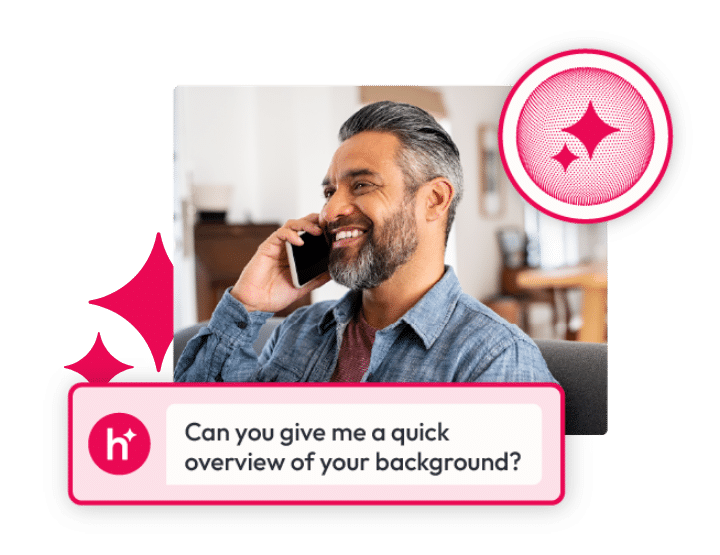
The incumbent that defined the category is HireVue, the enterprise standard for structured video interviewing with AI scoring, now extending into two-way voice. It publishes no prices; procurement data pegs the average contract near $49,855 a year, with a broader range from roughly $35,000 to well over $200,000 depending on volume and modules - OneWayInterview. HireVue is also the cautionary tale of the category: after a 2019 FTC complaint from EPIC, it dropped facial analysis from its scoring in 2021, though it still analyzes speech and language. Its product page, below, shows the candidate-facing pitch that the whole enterprise category is built on.
The enterprise incumbent's candidate-facing pitch
The most interesting incumbent for candidate experience is Sapia.ai, because it competes by removing the camera entirely. Its blind, untimed, text-based interview posts a reported 92% completion rate, and its scale is enormous: Woolworths, Australia's largest private employer, interviews about a million people a year through it and hires 50,000, with a candidate satisfaction score around 9 out of 10, while Qantas lifted interview completion from 50% to 93% after switching to the chat format across 170-plus languages. Sapia does not publish a per-interview rate; it sells on an enterprise, per-hire basis. The lesson embedded in its numbers is that format, not the presence of AI, drives most of the completion gap.
At the accessible end of the video category, prices are transparent and modest. Willo sells async video with an AI summary layer starting around £49 a month for a handful of live roles, up to a £2,999-a-year enterprise tier, while Spark Hire runs about $299 a month month-to-month or $249 billed annually. These tools are cheap and fast to deploy, which is exactly why one-way video proliferated, and also why so many candidates now associate the format with employers who would not spend on a live conversation.
The newcomers are where the market is moving, and they are worth naming because they represent the format most likely to be interviewing your candidates next year. Ribbon runs an asynchronous AI voice interview and publishes a full rate card, from $499 a month for 100 interviews up to $1,999 a month for 1,000, targeting high-volume sectors like retail, logistics and healthcare. Apriora's "Alex," the same product from the viral glitch, runs live two-way voice screens around the clock and reports over a million AI-led interviews, though its pricing stays demo-gated. Braintrust AIR and Talently.ai round out the voice cohort, the latter starting near $79 a month. A fuller teardown of these interviewers lives in HeroHunt's guide to the best AI candidate interviewers; the point here is the pattern: the newcomers sell real-time conversation and, unlike the incumbents, they mostly tell you the price.
A few smaller players are worth knowing because they illustrate the pricing transparency shift. Interviewer.AI sells async video with an optional conversational layer on a plain credit model, where an async interview costs one credit and a conversational one costs two, which works out to roughly $4 and $8 per interview, one of the clearest per-interview breakdowns anyone publishes. That clarity is itself a candidate-experience signal: vendors confident enough to post a price tend to be the ones building for volume and self-serve buyers rather than for procurement departments. The incumbents' silence on price, by contrast, correlates with the multi-year, high-touch contracts that make employers reluctant to change a badly-received format once it is installed.
The question buyers most often ask, whether AI interviewing reduces bias or amplifies it, has one of its better answers in Sapia's data, and it is worth stating carefully. A Monash University study of Sapia's blind, text-based screening found it increased the share of women shortlisted in male-dominated roles by about 30% compared with human resume review, because stripping names, faces and voices removes cues humans use to discriminate. That is a genuine benefit of a specific design, blind and text-only, and it does not transfer to a video tool that scores facial affect. The lesson for buyers is that "AI interview" is not one thing with one bias profile; the modality determines whether the tool is closing gaps or widening them.
One category is easy to misfile: tools that sit on top of human interviews rather than replacing them. Paradox (its "Olivia" assistant, acquired by Workday in October 2025), Pillar (acquired by Employ), and Metaview automate scheduling, screening chat or interview note-taking, not the judgment itself. They rarely provoke the drop-off this guide is about, because a candidate scheduling a slot with a chatbot does not feel judged by one. That distinction, between AI that handles logistics and AI that renders a verdict, is the hinge the entire fix turns on, and Chapter 8 returns to it. It is also where a sourcing-and-outreach platform like HeroHunt.ai sits: it automates the top of the funnel rather than the interview, a placement candidates almost never resent.
Two structural facts about this market shape the candidate experience more than any single vendor. The first is a roughly hundredfold price spread between the enterprise incumbents and the self-serve newcomers, from tens of thousands of dollars a year for HireVue down to a few hundred dollars a month for Willo or Talently, which means the same candidate can face wildly different production values depending only on who happens to be hiring. The second is scale. Conversational screening now runs at volumes that turn any design flaw into a mass event: Paradox's Olivia alone has handled well over 150 million candidate conversations for employers such as McDonald's and Chipotle, so a poorly-tuned flow does not annoy dozens of people, it annoys millions, and every one of them can film it.
It is also worth knowing that some of what powers these interviewers is infrastructure rather than a hiring product. Hume AI, for instance, sells an empathic voice interface that infers emotional cues from speech, and other companies build interviewers on top of it, which is exactly the affect-reading capability the European Union now restricts in the workplace. When you evaluate a voice agent, it pays to ask what it is built on and what it claims to detect, because a vendor's marketing and the model underneath are not always making the same promise, and the gap between them is where both candidate trust and legal exposure hide.
The market's rapid consolidation is worth watching because it changes who controls the candidate experience. In a span of months the async pioneer myInterview was absorbed into Radancy, the interview-intelligence tool Pillar was acquired by Employ, and Paradox was bought by Workday, folding standalone interview products into large suites that many employers adopt by default rather than by deliberate choice. That matters for drop-off: when an AI interviewer arrives as a bundled feature of the applicant-tracking system you already bought, nobody explicitly decided the candidate experience it creates, and no one clearly owns fixing it. The teams least likely to quit their own candidates are the ones who treat the interview format as a decision to be made on purpose, not a default to be inherited.
5. The Other Side of the Arms Race: Candidates Bring Their Own AI
Any honest account of why AI interviews are struggling has to include the fact that candidates are now fighting back with AI of their own, and that this two-sided escalation is making the whole process colder for everyone. The moment employers automated the interview, a market appeared to help candidates beat it. Roughly 22% of job seekers have already used AI live during an interview to help answer questions, with nearly as many using it on skills tests - HR Executive. What began as employers screening people at scale has become an algorithm-versus-algorithm contest, and the candidates who refuse to cheat are the ones who lose.
The scale of undetectable cheating is the uncomfortable part. In a controlled experiment by interviewing.io, a candidate using ChatGPT on verbatim coding questions passed 73% of technical interviews, and not a single interviewer noticed; most cheaters were not even worried about being caught. A cottage industry of overlay tools now listens to interview audio and surfaces answers in real time, and industry analyses suggest cheating behavior appeared in a large and rising share of AI-led interviews through late 2025. When an employer cannot tell whether an answer came from the candidate or a hidden model, confidence in the entire remote format collapses.
The detection failure is worryingly complete. In that same experiment, 72% of interviewers said they felt confident in their hiring decision even when the candidate had been reading from ChatGPT the entire time, and one interviewer went so far as to recommend a cheating candidate as strong interviewer material - interviewing.io. Purpose-built overlay tools now sit invisibly beside the interview window, listening to the audio and surfacing answers in real time, and industry analyses of tens of thousands of AI-led interviews found cheating behavior in a large and sharply rising share through the second half of 2025. Gartner analyst Emi Chiba has warned that for some remote technical roles, employers can expect at least half of the applications to be false in some way - Computerworld. The signal an interview is supposed to produce is drowning in noise that both sides are now generating.
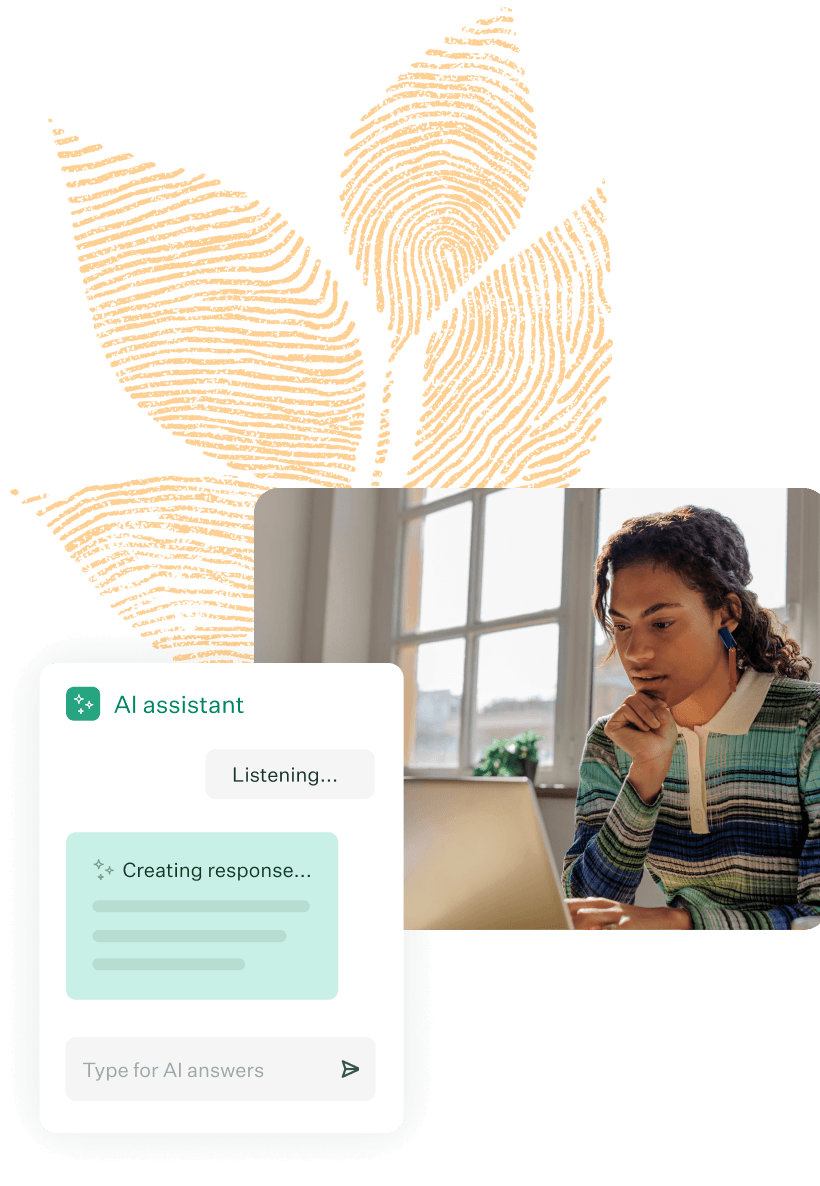
The image below captures why this is so hard to police: candidate-side AI assistants are designed to sit quietly beside the interview and generate answers on demand, invisible to whoever, or whatever, is on the other end.
The candidate's own AI, working the other side of the interview
The most alarming escalation is identity fraud, and it has already pushed major employers off remote interviews entirely. Gartner predicts that by 2028 as many as one in four candidate profiles worldwide could be fake, and 6% of candidates in one survey admitted to some form of interview fraud, including having someone else pose as them. The threat is concrete: a recruiter caught a deepfake applicant live when she asked him to pass a hand in front of his face to break the AI filter, and he refused and left the call - Newsweek. HeroHunt's own guide to preventing deepfake hiring scams covers the defensive playbook in depth, because this is now a standard part of the interviewing threat model rather than an edge case.
The reason this chapter belongs in a guide about candidate drop-off is that the arms race and the abandonment feed each other in a vicious loop. Employer fear of cheating and deepfakes pushes them toward more surveillance, more monitoring and more suspicion, which are precisely the design choices that make honest candidates quit. Google and McKinsey have reintroduced in-person rounds specifically to defeat AI-assisted cheating - Computerworld, and around 72% of recruiting leaders now say they interview in person for the same reason. Detecting the fakes is a legitimate need, and HeroHunt maintains a separate guide on detecting AI interview cheating, but every defensive measure aimed at the cheats also taxes the trust of the majority who are honest. The design challenge of 2026 is to raise integrity without treating every applicant like a suspect.
6. The Law Caught Up: What You Must Tell Candidates in 2026
The transparency that candidates are demanding has quietly become a legal obligation across major jurisdictions, which means the fix in this guide is no longer only about brand and completion rates; in several places it is now about compliance. The regulatory picture in 2026 is genuinely fragmented, with the European Union, individual American states and New York City each imposing different duties, and with several high-profile timelines shifting during 2025 and 2026. The safest posture is to treat disclosure, bias testing and a documented human role as baseline requirements, because somewhere in your candidate pool, at least one of them is now legally mandatory.
The European Union AI Act is the most consequential, because it classifies AI used for recruitment and candidate evaluation as high-risk under Annex III, which triggers obligations around human oversight, transparency, data governance and a candidate's right to an explanation of automated decisions. The timeline, however, moved: the high-risk obligations for standalone hiring systems, originally due in August 2026, were postponed to 2 December 2027 by the Digital Omnibus that entered into force in July 2026 - European Commission. One duty is already live, though. Since 2 February 2025, the Act flatly prohibits AI that infers emotions in the workplace, which directly implicates any interview tool claiming to read candidate affect from face or voice, with fines reaching €35 million or 7% of global turnover - Gibson Dunn. If your interviewer scores emotion and you operate in the EU, that is not a future risk; it is a current one.
Two nuances make the EU rules more relevant to interviews than they first appear. The emotion-recognition ban is not limited to reading faces: it covers inferring emotional state from voice, gait or other physiological signals, which reaches the vocal-tone analysis some voice interviewers perform, not just the facial scoring the incumbents abandoned years ago - Future of Privacy Forum. And once the high-risk obligations bite, candidates gain a right under Article 86 to a meaningful explanation of a significant decision made about them by a high-risk system, which turns the transparency this guide recommends into an enforceable individual right rather than a courtesy. The AI-literacy duty on employers deploying these systems, requiring that the staff operating them actually understand them, has applied since February 2025. Taken together, the European Union is legislating the exact behaviors, disclose, explain, keep a human accountable, that the candidate data independently says reduce drop-off.
In the United States, the strongest disclosure rules are state and local, and they are older and firmer than most employers realize. Illinois has required notice, a plain-language explanation, and affirmative candidate consent before using AI to analyze video interviews since its Artificial Intelligence Video Interview Act took effect in 2020 - Illinois General Assembly, and from 1 January 2026 a broader amendment to the state's Human Rights Act bans discriminatory AI in employment decisions and adds its own notice duty - National Law Review. New York City goes furthest on auditing: Local Law 144, enforced since 5 July 2023, requires an independent annual bias audit of automated employment decision tools, public posting of the results, and at least ten business days' notice to candidates - DLA Piper.
Two more states matter, and one of them is a trap for anyone reading last year's advice. California's Civil Rights Council put automated-decision-system regulations into force under the Fair Employment and Housing Act on 1 October 2025, extending anti-bias liability to AI tools and to the vendors operating them as employer "agents," and lengthening record retention to four years - Paul Hastings. Colorado, by contrast, is the moving target: its landmark AI Act was delayed twice, scaled back by an amendment, and then partially stayed by a federal court, pushing its core obligations to 1 January 2027 and stripping the original duty-of-care regime - Hunton. Anyone citing Colorado's original "reasonable care" standard as current law in 2026 is working from a repealed version.
Two newer state laws round out the map and cut in different directions. Texas's Responsible AI Governance Act took effect on 1 January 2026, but its discrimination standard is intent-based, meaning a mere disparate impact is expressly not enough to establish a violation, which makes it far weaker for hiring than the European, Californian or Illinois frameworks - Norton Rose Fulbright. Utah went the other way early, becoming the first state to require clear disclosure that a person is interacting with generative AI rather than a human, a rule that squarely covers AI recruiting chatbots and voice agents - Skadden. The pattern across all of these is that disclosure is becoming the common denominator even where the anti-bias duties diverge.
One caution prevents a false sense of safety: the much-discussed "right to a human" is thinner in law than in candidate expectation. New York City's rule, for example, requires only that you tell candidates they may request an alternative process, not that you actually provide one, and its penalties run a modest $500 to $1,500 per violation - DLA Piper. The distance between what the law minimally requires and what candidates actually want is precisely the space where employer brand is won or lost. Meeting the legal floor keeps you out of court; meeting the candidate expectation keeps your funnel full, and the two are not the same target.
The federal picture is the opposite of the state trend, and understanding the divergence prevents a costly false comfort. The current administration has pulled back at the national level: the Equal Employment Opportunity Commission removed its AI-hiring technical guidance in early 2025, and an April 2025 executive order directed federal agencies to deprioritize disparate-impact enforcement - Cooley. The critical point is that removing guidance does not repeal the underlying statutes: Title VII, the Americans with Disabilities Act and the age-discrimination laws still apply to AI selection tools in full. The enforcement energy has simply shifted from Washington to the states and to private complaints, such as the ACLU's actions against video-interview vendors over disability discrimination. For a national employer, the safe reading is that disclosure and bias testing are effectively required somewhere you hire, so building them in once, everywhere, is both the compliant and the operationally simplest choice.
7. The 2026 Fix: How to Run AI Interviews Candidates Do Not Quit
The good news buried in all this data is that candidates have told us, in detail and with striking consistency, exactly what would keep them in the process, which means the fix is not a mystery to be solved but a checklist to be executed. When asked what they want, 46% of candidates said the option to request a human interview, 44% said upfront disclosure that AI is being used, 39% said a clear explanation of what the AI measures, and 38% said a human should review the AI's evaluation before any decision - Greenhouse. None of these is expensive. All of them are about restoring the candidate's standing in their own hiring process, which is the exact thing the failure modes in Chapter 3 strip away.
The chart below turns those requests into a priority order. It is, in effect, your remediation backlog, ranked by how many candidates each fix would reach.
What Candidates Say Would Keep Them in the Process
The first and highest-leverage fix is disclosure done early and specifically, because it is the cheapest intervention with the largest brand upside. Telling candidates before they start that AI will be involved, and what it evaluates, closes the single biggest grievance in the data, the 70% who were never told. The payoff is not just avoided anger: a well-executed, transparent AI interview leaves 38% of candidates with a more positive impression of the employer, while a poorly handled one leaves 34% more negative - Greenhouse. As Greenhouse's chief people officer put it, candidates are asking for something that "isn't complicated: tell them when AI is in the room and what it's measuring." Disclosure converts the same technology from a trust liability into a signal of a well-run process.
The return on getting this right compounds in a way that is easy to underrate. A candidate who has a transparent, respectful AI interview does not merely avoid becoming a detractor; a positive experience makes people materially more likely to accept an offer and to recommend the employer, while a single humiliating one gets filmed and shown to a candidate's entire network, as the viral clips in Chapter 3 prove. Roughly 66% of applicants say they are more likely to accept a job after a positive interview experience - CareerPuck. In a market that tight, the interview experience is not a cost center to be minimized but a conversion lever, and disclosure is the cheapest way to pull it.
The second fix is a guaranteed human path, and the counterintuitive finding is that most candidates will never use it. Offering the option to escalate to a human, or to have a human review the AI's output before a decision, signals respect and control even to the majority who proceed with the automated flow. Gartner's talent-acquisition analysts advise recruiting leaders to clarify how AI is used and to let candidates opt out of AI interviews for exactly this reason - Recruiting News Network. The human path is cheap precisely because it is rarely exercised; its value is almost entirely in the offering.
The third fix is choosing a format that does not manufacture anxiety, and here the evidence is unusually strong because it comes from a randomized field experiment rather than a survey. Researchers who randomized more than 3,000 real applicants into asynchronous audio and video interviews versus live online interviews found the asynchronous format caused an over 50% decrease in application continuation, with the drop largest among women and hitting even the most qualified applicants - RePEc working paper. The striking twist is that the same study found the commercial AI tool predicted later job success better than human recruiters and scored women and underrepresented candidates higher, which means the backlash is about the async format and the felt experience, not the accuracy of the model. The design implication is direct: if you must use AI, prefer conversational or chat formats over solo-recorded video, and never make one-way video the only door.
A fourth fix is subtler but decisive: fix the structure of the interview before you automate it, because AI does not create rigor, it only enforces whatever rigor you already have. Dropped onto a vague, inconsistent interview, an algorithm simply exposes the mess faster and at scale. Only about 24% of candidates are satisfied with interview processes even before AI arrives, and a large share of companies already run four or more rounds that shed good people through sheer friction - Aptitude Research. Gartner's Jamie Kohn puts the operational fix in one line: the experience breaks down when candidates are surprised by the AI or cannot get basic questions answered, so setting expectations early and keeping the process clear is what stops them dropping out. Structure and clarity are not the boring prerequisites to the AI; they are the actual product candidates are responding to.
Turning all of this into an operating checklist is less work than it sounds, because the moves are small and mostly one-time. In practice a humane 2026 AI interview discloses the AI in the job posting and the invitation email, opens with a plain one-line explanation of what the tool evaluates and what it does not, carries a visible "request a human" option that most candidates will never click, sends an automated status update at each stage so nobody is left in silence, and returns at least one concrete line of reasoning on a rejection. None of these requires a new vendor or a model retrain. They require deciding that the candidate's standing in the process is worth protecting, and then wiring that decision into the templates you already send.
One more design choice pays for itself with hourly and high-volume applicants specifically: meet them where they are. Most of these candidates apply from a phone, in the gaps between shifts, so an interview that demands a desktop, a quiet room and a polished single take is one many of them will simply never start. Making the interview mobile-first, letting people complete it on their own schedule, and allowing a re-record removes the friction that turns a willing applicant into a silent non-response. The employers with the highest completion in this segment are rarely the ones with the most sophisticated model; they are the ones who asked the least of the candidate to get through the door, and who never made the technology the candidate's problem to solve.
The remaining fixes close the back of the process, where ghosting compounds every earlier sin. Practically, the highest-return moves are:
- Close the feedback loop - never leave a completed AI interview with no outcome, since 51% of candidates currently hear nothing, which turns a tolerable experience into a resentful one.
- Fix the structure before you automate it - AI applied to a vague, inconsistent interview simply exposes the mess faster; define the criteria first.
- Keep it short and mobile-first - respect the candidate's time in proportion to the stage, and let people complete on their own schedule and device.
The unifying principle is that each of these restores something the candidate lost: information, a reason, a choice, or their time. Analyst Madeline Laurano of Aptitude Research notes that only about 24% of candidates are satisfied with interview processes even before AI enters, and that unstructured, inconsistent interviewing already introduces inequity and reputational damage; AI amplifies whatever process it is dropped into. The fix, then, is not a clever feature. It is the discipline to disclose, to keep a human reachable, to pick a humane format, and to always, always tell people what happened.
8. Where AI Interviewing Genuinely Belongs (and Where It Does Not)
The most useful mental model for 2026 is to stop asking whether to use AI in interviewing and start asking which part of the process each tool should touch, because the drop-off data draws a clean line between the stages where candidates welcome automation and the stages where they revolt against it. Broadly, candidates tolerate and even appreciate AI in the logistics of hiring, and resent it in the judgment of hiring. Getting this division right is the difference between a process that feels efficient and one that feels dehumanizing, and it happens to also be the design that best defends against both drop-off and fraud.
AI earns its keep at the top and middle of the funnel, where the work is repetitive, high-volume and low-stakes for the candidate's sense of dignity. Sourcing candidates, screening resumes against explicit criteria, answering applicant questions, and scheduling interviews are all tasks where automation removes friction that candidates dislike anyway. The clearest candidate frustration in the entire funnel is silence: 48% of entry-level job seekers name "not hearing back after applying" as their top complaint - iCIMS. AI that answers, updates and schedules is AI that fixes that silence, and almost no candidate objects to a fast, responsive process. This is precisely where a platform such as HeroHunt.ai operates, sourcing from over a billion profiles and running personalized outreach on autopilot, so recruiters reach and engage people faster without an algorithm ever standing in for the human interview itself.
This division also resolves the most awkward finding in the whole literature: the AI is often the better judge on paper, and candidates reject it anyway. The randomized field study behind Chapter 7 found the commercial AI interviewer predicted later job success more accurately than human recruiters and scored women and underrepresented candidates higher, yet the async AI format still cut application continuation by more than half. Accuracy, in other words, does not buy acceptance. That is not an argument to overrule candidates and force the more accurate tool on them; it is the reason to point the model's strength where it is welcome, at surfacing and screening near the top of the funnel, and to let a human carry the verdict where acceptance, not just accuracy, decides whether your offer gets a yes. Both sides are already escalating: nearly three in four employers report that candidates now use AI in their own job search, which only sharpens the case for a human judgment that everyone can trust - iCIMS.
Where AI belongs least is the final judgment of a person's fit and character, and here even the vendors agree. Braintrust's chief executive, whose own company sells an AI interviewer, told Fortune that candidates increasingly see an AI interviewer as "a red flag for company culture," and that while AI is good at objective skill assessment, he "wouldn't even try to have AI" judge cultural fit. That is the honest boundary. Skills that can be objectively verified, coding, language proficiency, structured knowledge, are reasonable candidates for AI assessment with disclosure. The judgment of whether someone belongs on a team, and the human relationship that makes an offer feel earned, are not.
The economic case for this split is as strong as the candidate-experience case, which is why it tends to survive contact with a budget meeting. Recruiters spend an enormous share of their week on exactly the logistics that automate cleanly: chasing applicants, scheduling, answering the same questions, and screening resumes against fixed criteria. Handing those to software does not remove the human from hiring; it relocates the human to where judgment actually happens and gives them the time to do it well. An employer that automates the top of the funnel and protects the final conversation gets both a faster process and a more human one, which is precisely the combination the drop-off data rewards. The failure mode is doing the reverse: automating the judgment to save a manager an afternoon while leaving candidates to fight a chatbot for a scheduling slot.
The diagram below shows the division as a pipeline: automate the logistics, keep a human on the verdict, and let the two hand off cleanly rather than letting AI run end to end.
The strategic reason to draw the line this way is that it defends both sides of the trust problem at once. Automating logistics speeds the process and kills the silence that drives drop-off, while keeping humans on judgment preserves the dignity candidates are quitting to protect, and adds the in-person or live touchpoints that also happen to defeat deepfakes and cheating. The employers moving judgment back to humans while automating everything around it are not being nostalgic; they are responding to the same data this guide is built on. As one analysis of the return to in-person interviews put it, the human qualities that hiring ultimately turns on, judgment, empathy, connection, are exactly the ones that cannot be automated - Computerworld. The winning 2026 process is not more AI or less AI. It is AI in the right place.
9. The Future: Voice Agents, Liveness Checks, and Re-Humanized Judgment
Looking eighteen months ahead, three trajectories are already visible in the 2026 data, and together they suggest the AI interview will not disappear but will migrate toward the formats and safeguards that reduce the drop-off this guide documents. The one-way video interview, the most-hated generation, is on borrowed time; the identity-verification layer is becoming mandatory infrastructure; and the judgment itself is quietly moving back toward humans even as the logistics automate further. None of these is speculative. Each is being pulled forward by the same tension between adoption and trust that the opening chart captured.
The first trajectory is the displacement of one-way video by conversational voice agents. The randomized evidence that async formats cut application continuation by more than half makes solo-recorded video a liability that better-funded employers will shed, and the newcomers profiled in Chapter 4 are already building the replacement. A live, two-way agent that adapts its questions and lets candidates ask their own reduces the "talking to a wall" complaint that defines video abandonment. Analysts expect this to arrive as coordinated multi-agent workflows rather than a single bot: Josh Bersin describes chains of roughly two dozen agents that can carry a candidate from the career site through application to an AI interview, with a human stepping in at the decision. The direction of travel is more automation of the path to the interview and a clearer, better-defended human moment at the end of it. Reputable newsrooms have begun testing these agents directly; the segment below is one such first-person walkthrough of a live two-way AI voice interview.
A reporter takes a live two-way AI voice interview
The second trajectory is real-time identity verification as standard equipment, driven by the fraud numbers rather than by candidate demand. As deepfake applicants and impersonation scale toward Gartner's one-in-four projection, the interview will increasingly carry a liveness check, document verification at application, and re-verification at offer. The design risk is obvious and central to this guide's thesis: verification can either be built as a smooth, disclosed step that candidates understand, or as intrusive surveillance that adds another reason to quit. The employers that treat it as the former, explaining why identity confirmation protects honest applicants, will hold their completion rates; those that bolt on silent monitoring will keep feeding the backlash.
The verification stack is already taking a recognizable shape: document authentication at application, a liveness check during the interview to defeat face filters, and re-verification at the offer stage, so identity is confirmed at the three points where fraud is most likely. Done openly, this protects honest candidates as much as employers, because the alternative to targeted verification is the blanket suspicion that has companies dragging everyone back to the office. The same agentic capability is being pointed at the fraud itself, with systems that analyze voice patterns and behavioral consistency across a candidate's interactions to flag impersonation in real time rather than discovering it after a bad hire. The winners here will be the teams that verify precisely and visibly, rather than surveilling broadly and quietly.
The third trajectory is the re-humanization of judgment, and it is the one most likely to surprise people who assume AI only ever expands. Gartner's own research finds that 62% of candidates are more likely to apply when a role requires in-person interviews, and roughly 72% of recruiting leaders have already reintroduced in-person steps - Computerworld. The end state is not a fully automated interview but a barbell: heavy automation of sourcing, screening and scheduling on one end, a deliberate human conversation for the final judgment on the other, and a thinning middle where one-way video used to live. Industry analyst Josh Bersin frames the same shift as a move from "hand-crafted" hiring to "precision science" that must still be built to feel "trustworthy, transparent, and positive," with humans owning the decision - Josh Bersin. The tools will get more capable every quarter. The winning strategy will still be to point that capability at the parts of hiring candidates are glad to hand over, and to keep a person exactly where the candidate needs one.
10. The Decision, in Five Sentences
Candidates are not rejecting AI; they are rejecting being processed by it without disclosure, without a human anywhere in reach, and without ever learning what happened, and roughly half of them will now walk over it. The cheapest and highest-return fixes are the ones candidates themselves name: tell them upfront that AI is involved and what it measures, keep a human path they can request, avoid one-way video as the only door, and never end an interview in silence. The law now backs the same instincts, because disclosure in Illinois, a bias audit in New York City, automated-decision rules in California and the European Union's high-risk regime all point at the transparency candidates were already demanding. The clean operating model for 2026 is a barbell: automate the logistics that create silence and delay, source and reach candidates with AI so recruiters have time to spend, and keep a human on the judgment where dignity, culture and trust are actually decided. Do that, and the AI in your process stops being the reason good people leave and starts being the reason they get a fast, respectful, human hiring experience.
For teams rebuilding their pipeline around that model, the practical first move is to pull AI out of the interview verdict and put it where candidates welcome it, in sourcing and outreach, which is the whole design behind an AI recruiter like HeroHunt.ai: it finds and engages talent from over a billion profiles on autopilot, so the human interview stays human and the funnel above it stops leaking. The technology is not the problem. Where you point it is the entire decision.
This guide reflects the AI-interview landscape as of September 2026. Pricing, platforms and especially the regulatory timelines change quickly (the European Union and Colorado both moved their deadlines during 2026), so verify current details before you rely on them.